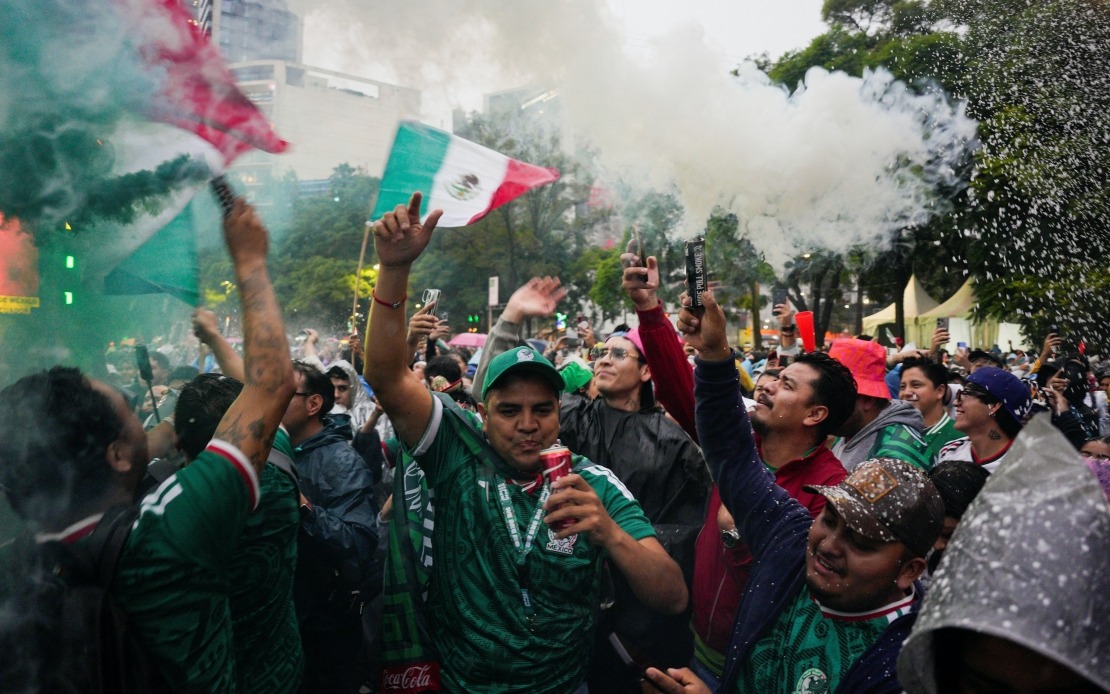
Three people have died in Mexico City following crowds gathering to celebrate Mexico's advancement to the knockout stages of the World Cup, marking a tragic outcome to what should have been a moment of national joy. The deaths occurred in separate locations near Paseo de la Reforma in the heart of the Mexican capital, with authorities confirming that asphyxiation was the cause in each case. The victims included a 44-year-old man, a 19-year-old woman, and a 48-year-old woman, according to the official account of the secretary of public health in Mexico City.
Mexico's qualification came after a commanding 2-0 performance against Ecuador at the Estadio Azteca on Tuesday evening. The victory secured the nation's passage to the round of 16, reigniting hopes for a strong campaign in the tournament. The result triggered widespread celebrations throughout Mexico City as supporters flooded the streets, embodying the passion and enthusiasm that football generates across Latin America. This sentiment resonates strongly in Southeast Asia, where Mexico's World Cup performances have long captured the imagination of regional football enthusiasts who relate to the pride invested in national teams.
The timing of these deaths raises significant questions about crowd management during large-scale public celebrations. Asphyxiation deaths in crowded public gatherings typically result from compression injuries or suffocation, underscoring the dangers that can emerge when massive crowds gather without adequate safety measures. Such incidents have plagued celebrations worldwide, from music festivals to sporting victories, highlighting a persistent blind spot in public safety protocols even in major cities with established emergency response systems.
Clara Brugada, the head of government in Mexico City, acknowledged the tragedy through her official communications, confirming that emergency teams responded immediately upon receiving reports of three unconscious individuals at different points near Paseo de la Reforma. She emphasized that all medical response protocols were activated despite the rapid deployment of resources, suggesting that the circumstances of each incident may have proven overwhelming for emergency responders. Brugada's statement indicated that the severity and speed of the asphyxiation events prevented successful medical intervention.
The city's chief executive extended her condolences to the families of those who perished, committing to provide comprehensive support and assistance during what will undoubtedly be an extraordinarily difficult period. Her remarks stressed the importance of celebrating responsibly, acknowledging that while patriotic enthusiasm and national pride are valuable aspects of community identity, they must be tempered with awareness of public safety and consideration for fellow citizens. This message carries particular weight given Mexico's large, passionate football-supporting population.
These deaths underscore a broader concern for event organisers and public health authorities across the region. Southeast Asian nations with significant football cultures—including Malaysia, Vietnam, Thailand, and Indonesia—regularly witness large public gatherings during major tournaments. The incident in Mexico City serves as a cautionary reminder about the infrastructure and protocols necessary to safely accommodate the enthusiastic crowds that international football generates. Reviewing crowd management practices, establishing clear safety guidelines, and ensuring adequate medical personnel are positioned throughout gathering areas represent essential considerations for future celebrations.
The potential England versus Mexico matchup on Sunday would have further intensified celebrations had Mexico's victory been followed by a favourable result from the England versus DR Congo fixture on Wednesday. The possibility of such a high-profile encounter at the Estadio Azteca underscores the scale of attention and emotional investment surrounding Mexico's World Cup campaign. For Malaysian observers, the tragedy reflects universal challenges in balancing celebratory freedom with public safety obligations.
The incident also highlights how sporting events, while unifying in their positive capacity to inspire national pride, can create circumstances where individual safety becomes compromised. The concentration of large populations in limited urban spaces during spontaneous celebrations creates inherent risks that require careful consideration and planning. Urban planners and public safety officials must anticipate such scenarios and implement preventative measures, including designated gathering areas, adequate medical facilities, clear communication channels for emergencies, and crowd control mechanisms.
Mexico's football authority and city officials will likely conduct comprehensive reviews of what transpired near Paseo de la Reforma. Understanding the specific circumstances that led to these three separate asphyxiation events will be crucial for implementing improvements to protect citizens during future celebrations. Regional authorities in Southeast Asia should similarly examine the findings and adapt recommendations to their own contexts, particularly given the region's demonstrated enthusiasm for international football tournaments.
As Mexico prepares for potential continuation in the tournament, the nation processes this unexpected tragedy that has cast a shadow over qualification achievements. The loss of three citizens during what should have been a moment of collective celebration serves as a sobering reminder that public safety infrastructure must evolve alongside the emotional intensity and scale of modern sporting occasions, particularly in densely populated urban environments.

