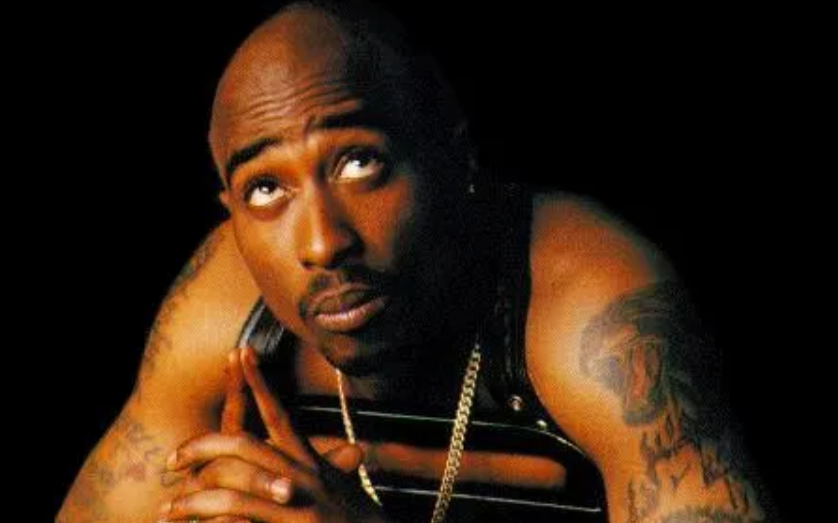
The trial of Duane "Keffe D" Davis, a former leader of the South Side Compton Crips, commenced this week in connection with the September 1996 shooting death of Tupac Shakur, marking a watershed moment in one of American popular culture's most persistently unsolved murders. Three decades have passed since the West Coast hip-hop icon was gunned down in a drive-by shooting while in Las Vegas attending a Mike Tyson boxing match, leaving the hip-hop community and music fans worldwide desperate for answers. Davis, now 63, faces a potential life sentence without the possibility of parole if convicted, with prosecutors alleging he not only ordered the fatal attack but also provided the weapon used in the assassination.
The proceedings are expected to consume approximately four weeks of court time, though the case presents a challenging evidentiary puzzle for both the prosecution and defence. While authorities believe they can demonstrate Davis's role in orchestrating the murder, the trial is unlikely to conclusively establish who actually pulled the trigger on the night Shakur died. The defendant entered the courtroom in formal attire—a light-blue shirt paired with a navy tie—as jury selection commenced, a process anticipated to extend throughout the initial week of proceedings. The composition of the jury will be critical, given the case's deep cultural resonance and the decades of speculation that have surrounded Shakur's death.
Shakur's assassination occupies a singular place in American crime history, generating fervent debate and countless theories among music enthusiasts, criminologists, and amateur investigators. The rapper, who was only 25 at the time of his death, had become a towering figure in hip-hop during the mid-1990s, when the genre was fractured along geographical lines pitting East Coast and West Coast factions against each other in a rivalry that extended well beyond music into the realm of genuine violence. Death Row Records, established by Marion "Suge" Knight and closely connected to Los Angeles gang networks, represented West Coast dominance, while Bad Boy Records—founded by Sean "Diddy" Combs and featuring Christopher "The Notorious B.I.G." Wallace—anchored the East Coast establishment. This bitter competition formed the backdrop to Shakur's death, with the Notorious B.I.G. himself being murdered just six months later in March 1997.
The prosecution's narrative centres on a sequence of events triggered by confrontation at the MGM Grand casino following the Tyson fight. According to prosecutors, Knight and Shakur assaulted Davis's nephew, Orlando "Baby Lane" Anderson, a Crips member, in retaliation for what they characterised as an assault on a Death Row Records employee. This assault apparently set in motion a cycle of revenge that culminated in the fatal shooting hours later, when a white Cadillac pulled alongside Shakur's vehicle on a Las Vegas street. Davis allegedly distributed a firearm to occupants in the vehicle's rear seat, from which the lethal shots were discharged. The underlying gang dynamics appear critical to the prosecution's case: Death Row was supposedly protected by Mob Piru, a Los Angeles Bloods faction with which Knight maintained ties, while Bad Boy Records had engaged South Side Compton Crips—led by Davis—as security personnel.
For decades, the investigation languished due to insufficient evidence and witness reluctance to cooperate with authorities, leaving the case dormant among police files and media speculation. The breakthrough came unexpectedly in 2019 when Davis published a memoir detailing his involvement in Los Angeles gang culture and, more significantly, his presence in the Cadillac on the night of Shakur's murder. In the book, Davis acknowledged sitting in the front passenger seat and handing a pistol to individuals seated behind him, though he conspicuously refused to identify who actually fired the weapon. This partial confession, combined with statements Davis had made years earlier to journalists, provided prosecutors with sufficient grounds to initiate charges, resulting in his arrest in September 2023. The memoir's publication appears to have been the critical catalyst that transformed a three-decade-old cold case into an active prosecution.
However, Davis has since abandoned the admissions contained in his own written account, pleading not guilty and adopting a posture of complete innocence. In a March 2025 interview conducted from his prison cell with ABC News, Davis flatly denied any involvement in Shakur's death, declaring "I'm innocent. I ain't killed nobody. Never did ever kill nobody." He further contended that prosecutors possess no credible evidence linking him to the crime and that he was not even present in Las Vegas on the evening in question, claiming instead to have been in Los Angeles. Most remarkably, Davis suggested that his own memoir—the document that prompted his arrest—was substantially fabricated by his co-author to boost commercial sales, with Davis maintaining he merely provided biographical details that were subsequently embellished and reinterpreted by the writer during independent research.
Davis's defence team mounted vigorous efforts to exclude both his memoir and a 2008 police interview, in which he discussed the Shakur murder in his capacity as a purported witness, from being introduced as trial evidence. These pretrial motions failed, and both documents are now available to the jury for consideration. The simultaneous existence of Davis's prior admissions and his current denials creates a profound credibility issue at the heart of the trial. Jurors must grapple with the question of why an individual would provide detailed, self-incriminating information to an author and journalists only to subsequently recant those statements after arrest. The defence will presumably argue that Davis was misrepresented or that the memoir represents fabrication rather than genuine confession, yet the prosecution possesses contemporaneous evidence that Davis made similar statements before the book's publication.
A particularly significant factual complication underlies the entire prosecution: everyone else who occupied the Cadillac during the shooting has since died. This absence of corroborating witnesses means that Davis's own testimony—or rather, his silence, given his not-guilty plea—may be the closest the court gets to an eyewitness account. The prosecution must therefore rely upon circumstantial evidence, gang dynamics, motive analysis, and Davis's own prior statements to construct its case. Defence arguments regarding insufficient direct evidence and reasonable doubt will almost certainly feature prominently in closing arguments. The challenge for prosecutors is transforming a chain of circumstantial indicators—gang affiliation, documented presence in the vehicle according to Davis's own prior admissions, prior confrontation with Anderson, and alleged possession of the murder weapon—into proof of guilt beyond reasonable doubt.
The trial's conclusion is unlikely to provide complete closure for those most affected by Shakur's death, despite the historic significance of the proceedings. In May of this year, Maurice Shakur, the slain rapper's stepbrother, initiated a wrongful-death civil lawsuit, signalling that Shakur's family remains unconvinced that criminal prosecution alone will adequately address the killing. The civil complaint asserts that multiple individuals involved in orchestrating Tupac's assassination have evaded accountability for three decades, suggesting that family members view the Davis prosecution as incomplete justice. The distinction between civil and criminal proceedings means that even if Davis is convicted, other alleged participants or facilitators might escape criminal liability, leaving lingering questions about the full scope of responsibility for the 1996 murder.
For Malaysian and Southeast Asian audiences, the Shakur case represents more than merely a historical curiosity about American crime and hip-hop culture. The trial underscores how gang violence, territorial disputes, and cycles of retaliation can persist across decades, with consequences extending far beyond immediate victims to affect families, communities, and entire cultural movements. The case also illustrates the challenge law enforcement faces in prosecuting complex crimes where gang codes of silence discourage witness cooperation and where crucial evidence may only emerge years or decades later. Furthermore, the international resonance of Tupac Shakur—whose music and cultural influence extended worldwide, including across Asia—demonstrates how the resolution of high-profile cases transcends national boundaries, affecting global communities of fans and artists who continue to engage with his legacy.
As the trial progresses over the coming weeks, the central question remains unresolved: will the jury accept Davis's prior admissions as credible evidence of guilt, or will his subsequent recantation and claims of misrepresentation introduce sufficient reasonable doubt? The outcome will significantly impact public understanding of one of popular culture's most defining moments. Whether Davis's conviction provides genuine justice or merely addresses the most conspicuous participant in what may have been a more complex criminal enterprise remains to be determined. The trial represents not merely a legal proceeding but a cultural reckoning with three decades of unanswered questions about how a young artist of extraordinary talent and influence came to be murdered in the prime of his career.

