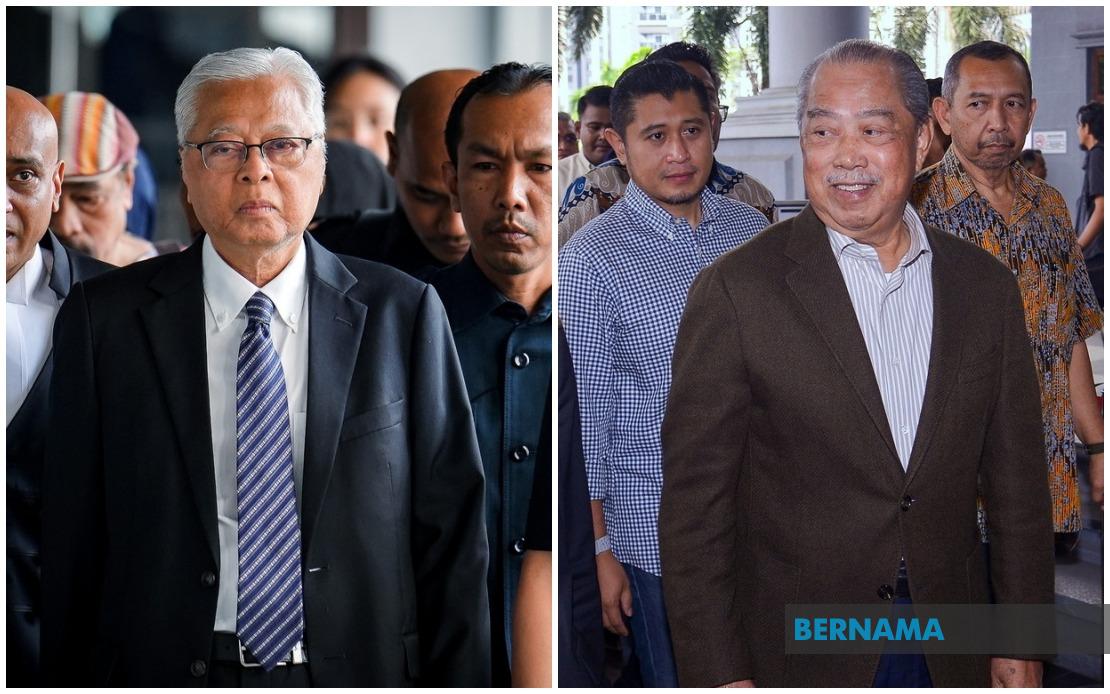
The Kuala Lumpur Court Complex became the focal point of Malaysian legal and political history on August 27 when three former prime ministers appeared before the judiciary on the same day for distinct proceedings, an occurrence that veteran journalists and court officials described as virtually unprecedented in the nation's modern record. The simultaneous presence of Datuk Seri Najib Tun Razak, Tan Sri Muhyiddin Yassin, and Datuk Seri Ismail Sabri Yaakob underscored both the intensity of Malaysia's recent political reckoning and the logistical complexities of managing high-profile cases involving figures who once occupied the nation's highest office.
Court reporter V. Anbalagan of Free Malaysia Today, reflecting on decades of covering judicial proceedings, offered his perspective on the singular nature of the event. He emphasized that witnessing three former premiers within the same court building simultaneously represented not merely a Malaysian anomaly but a global rarity, suggesting that such a convergence might never occur again in the foreseeable future. His comments resonated with the gravity journalists attached to the moment, treating it as a watershed in both Malaysian legal history and the nation's media narrative.
The preparation for managing this exceptional circumstance began the previous afternoon, with security officials coordinating extensively to accommodate the anticipated media frenzy and ensure the safety of those involved. Between three and six categories of security passes were distributed to different constituencies—members of the public, journalists attending open proceedings, and those accessing video-link facilities—each category calibrated to maintain order while preserving public access to justice. Police personnel from the Sentul district headquarters and court security officers collaborated with Palace of Justice police to establish a framework that would withstand the pressure of covering multiple high-profile cases simultaneously.
The court grounds began filling before dawn, with journalists assembling from approximately 7 am to secure vantage points and prepare their coverage. Siti Zanariah Nor Zin, a Bernama TV news officer with 16 years of experience, acknowledged the extraordinary nature of the assignment while noting that meticulous planning proved essential to executing coverage smoothly. She credited the staggered arrivals of the three former leaders and their legal teams for providing sufficient time to dispatch regular updates to headquarters, preventing the kind of chaotic reporting conditions that might otherwise have prevailed. The controlled perimeter also enabled media personnel to maintain visual contact with developments throughout the day.
The three separate proceedings reflected different dimensions of Malaysia's ongoing legal accountability processes. Najib appeared before Judicial Commissioner Mohamad Redzuan Idrus in connection with a USD5.64 billion civil suit initiated by 1Malaysia Development Berhad (1MDB) and its subsidiary, allegations stemming from events that reshaped Malaysian politics and international perceptions of the nation's governance. Muhyiddin faced a separate docket involving seven charges related to alleged abuse of power and money laundering connected to the Jana Wibawa programme, appearing before Judge Noor Ruwena Md Nurdin. Ismail Sabri, meanwhile, confronted charges of failing to declare assets totalling RM14.7 million in cash, multiple foreign currencies, and gold bars, with Judge Suzana Hussin presiding.
Amirul Aiman Osman, representing Utusan Malaysia, acknowledged the operational challenges posed by the convergence while praising the security apparatus for preventing disorder. Despite arriving before dawn to secure coverage positions, he noted that the atmosphere, though hectic and densely populated, remained orderly and incident-free throughout the proceedings. His account highlighted the professionalism of both security personnel and media practitioners in navigating circumstances that had no recent precedent in Malaysian journalism.
The security officer overseeing the operation, Nik Zainab Jusoh, emphasized the importance of the previous day's briefing in preparing personnel for the unprecedented turnout. She indicated that monitoring concentrated on upper-floor areas, particularly outside courtrooms where proceedings occurred, while ground-floor conditions remained stable. This strategic deployment reflected a sophisticated understanding of how media personnel and public observers would distribute themselves throughout the complex.
The implications of this convergence extend beyond the immediate spectacle of three former premiers appearing simultaneously before the courts. It represents, in miniature, the ongoing reckoning with Malaysia's political past—a period marked by significant governance challenges that led to criminal and civil allegations against multiple former leaders. The fact that three individuals who each held the highest executive office now face legal proceedings underscores the extent to which Malaysia's institutions have pursued accountability, a development that distinguishes the country's recent trajectory from many regional counterparts.
For Malaysian and Southeast Asian observers, the event carries additional significance regarding institutional independence and the rule of law. The judiciary's willingness to schedule and proceed with cases involving such prominent political figures simultaneously, despite obvious logistical and security complications, suggests a measure of institutional resilience and commitment to processing legal matters regardless of the political stature of those involved. This stands in contrast to scenarios in some neighboring jurisdictions where such cases might be deliberately sequenced or delayed to minimize political sensitivity.
The media's capacity to cover these proceedings also reflects Malaysia's relatively open information environment. Unlike systems where access to high-profile trials remains restricted or heavily controlled, Malaysian journalists maintained substantial freedom to document developments, interview participants, and provide real-time reporting to the public. The festive atmosphere among reporters, despite the early morning and crowded conditions, suggested genuine professional satisfaction in witnessing and chronicling an historical moment.
As Ismail Sabri departed the court complex at 11:43 am after posting RM300,000 bail with one surety, the immediate convergence drew toward its close, though the legal processes underlying each case would continue independently. Yet for journalists, security personnel, and court officials who participated in managing the unprecedented assembly, the day would likely remain memorable—a singular intersection of political history, institutional processes, and media documentation that illustrated both Malaysia's legal complexities and the nation's capacity to navigate extraordinary circumstances without compromising order or transparency.

