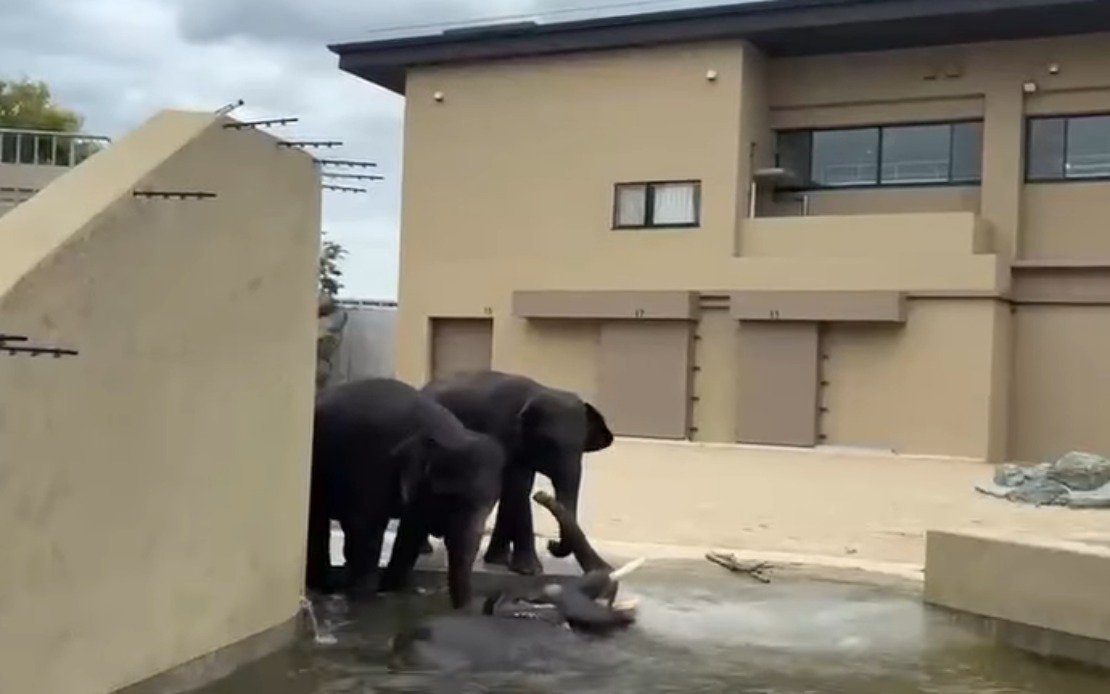
Three female elephants from Malaysia—Dara, Amoi and Kelat—are flourishing under the care of Tennoji Zoo in Japan, with recent health assessments revealing substantial weight gains and overall vitality. The Taiping Municipal Council has released the latest update on the animals, demonstrating that the international placement continues to meet conservation and welfare objectives. This development represents an encouraging chapter in Malaysia's broader engagement with international zoological institutions and wildlife management partnerships.
According to Mohamed Akmal Dahalan, president of the Taiping Municipal Council (MPT), the three elephants are registering consistent improvements in their physical condition. Kelat has achieved the most dramatic progress, gaining 260 kilogrammes since arrival, while Dara and Amoi have added 35kg and 30kg to their body weights respectively. These gains indicate that the animals are not merely surviving in their new environment but actively thriving under professional stewardship. The data suggests that the transition from their previous habitat has been successfully managed from a nutritional and physiological standpoint.
The nutritional regimen underpinning this success reflects careful species-specific planning. Tennoji Zoo's animal care team has developed a comprehensive diet that draws on scientific understanding of elephant dietary needs. The foundation comprises various grades of hay to supply essential fibre, supplemented by bamboo shoots, fresh grass and cabbage to provide variety and natural foraging stimulation. Specially formulated elephant pellets ensure that micronutrient and mineral requirements are precisely met. This multi-component approach demonstrates the sophistication required in maintaining megafauna in captive environments far from their native habitat, and underscores why international placements in accredited facilities represent a viable conservation strategy.
Monitoring and oversight of the elephants remains a shared responsibility conducted through established channels. The Taiping Municipal Council continues to collaborate closely with the Department of Wildlife and National Parks (Perhilitan) Peninsular Malaysia to track health metrics, verify welfare standards and ensure compliance with care protocols. This supervisory arrangement reflects Malaysia's commitment to maintaining accountability in international wildlife arrangements and provides domestic stakeholders with regular reassurance about the animals' treatment. Veterinary personnel embedded within Tennoji Zoo's operations assess the elephants' condition systematically, creating a transparent record of their welfare trajectory.
The placement itself operates under a formal bilateral agreement between Tennoji Zoo and Zoo Taiping & Night Safari, executed across two signing ceremonies in May and October 2022. The arrangement commits both institutions to a 25-year partnership, establishing a long-term framework for the elephants' management and the exchange of expertise between Malaysian and Japanese zoological professionals. Such extended commitments reflect confidence in the stability and credibility of the host institution, and provide continuity that benefits the animals themselves, who require consistency in their environment and caretaking routines.
The council has taken the opportunity to emphasise that this programme remains open to scrutiny and has explicitly pledged its cooperation with any review, investigation or information request from relevant authorities. This stance signals confidence in the arrangement's legitimacy and reflects broader Malaysian government commitments to transparency in international conservation endeavours. By inviting external verification rather than deflecting it, the council positions the elephant programme as an exemplar of accountable wildlife stewardship, distinguishing it from less transparent international placements that sometimes attract criticism.
Muhammad Akmal has also addressed the broader public discourse surrounding the elephants' relocation. He has acknowledged that citizens hold legitimate interests in the welfare of animals associated with Malaysia and that concerns warrant respectful consideration. However, he has simultaneously called for public discussions to be anchored in verified information and professional assessment rather than unsubstantiated claims. This framing reflects a tension common to wildlife diplomacy: how to accommodate public engagement while protecting institutional decision-making from being undermined by speculation or advocacy based on incomplete information.
The emphasis on factual grounding carries particular weight in the Malaysian context, where wildlife conservation initiatives have periodically become flashpoints for public debate. By stressing the importance of evidence-based discourse, the council is attempting to establish norms that preserve the viability of future international arrangements. If every cross-border animal placement becomes the subject of unverified allegations, the political cost of such programmes rises, potentially deterring institutions from engaging in them. This concern is not mere institutional self-protection; it reflects a genuine anxiety that misinformation might undermine Malaysia's capacity to participate in international wildlife networks that often prove beneficial for species management.
The Tennoji Zoo placement also carries diplomatic dimensions that extend beyond immediate animal welfare. Japan's willingness to accept and maintain three Malaysian elephants signals the strength of bilateral relations and Japan's recognition of Malaysia's legitimate interest in wildlife cooperation. For Malaysia, the arrangement demonstrates engagement with sophisticated global institutions and provides soft power returns through association with Japan's reputation for animal care excellence. These intangible benefits complement the direct conservation value of ensuring the elephants' wellbeing in a facility equipped with world-class resources.
Looking forward, the success of this programme may influence Malaysia's approach to future international animal placements and institutional partnerships. If the elephants continue to demonstrate the positive trajectory evident in current reports, the model could be replicated for other species or expanded to other Japanese facilities, deepening bilateral zoological cooperation. The programme thus functions simultaneously as animal welfare intervention, diplomatic gesture and potential template for future conservation initiatives, making its continued success important across multiple registers of Malaysian policy and international engagement.

