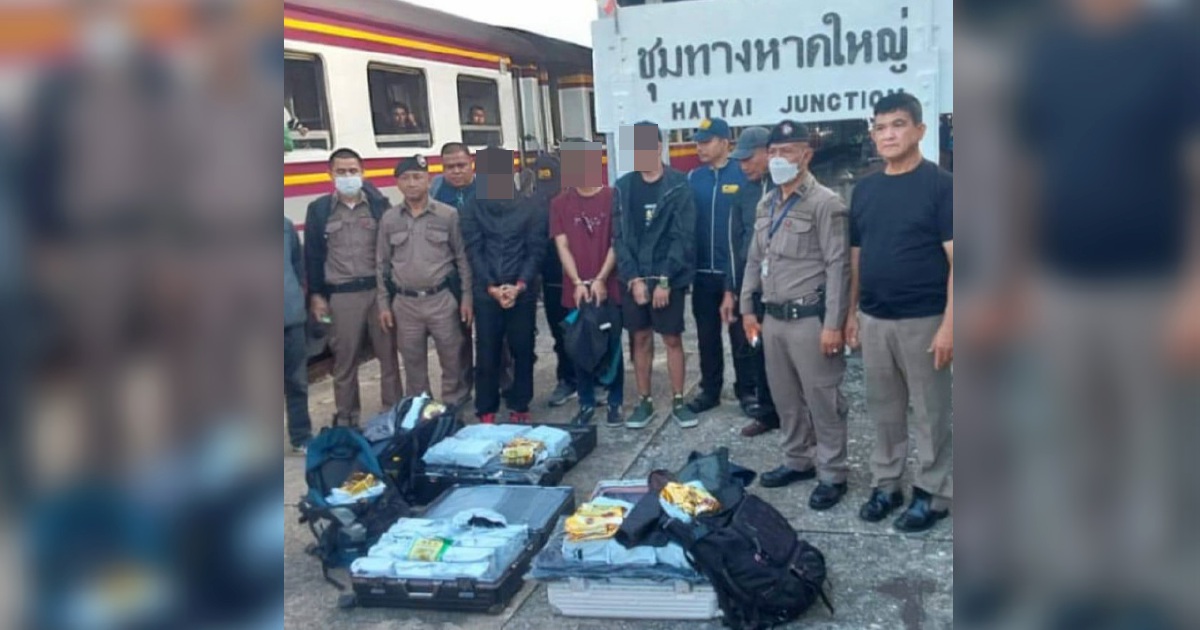
Three Malaysian nationals face serious drug trafficking charges after Thai authorities arrested them in Hat Yai with 87 kilograms of methamphetamine concealed in their luggage. The seizure, valued at approximately RM4.3 million, represents a significant interception of crystal methamphetamine destined for regional distribution networks. Police investigations suggest the trio were acting as human couriers transporting the illicit substance across the porous Thailand-Malaysia border, a well-established trafficking route that law enforcement agencies on both sides have struggled to contain.
The arrest underscores the persistent vulnerability of Malaysian nationals to involvement in transnational drug smuggling operations. Regional criminal syndicates actively recruit couriers from Malaysia and neighbouring countries, leveraging geographic proximity and relative ease of cross-border movement to expand their distribution reach. Individuals recruited for such operations typically receive modest financial compensation—often ranging from a few thousand to tens of thousands of ringgit—while shouldering enormous legal and personal risk. The disparity between the payment offered and potential prison sentences frequently goes unappreciated by individuals facing economic hardship or those manipulated through deception about the cargo's true nature.
The Hat Yai detention represents part of an ongoing pattern of transnational drug enforcement along Thailand's southern border regions. Thai authorities maintain enhanced security protocols at major transit points and borders, yet the sheer volume of cross-border traffic and the sophistication of smuggling techniques continue to challenge law enforcement capacity. Methamphetamine manufactured in clandestine laboratories across the Golden Triangle remains one of Asia's most prevalent illicit drugs, with Myanmar-based production facilities serving as primary supply sources for regional markets including Malaysia, Thailand, and beyond.
For Malaysia, such incidents carry particular implications regarding border security and the country's role within transnational criminal networks. The Royal Malaysian Police and Bukit Aman narcotics divisions regularly report seizures of crystal methamphetamine and ecstasy pills at entry points, though the scale of interdiction pales compared to estimated trafficking volumes. Neighbouring countries view Malaysia as both a transit nation and consumer market, making the country a strategic focal point for smuggling operations. Law enforcement coordination between Malaysian and Thai authorities has improved in recent years, yet information sharing and joint investigative frameworks remain areas requiring strengthening.
The three detainees now face prosecution under Thai drug laws, which impose severe penalties including lengthy imprisonment and potential capital punishment for large-scale trafficking offences. While Thai legislation distinguishes between trafficking, possession for personal use, and courier activities, individuals transporting 87 kilograms of methamphetamine occupy a serious category within the judicial spectrum. Thai courts have demonstrated consistency in imposing substantial sentences for comparable cases, typically ranging from 15 to 25 years imprisonment depending on aggravating factors, prior criminal history, and judicial discretion.
Myalaysian diplomatic missions in Bangkok have been notified of the arrests and are expected to provide consular assistance to the detained nationals. The Foreign Ministry typically facilitates communication between detainees and their families whilst Malaysian legal advisors monitor proceedings to ensure adherence to international legal standards. However, Malaysian citizens convicted of drug offences abroad have limited recourse to executive clemency or sentence reduction, remaining subject entirely to Thai judicial processes. Families of the detainees face extended periods of uncertainty regarding trial outcomes and potential sentencing timelines.
The seizure value of RM4.3 million reflects current wholesale pricing for crystal methamphetamine in Southeast Asian markets, though street-level retail values would be substantially higher depending on dilution and final distribution points. Disrupting such large shipments creates temporary supply disruptions within regional distribution networks, yet demand persistence typically prompts rapid replacement through alternate trafficking routes and suppliers. Law enforcement analysts suggest that each significant seizure represents merely a fraction of total throughput, with intelligence estimates suggesting that interdicted amounts constitute perhaps 5 to 15 percent of total trafficking volumes depending on the substance and region.
This incident provides renewed impetus for Malaysia to strengthen border infrastructure, enhance intelligence sharing mechanisms, and expand community education regarding drug trafficking recruitment tactics. Young Malaysians require greater awareness of how criminal networks identify and approach potential couriers, particularly through social media platforms and within vulnerable economic communities. Preventive strategies targeting supply-side disruption must complement enforcement activities, though such approaches require sustained international cooperation and resource investment that regional governments have struggled to prioritise consistently.
The broader context reveals that transnational drug trafficking represents an increasingly sophisticated enterprise with multinational operational capabilities. Criminal organisations employ diversified transportation methods, multiple courier networks, and financial systems designed to insulate upper-level management from direct law enforcement exposure. Individual couriers occupy the most vulnerable tier, bearing maximum criminal liability while receiving minimal financial benefit. Addressing root causes—economic desperation, limited employment opportunities, and demand for narcotics in consuming markets—requires comprehensive policy approaches extending beyond conventional law enforcement responses alone.

