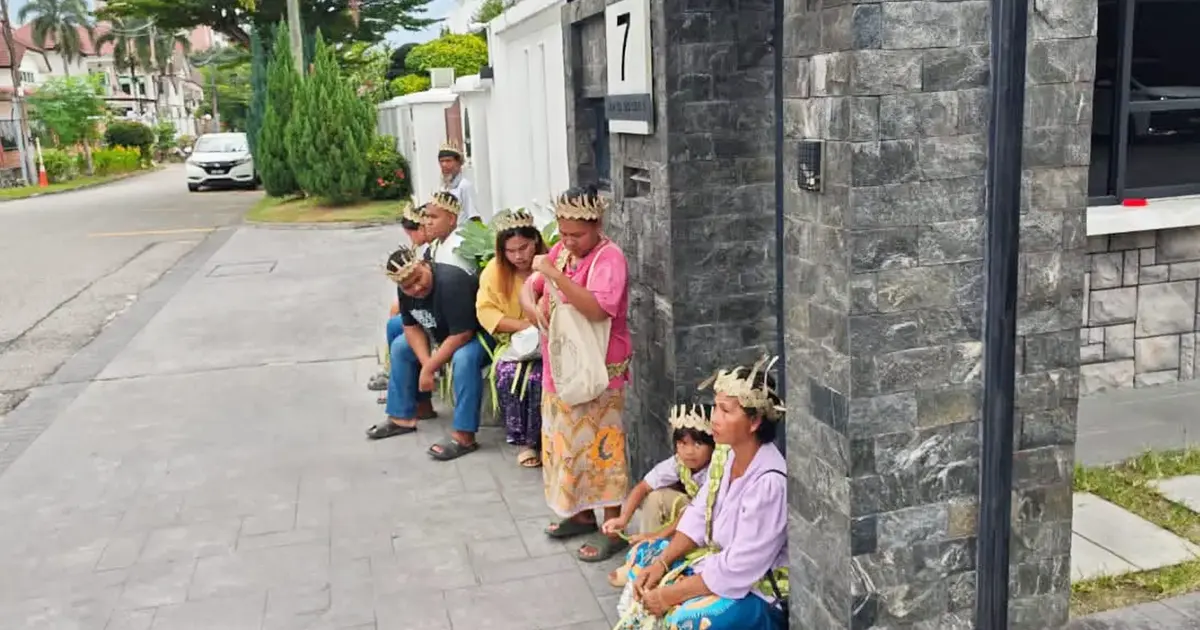
Prime Minister Anwar Ibrahim has confirmed that three Orang Asli individuals held in connection with a land dispute in Pahang have been released, marking a potential de-escalation in a case that had drawn attention to the ongoing tensions between indigenous communities and land governance in Malaysia.
The detained individuals had been held as part of a broader dispute over land rights in the state, an issue that frequently emerges as a flashpoint in Malaysia's federal system where land administration remains constitutionally vested in state authorities rather than the federal government. Anwar's announcement of their release comes after the matter gained public attention, underscoring the political sensitivity surrounding indigenous land claims in the country.
While welcoming the release, the Prime Minister acknowledged the structural limitations of federal intervention in land matters. He indicated that the issue would be escalated to the Pahang state government for further resolution, reflecting the constitutional framework in which land affairs and their administration fall squarely within state jurisdiction. This delegation of responsibility highlights a recurring challenge in Malaysian governance where federal-level pressure on indigenous rights issues must ultimately work through state-level mechanisms.
The Orang Asli, Malaysia's indigenous population with distinct cultural and social identities, have long faced challenges in asserting and protecting their customary land rights against competing development interests and state land policies. These communities are concentrated in Peninsular Malaysia, with significant populations in states including Pahang, Perak, and Selangor. Land disputes involving Orang Asli frequently arise when state governments allocate or commercialise land that communities claim as ancestral territory under customary tenure systems that the law does not always recognise or protect.
The detention of the three individuals, likely related to their assertion of land rights or resistance to displacement, reflects the sometimes-aggressive enforcement approaches taken by state authorities when land disputes escalate. Such detentions have previously drawn criticism from human rights organisations and indigenous advocacy groups, which argue that criminalising Orang Asli land resistance effectively denies them meaningful avenues to protect their interests within the formal legal system.
Anwar's intervention and the subsequent release signal a willingness at the federal executive level to engage with indigenous concerns, though the actual resolution of underlying land disputes will depend on the Pahang government's responsiveness. The state government's approach to such matters varies, with some states showing greater willingness than others to recognise customary Orang Asli claims or negotiate settlements. Pahang, the largest state by area and home to significant Orang Asli populations, has been a focal point for such tensions in recent years.
The case also illustrates broader questions about how Malaysia's federal system addresses minority rights when those rights conflict with state revenue interests or development priorities. Since land remains a critical source of state government revenue through alienation and development permits, there is often institutional resistance to recognising claims that would restrict a state's capacity to commercialise land. Federal statements expressing concern or commitment to indigenous rights, while important symbolically, face practical limits when implementation depends on state-level cooperation and political will.
For the three detainees themselves, their release represents immediate relief from custody, though their underlying dispute with authorities over land remains unresolved. The announcement offers no details on whether their release came with conditions, whether charges were withdrawn entirely, or what mechanism might be established to address their actual land claims. These details matter significantly for assessing whether the federal intervention produces substantive protection for Orang Asli land rights or merely removes individuals from detention while leaving the fundamental dispute intact.
The incident adds to a growing portfolio of cases in which Orang Asli land activism has resulted in detention or legal jeopardy for community members. Indigenous groups and civil society organisations have documented numerous instances where Orang Asli attempting to prevent logging, agricultural development, or state land registration on their traditional territories have faced police action or prosecution. These patterns suggest that despite federal expressions of concern, the legal and enforcement environment remains challenging for indigenous land advocates.
Moving forward, how the Pahang government responds to federal engagement on this matter will be instructive. The state's willingness to negotiate, recognise customary claims, or provide alternative solutions will indicate whether this case becomes a precedent for improved federal-state collaboration on indigenous rights or remains an isolated intervention that leaves systemic issues unaddressed. For Malaysian Orang Asli communities across the peninsula, the outcome carries implications beyond this single dispute, potentially signalling either greater federal protection or a reaffirmation that land governance remains fundamentally a state prerogative where indigenous interests carry limited institutional weight.

