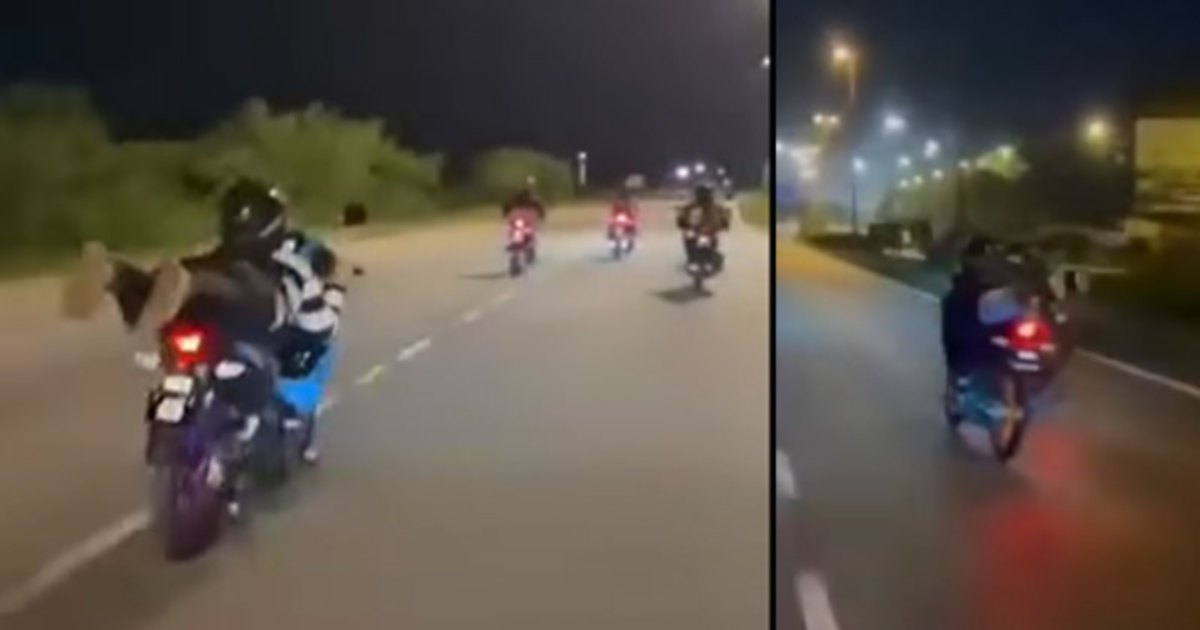
Three teenage girls have been detained by authorities in Kuantan following their involvement in a viral stunt that saw them performing acrobatic 'Superman' manoeuvres while riding motorcycles along the busy Kuantan Bypass-Gebeng road. The arrests come after video footage of the teenagers executing the risky tricks gained widespread traction on social media platforms last week, prompting concerned members of the public to report the incident to police.
The 'Superman' motorcycle stunt, where riders perform flying-style body positions while their hands leave the handlebars, represents one of the most dangerous forms of motorcycle showboating that has proliferated across Southeast Asia in recent years. What began as underground motorcycle culture has increasingly migrated to public highways, creating genuine hazards not only for the performers themselves but also for innocent motorists sharing the same roads. The stunt demands a combination of speed, balance, and physical control that far exceeds the capabilities of most riders, let alone teenagers who may lack sufficient riding experience and road awareness.
The incident unfolded on Jalan Kuantan Bypass-Gebeng, a major arterial road that experiences considerable traffic volume throughout the day. This particular highway serves as a critical transport corridor connecting different parts of Pahang and facilitating regional commerce, making it an especially dangerous location for such reckless behaviour. The decision by the teenagers to perform these stunts on such a prominent and busy route rather than in a controlled environment suggests either a deliberate intent to gain maximum visibility for social media purposes or a alarming degree of disregard for public safety protocols.
The role of social media in amplifying and encouraging such behaviour cannot be overlooked. Video platforms have created powerful incentive structures where dangerous stunts attract engagement through likes, shares, and comments, effectively rewarding risky behaviour with digital currency in the form of online attention. For teenagers navigating questions of identity and social status, such platforms offer tantalizing opportunities to achieve instant celebrity and peer recognition. Unfortunately, the algorithmic nature of these platforms means that the most shocking and dangerous content often spreads fastest, creating a feedback loop that incentivizes increasingly extreme behaviour.
Police involvement in the case signals a broader effort by enforcement authorities to combat what has become a recognizable trend of stunt-riding across Malaysian highways. The detention of these three girls sends a clear message that such activity will not be tolerated, particularly when it takes place on public roads where innocent civilians are at risk. The authorities must balance enforcement with education, as younger riders may not fully comprehend the fatal consequences that can result from momentary loss of control at high speeds.
The medical and emergency response implications are substantial. Motorcycle accidents involving stunt-riding typically result in severe injuries or fatalities because the riders have deliberately compromised their ability to react to unexpected obstacles, road conditions, or other vehicles. Emergency services in Kuantan and across Malaysia have resources already stretched thin; preventable accidents of this nature place unnecessary burden on hospitals and trauma centres. Moreover, bystanders or other motorists can become collateral casualties through no fault of their own.
The case reflects broader concerns within Malaysian society about youth risk-taking behaviour and the intersection of technology, social media, and decision-making among teenagers. Parents, educators, and community leaders have expressed growing alarm at the apparent willingness of young people to expose themselves to life-altering injuries or death in pursuit of online validation. School authorities and social organizations have begun incorporating digital literacy and road safety awareness into their programmes, recognizing that traditional approaches to safety education must evolve to address modern technological influences.
The arrest of these teenagers provides an opportunity for their families and communities to reflect on the pressures facing adolescents today. Peer influence, combined with the gamified nature of social media engagement, creates powerful psychological incentives to participate in risky behaviour. Understanding these underlying motivations is crucial for developing effective intervention strategies that go beyond simple punishment and address the root causes driving teenagers toward such dangerous activities.
Moving forward, sustained efforts from multiple stakeholders will be necessary to reduce such incidents. Police enforcement must continue, but equally important are public awareness campaigns, school-based education about consequences, and perhaps interventions from social media platforms themselves to reduce algorithmic amplification of dangerous content. Parents and guardians need to maintain open conversations with young people about the real-world risks attached to viral trends, particularly those involving motor vehicles on public roads. The Kuantan incident serves as a sobering reminder that social media fame carries genuine physical costs that cannot be edited, deleted, or undone.

