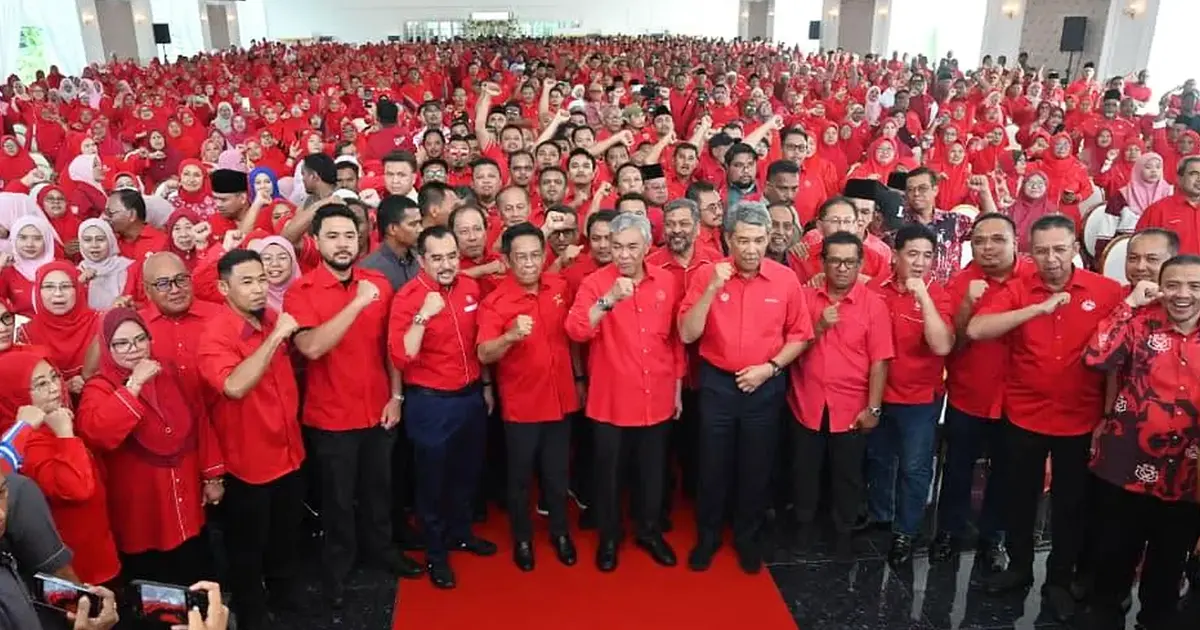
Barisan Nasional's hierarchical approach to the Negeri Sembilan state election is taking clearer shape, with Ahmad Zahid Hamidi, the coalition's national chairman, delegating the sensitive task of candidate selection directly to the state-level BN apparatus. This move reflects a strategic decentralisation of decision-making in a state where coalition dynamics have grown increasingly complex, particularly given the need to balance competing interests between BN's component parties and regional power brokers. By entrusting these matters to Negeri Sembilan's BN chief, Zahid has signalled the national party's confidence in the state leadership whilst simultaneously sidestepping potential controversies that often accompany top-down candidate imposition.
The Negeri Sembilan BN chief, commonly referred to as Tok Mat in political circles, inherits considerable responsibility in orchestrating what promises to be a delicate balancing act. Candidate selection in Malaysian state elections has historically been a flashpoint within multi-party coalitions, where each component party lobbies fiercely for favourable seat allocations and prominent positions. In Negeri Sembilan, where UMNO, MCA, and MIC maintain varying degrees of influence, such negotiations require deft political management and an understanding of local power dynamics that extend beyond the national party structure.
This delegation of authority also carries implications for how Zahid's leadership is perceived within the broader BN ecosystem. By stepping back from direct involvement in Negeri Sembilan's candidate discussions, the national chairman avoids appearing overbearing or dismissive of state-level stakeholders. Conversely, this approach allows state leaders to demonstrate their organisational competence and ability to manage internal party politics—a valuable credential in Malaysia's federal system where state governments retain significant autonomy and prestige. For Tok Mat specifically, the opportunity to shepherd the selection process represents a chance to cement his authority within Negeri Sembilan's political establishment.
The timing of this announcement is strategically significant. Negeri Sembilan has not held state elections since 2018, and the political landscape has shifted considerably since then. National developments, including leadership changes within BN component parties and the evolving relationship between UMNO and its coalition partners, necessarily influence how state-level negotiations will unfold. By making clear that seat talks and candidate selection rest with the state command, Zahid effectively insulates the national party apparatus from internal disputes that might otherwise escalate and embarrass the coalition at the federal level.
From a Southeast Asian perspective, Malaysia's coalition politics offers a study in how multi-ethnic democracies manage power-sharing arrangements. The BN model, whilst sometimes criticised for opacity, has endured through mechanisms like the state-level delegation witnessed here. By allowing regional strongmen like Tok Mat to exercise agency in candidate selection, the coalition maintains buy-in from diverse constituencies and prevents the concentration of power that might otherwise destabilise the broader alliance. This distributes both authority and accountability in ways that reflect Malaysia's constitutional federal framework.
For Negeri Sembilan voters, this arrangement carries practical consequences. The candidates selected and promoted through Tok Mat's process will determine the choice available at the ballot box and, ultimately, the composition of the state assembly. The decentralisation of selection authority theoretically allows for greater attention to local issues and preferences, though it also creates opportunities for patronage and factional manoeuvring to influence outcomes. Understanding that the process is deliberately delegated to state actors rather than centrally directed helps voters contextualise how and why certain candidates emerge as official coalition representatives.
The broader coalition dynamics also merit attention. MCA and MIC, as BN component parties with historical stakes in Negeri Sembilan, will undoubtedly assert their positions during seat negotiations led by Tok Mat. How these discussions unfold will reflect not only the current balance of power within BN but also the parties' respective health and ability to deliver votes. Recent electoral trends have shown varying fortunes for BN's component parties, and negotiations in Negeri Sembilan will likely showcase these shifting dynamics in microcosm.
Zahid's decision to step back from direct involvement also suggests a pragmatic assessment of BN's electoral prospects. Rather than centralising decision-making in a way that might invite criticism of authoritarianism or create perceptions of arbitrary choices, the national chairman has opted for a more consultative, distributed model. This approach accommodates the reality that elections in Malaysia are won or lost at state and constituency levels, where local knowledge, community relationships, and ground networks matter enormously. Tok Mat's proximity to these factors makes him better positioned than any national office to make informed decisions.
Looking forward, the success of this delegation approach will depend substantially on Tok Mat's political acumen and his ability to navigate the competing interests of BN's component parties whilst building consensus around candidate selections. If the process produces a slate of candidates perceived as credible and representative across the coalition, BN's prospects in Negeri Sembilan will be enhanced. Conversely, if contentious disputes emerge or if any party feels sidelined, the delegation model could unravel, creating pressure for national-level intervention.
The Negeri Sembilan situation also underscores the ongoing significance of state-level politics in Malaysia. Whilst national narratives often dominate media coverage and political analysis, state elections remain crucibles where coalition dynamics are tested and refined. The outcome in Negeri Sembilan will contribute to broader assessments of BN's electoral strength heading into potential federal elections, making the candidate selection process far more consequential than administrative detail alone would suggest. Tok Mat's stewardship of this process, therefore, carries weight that extends well beyond the state's boundaries.

