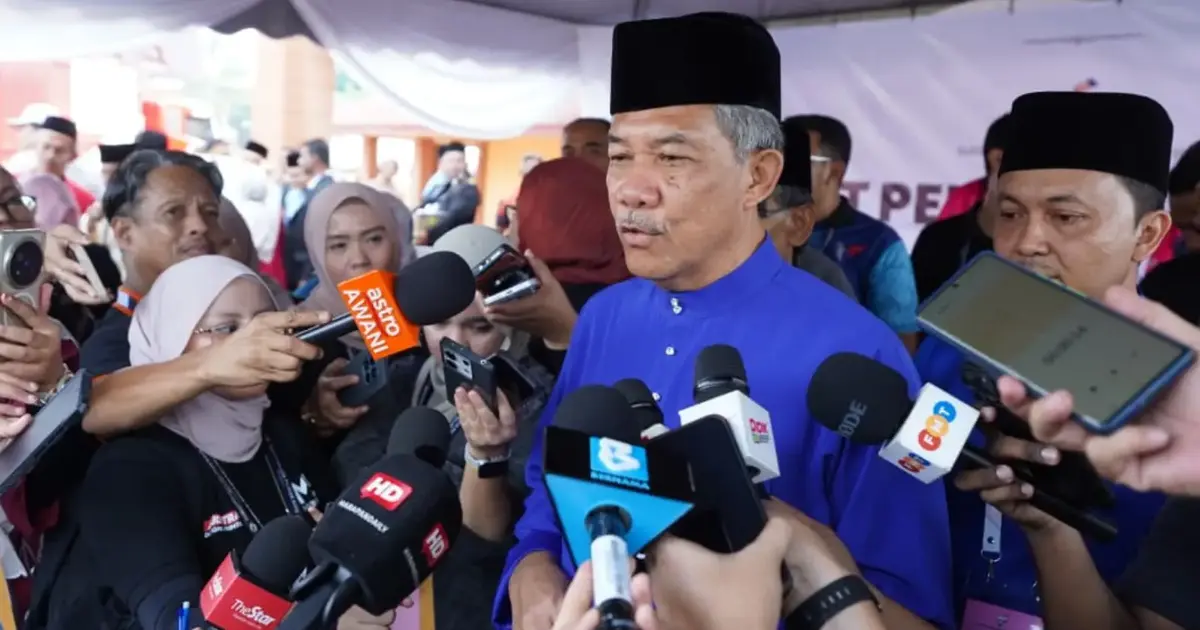
Mohamad Hasan, the Menteri Besar of Negeri Sembilan, has issued a direct appeal to Barisan Nasional candidates to refrain from using adat—the state's customary institutions and traditions—as a campaign tool during the upcoming electoral contest. The senior political figure expressed concern that incorporating matters tied to Negeri Sembilan's adat framework into campaign messaging risks deepening existing social rifts within communities across the state.
The warning reflects growing sensitivity around how Malaysia's traditional institutions, particularly those governing succession and royal protocol in individual states, intersect with contemporary electoral politics. Adat in Negeri Sembilan carries significant cultural and constitutional weight, with the state's unique matrilineal inheritance system distinguishing it from most other Malaysian states. This system, whereby property and titles pass through female lineage, remains a defining feature of Negeri Sembilan's social structure and identity.
Tok Mat's intervention signals internal coalition concerns about how far campaign rhetoric should extend when touching on matters traditionally considered beyond the scope of partisan contestation. His message appears calibrated to prevent candidates within the BN machinery from exploiting adat-related grievances or controversies to mobilise votes, a tactic that could backfire by alienating different demographic segments or drawing criticism from custodians of these institutions.
The Menteri Besar's position underscores a broader Malaysian political principle: that certain institutions—including royal houses, religious establishments, and customary frameworks—occupy protected spaces within the political ecosystem. Violating these boundaries, even incrementally through campaign language, can trigger backlash from both community leaders and state authorities tasked with preserving institutional integrity.
In Negeri Sembilan specifically, adat disputes have occasionally surfaced in recent years, touching on land rights, succession protocols, and the balance between modern governance and traditional practice. By instructing BN candidates to leave these matters off the campaign agenda, Tok Mat appears intent on preventing electoral cycles from becoming vectors through which dormant tensions resurface or become exploited for short-term political advantage.
The admonition also reflects practical campaign management. Campaigns that veer into adat territory risk alienating traditional custodians—clan leaders, community elders, and palace advisors—whose informal influence and moral authority can significantly impact grassroots mobilisation. These figures typically operate outside formal party structures and may withdraw cooperation or tacitly support opposition candidates if they perceive partisan actors disrespecting customary institutions.
For candidates operating under the BN banner, the guidance establishes clear parameters: electoral competition should centre on conventional policy platforms, economic management, and service delivery records rather than matters embedded in Negeri Sembilan's cultural and constitutional fabric. This approach aligns BN's campaign strategy with a more cautious, institutionally-respectful posture—potentially contrasting with opposition parties that might attempt to weaponise adat grievances.
The timing of Tok Mat's statement carries significance given Malaysia's fragmented political landscape and the competitive pressures facing coalitions at state level. Negeri Sembilan has witnessed oscillating electoral fortunes, with BN needing to consolidate its position through disciplined, focused campaigning rather than controversial forays into sensitive terrain. A disciplined campaign that avoids adat complications also reduces ammunition available to opposition challengers seeking to portray BN as disrespectful toward community institutions.
Moreover, Tok Mat's intervention reflects awareness that adat matters possess mobilising potential cutting across conventional political divides. Rural constituencies in Negeri Sembilan where adat traditions retain strongest cultural resonance could become battlegrounds if candidates recklessly invoked customary grievances. By preemptively restricting such tactics within his own coalition, the Menteri Besar attempts to prevent a race to the bottom where adat becomes another exploitable campaign asset.
The broader context involves Malaysia's ongoing negotiation between modernising impulses and institutional conservation. As urbanisation and social change accelerate, customary systems face pressures to adapt or justify their relevance. Yet Malaysian political culture generally discourages treating such institutional evolution as fodder for electoral competition, preferring instead that adjustments occur through quieter deliberation among relevant stakeholders—palace officials, community leaders, civil society, and government bodies.
Tok Mat's directive essentially asks BN candidates to respect this convention, recognising that short-term electoral gains from adat-baiting would prove offset by longer-term institutional damage and community alienation. This represents a strategic calculation that disciplined, issue-focused campaigning ultimately serves BN's interests better than tactics risking backlash from powerful informal authorities whose cooperation shapes electoral outcomes.
For Malaysian political observers, the statement illustrates how state-level politics continues wrestling with questions about where electoral contestation appropriately begins and ends. While campaign seasons naturally intensify rhetorical temperature, certain boundaries—in this case, adat institutions—remain generally recognised as zones requiring protection from partisan manipulation. Tok Mat's warning to his own coalition's candidates reflects this understanding and seeks to maintain it amid contemporary electoral pressures.

