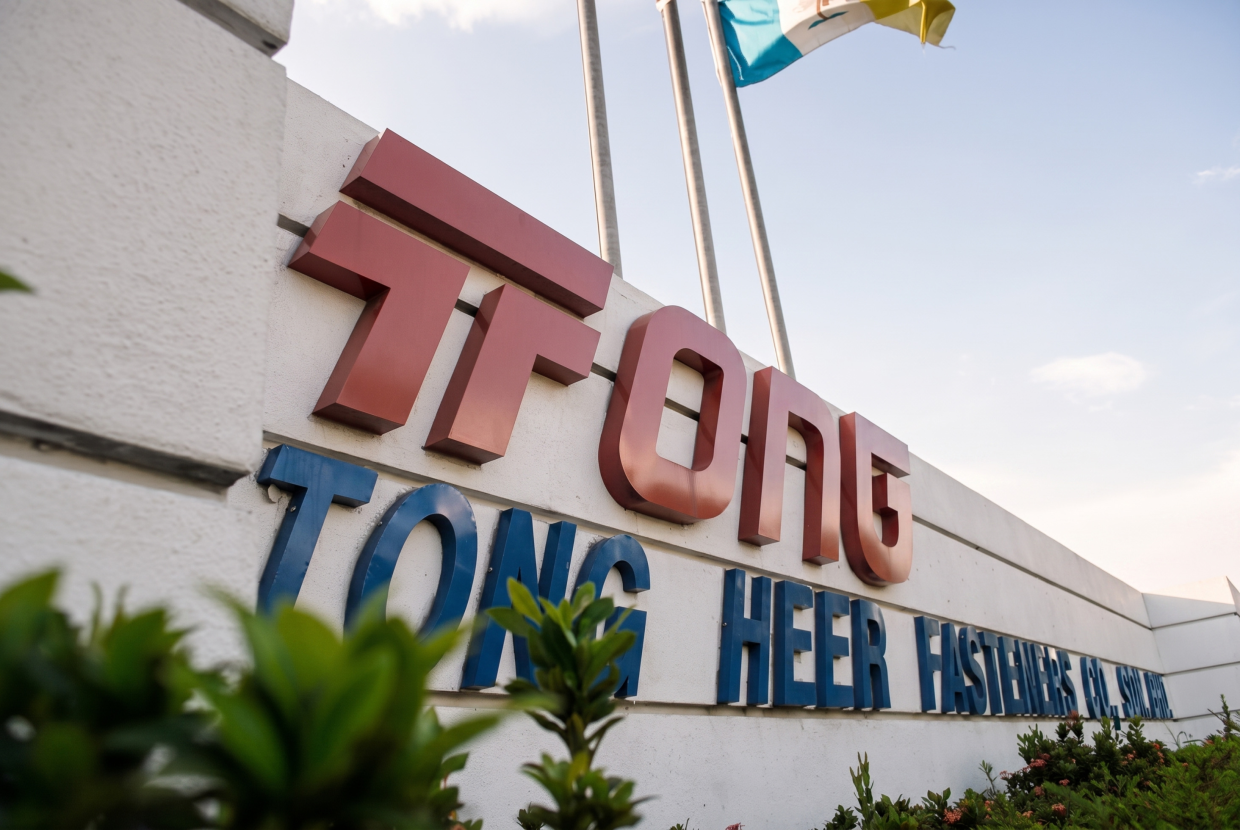
Major shareholders of Tong Herr have tabled a proposal to privatise the stainless steel fastener and aluminium extrusion manufacturer, offering RM2.55 per share in a move that would delist the company from Bursa Malaysia's Main Market. The offer represents a significant financial incentive to remaining shareholders, pricing the deal at a 34.2% premium above the company's last closing price of RM1.90, according to filings submitted to the exchange.
The privatisation initiative comes from Allrich Corp and Richard Holdings Ltd, the two dominant shareholders who collectively command substantial influence over Tong Herr's future direction. Allrich holds 39.68% of the company while Richard Holdings owns 31.95%, figures that underscore their combined control over major corporate decisions. When accounting for their respective joint ultimate offerors and persons acting in concert—market terminology for coordinated shareholder groups—these entities collectively hold 114.38 million shares, representing approximately 74.5% of Tong Herr's total issued capital. This commanding shareholding position significantly streamlines the path toward achieving the approval thresholds required for such a transaction.
The proposed mechanism for executing this privatisation involves a selective capital reduction and repayment exercise, a structured financial manoeuvre that allows controlling shareholders to compress the company's public ownership footprint. Under this framework, the RM2.55 valuation has been carefully calibrated based on Tong Herr's closing price and volume-weighted average price calculations extending through August 5, 2026, yielding a 41.7% premium relative to the company's closing price of RM1.80 on that specific date. The use of VWAP methodologies reflects an attempt to establish a pricing mechanism grounded in genuine market activity rather than arbitrary valuations, though critics of such transactions often question whether extended lookback periods adequately represent current market sentiment.
The joint offerors have explicitly signalled their intention to withdraw Tong Herr from public market listing once the transaction concludes, committing to formally petition Bursa Securities to effect delisting and strip the company of its listed status. This represents an irreversible transformation in Tong Herr's corporate structure and investor accessibility. The strategic rationale presented by the controlling shareholders emphasises the operational constraints imposed by maintaining public company status. They argue that privatisation would liberate Tong Herr from the administrative burdens, compliance costs, and management attention required to service equity market obligations, thereby permitting the company to concentrate exclusively on growth initiatives and the methodical construction of long-term shareholder value creation strategies without the distraction of quarterly reporting cycles and investor relations obligations.
A particularly compelling argument advanced by the offerors concerns Tong Herr's conspicuous lack of trading dynamism on the secondary market. The company recorded an average daily trading volume of merely 21,075 shares across the three-year period preceding the announcement, translating to just 0.05% of the company's free-floating shareholding. This extraordinarily low liquidity represents a critical market dysfunction—while equity capital theoretically enables investors to exit positions, minimal trading activity renders such exit mechanisms practically illusory for most shareholders. For minority investors, this illiquidity creates a genuine problem: their ownership stake becomes increasingly difficult to monetise at reasonable valuations. By offering an immediate, definitive cash exit at a premium valuation, the selective capital reduction addresses this market failure directly, providing a structured pathway for non-controlling shareholders to liquidate their holdings under transparent, regulated terms.
The transaction structure carries specific governance and voting requirements designed to protect minority shareholder interests, a safeguard that reflects Malaysian securities regulation's balanced approach to controlling shareholder transactions. Approval hinges upon a special resolution vote at an extraordinary general meeting, requiring endorsement from at least a simple majority of non-interested shareholders by headcount and three-quarters support measured by share value. Additionally, the proposal must not attract opposition exceeding 10% in value from the overall non-interested shareholder base—a blocking mechanism that effectively grants veto power to dispersed minority holders if they achieve sufficient collective coordination. These graduated thresholds create meaningful friction in the approval process, ensuring that the transaction cannot proceed over substantial minority objection.
Tong Herr's non-interested directors—those lacking personal financial stakes in the outcome—bear responsibility for evaluating this proposal against the company's broader interests and stakeholder welfare. Their deliberation will determine whether they endorse the transaction, recommend rejection, or propose counterarguments to present to the broader shareholder body. The independent directors' analytical framework typically examines whether the offered price adequately compensates minorities for surrendered future growth opportunities and whether the company might better serve shareholder interests by remaining listed. This assessment proves particularly relevant for a manufacturing enterprise engaged in export-oriented production of stainless steel fasteners and aluminium extrusions, sectors where operational flexibility and capital deployment decisions substantially influence competitive positioning and profitability trajectories.
From a broader market perspective, the Tong Herr privatisation proposal reflects a widening trend among Malaysian-listed companies wherein controlling shareholders increasingly view public market status as an operational impediment rather than a strategic advantage. The proliferation of such transactions signals investor confidence that private ownership structures, freed from quarterly earnings pressures and equity market volatility, enable more sophisticated long-term wealth creation strategies. However, these developments also underscore concerns among minority shareholders regarding value capture—whether controlling groups strategically undervalue minority interests when transitioning to private ownership, and whether the securities regulatory framework adequately protects dispersed equity holders from such value extraction.
For Malaysian investors and market observers, the Tong Herr case offers instructive insights into contemporary capital markets dynamics and the persistent tension between liquidity provision and operational efficiency in public equity structures. The selective capital reduction mechanism itself represents a sophisticated financial engineering approach, increasingly deployed to address the fundamental incompatibility between minority protection requirements and controlling shareholder desires for operational autonomy. The transaction's success or failure may influence whether comparable privatisation initiatives proceed among other Malaysian-listed enterprises with similarly concentrated ownership structures and marginal trading volumes, potentially reshaping the character of Malaysia's public equity ecosystem.

