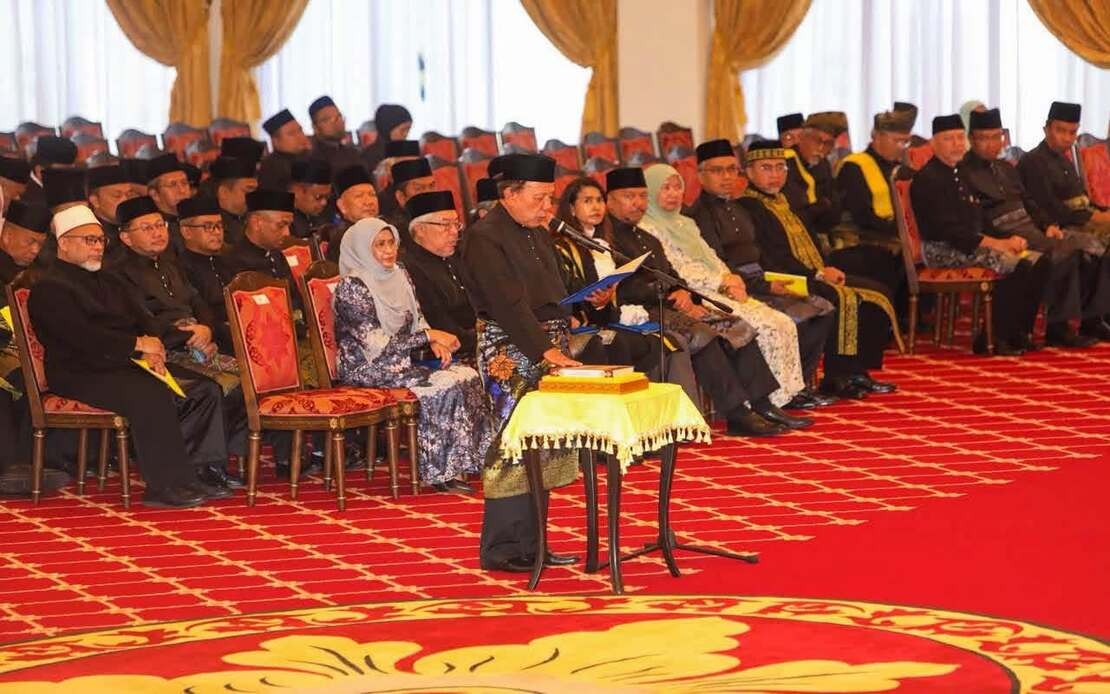
The top echelons of Malaysia's federal government have rallied behind Datuk Ismail Lasim's appointment as Negeri Sembilan Menteri Besar, with Deputy Prime Minister Datuk Seri Dr Ahmad Zahid Hamidi leading a chorus of congratulations from cabinet colleagues. The endorsement signals strong backing from Kuala Lumpur for the 67-year-old assemblyman's transition to leading the central Malaysian state, a pivotal role in the country's administrative hierarchy and political landscape.
Ahmad Zahid, who also oversees the Rural and Regional Development portfolio, conveyed his wishes through social media, emphasising that Ismail's elevation represents a significant trust that comes with weighty responsibilities. The Deputy Prime Minister expressed optimism that the new Menteri Besar would discharge his duties with dedication to benefit both the people and advancement of Negeri Sembilan as a whole. His message underscored a vision of collective effort, suggesting that federal and state leadership would collaborate to enhance the state's standing and prosperity.
Defence Minister Datuk Seri Mohamed Khaled Nordin similarly extended his blessings, framing the appointment within the broader context of ensuring continuity in governance and development initiatives. Khaled characterised the mantle assumed by Ismail as demanding prudence and stewardship, particularly in maintaining the stability that Negeri Sembilan has cultivated. His remarks reflected hopes that the incoming administration would sustain the momentum of economic and social progress while fostering shared prosperity across the state's diverse communities.
Plantation and Commodities Minister Datuk Seri Dr Noraini Ahmad added her voice to the congratulations, describing Ismail's appointment as a transformative moment for Negeri Sembilan's trajectory. Noraini characterised the transition as opening a fresh chapter in the state's governance and development narrative. Her message, delivered via Facebook, invoked spiritual blessings and sought divine guidance for Ismail's tenure, reflecting the deeply intertwined nature of Islamic values within Malaysia's political culture and public discourse.
Ismail was formally sworn in before Tuanku Muhriz Tuanku Munawir, the Yang Dipertuan Besar of Negeri Sembilan, in a ceremony held at the Balairong Seri of Istana Besar Seri Menanti. This ceremonial endorsement by the state's constitutional monarch underscores the legitimacy and traditional authority underpinning his new position within Negeri Sembilan's governance structure. The formal investiture marks the official commencement of his leadership responsibilities for the state.
Ismail brings substantial experience to the post, having dedicated nearly three decades to Negeri Sembilan politics. His political journey commenced in 1999 when he was first elected as a state assemblyman representing Juasseh, establishing the foundation for his long career in public service. This extended tenure demonstrates his deep roots within the state's political machinery and his familiarity with its constituencies, challenges, and development priorities.
Previously, Ismail served in the Negeri Sembilan state executive council beginning in 2004, maintaining that position across three consecutive administrative terms until 2018. Throughout his tenure in state government, he held responsibility for the education portfolio, positioning himself at the forefront of human capital development initiatives. His involvement in formulating and implementing education policies would have exposed him to the intricacies of managing the state's academic institutions, teacher welfare, student development programmes, and educational infrastructure expansion.
His background in education-related administration provides particular relevance given that Malaysian states increasingly grapple with balancing federal education policies with local development needs and community expectations. The experience suggests Ismail understands the nuances of managing stakeholder interests across schools, parents, educators, and business communities dependent on workforce quality. Such insights could prove valuable as he navigates the broader development agenda facing Negeri Sembilan.
The appointment of Ismail comes amid broader political realignments within Malaysian state governments, where leadership transitions often trigger careful recalibration of federal-state relations and resource allocation priorities. Negeri Sembilan's position as a centrally located state with significant economic contributions to the national economy makes its governance particularly consequential for broader Malaysian development trajectories. The ministerial endorsements suggest the federal government has confidence in maintaining cooperative relations under Ismail's stewardship.
For Malaysian political observers and Southeast Asian analysts monitoring governance developments, Ismail's appointment illustrates the continuing importance of seniority and parliamentary experience within Malaysia's political promotion pathways. His rise through electoral ranks and executive council service reflects the institutional norms through which political careers typically advance in the country's system. The cabinet ministers' public affirmations suggest expectations of stability and continuity rather than dramatic policy departures.
The congratulatory messages also highlight the ceremonial and symbolic dimensions of Malaysian political leadership, whereby federal-level figures formally acknowledge and legitimise state-level transitions. Such public endorsements serve multiple purposes: they reassure the public and business communities of governmental continuity, signal federal support for the new administration, and reinforce hierarchical relationships within Malaysia's federal system. The timing and content of these messages reflect calculated political communications designed to project unity.
Looking ahead, Ismail's tenure will be shaped by how effectively he navigates the complex interplay between state autonomy and federal directives, particularly regarding development projects, budget allocation, and policy implementation. His education background and experience in executive governance suggest preparation for these multifaceted challenges. The strong backing from senior federal ministers indicates that his administration can expect cooperative engagement from key government departments and ministries based in Kuala Lumpur.

