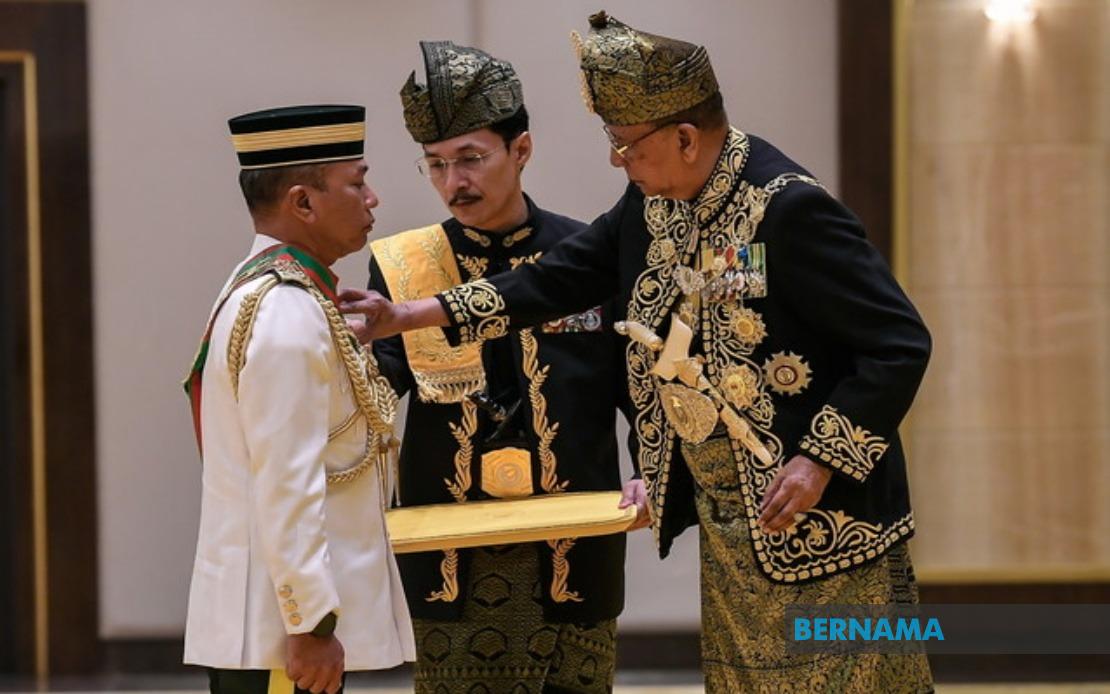
Malaysia's highest-ranking military and police officials have been recognised in Kedah's latest honours ceremony, reflecting the state's tradition of acknowledging exceptional service across both the defence and law enforcement sectors. Chief of Defence Forces General Tan Sri Malek Razak Sulaiman and Inspector-General of Police Tan Sri Mohd Khalid Ismail topped the recipients' list during celebrations marking the 84th Birthday of Sultan of Kedah Al Aminul Karim Sultan Sallehuddin Sultan Badlishah, held at Istana Anak Bukit in Alor Setar on July 5.
The dual recognition of the country's military chief and police chief underscores the significance Malaysia places on maintaining strong institutional leadership at the highest levels. Both officials received the Darjah Dato' Seri Setia Pahlawan Yang Amat Dihormati (S.S.P.K), one of the most prestigious honours the sultanate can confer. This honour carries the coveted title of Datuk Seri, elevating their standing within the ceremonial honours system that operates across Malaysian states. The distinction reflects not only their current roles but also their institutional significance in maintaining national security and public order.
Beyond the headline honourees, the ceremony reflected a deliberate effort to acknowledge diverse sectors contributing to Kedah's development and governance. Traditional state administration positions received recognition through the conferment of Orang Besar titles—among Malaysia's oldest honour classifications. Datuk Syed Khairol Anuar Syed Abidin received the Orang Besar Enam Belas designation, while Datuk Mohamad Che Nai was conferred the Orang Besar Tiga Puluh Dua title, positions that historically signified influence and responsibility within sultanate hierarchies.
The Darjah Dato' Setia Diraja Kedah (D.S.D.K) honours distributed during the ceremony recognised four individuals for sustained contribution to state interests, while Kedah's state police chief Datuk Adzli Abu Shah received the Darjah Dato' Setia Pahlawan (D.D.S.P) in recognition of law enforcement leadership at the state level. These distinctions emphasise how honours systems serve to reinforce leadership chains and acknowledge performance at various administrative tiers, particularly in security-related portfolios where institutional continuity remains paramount.
Political representation also featured prominently in the honours distribution. Two recipients of the Darjah Setia Sultan Sallehuddin Kedah (S.S.S)—Major (Rtd) Mansor Zakaria, a state executive council member, and PAS Youth Chief Afnan Hamimi Taib Azamudden—reflect the sultanate's recognition of political engagement and youth leadership. The inclusion of opposition-aligned figures alongside state administration officials demonstrates the ceremonial nature of such honours, which typically transcend partisan boundaries and focus on acknowledged service.
Technical and professional expertise received substantial recognition through the nine recipients of the Darjah Setia Diraja Kedah (S.D.K). The cohort included religious administration figures such as the Kedah State Islamic Religious Affairs Department director Syeikh Mohamad Subhi Abdullah, development authority officials like LADA deputy CEO Maznim Ismail, and infrastructure specialists including Kedah Public Works Department director Ir Mohd Fisal Ismail and MADA general manager Zulkifli Romli. This distribution signals state priorities toward religious governance, development infrastructure, and agricultural advancement—all foundational elements of Kedah's economic model.
Healthcare professionals featured prominently among honoured recipients, reflecting Malaysia's broader emphasis on medical advancement during the post-pandemic period. Sultanah Bahiyah Hospital's Dr Adam Mohd Zakaria, heading the neurosurgery department, and Dr Manisekar K. Subramaniam, a senior consultant general surgeon, exemplified recognition for clinical excellence. Meanwhile, Dr Jamaliah Omar, serving as deputy director of the Health Ministry's Dental Health Programme, received acknowledgment for national-level health system contributions. These appointments underscore how state honours mechanisms increasingly recognise technical specialists who advance public health outcomes across institutional hierarchies.
Private sector contributors also gained recognition, with Real Estate and Housing Developers Association (REHDA) Kedah/Perlis chairman Yeoh Su Guan and Bismi Empire Sdn Bhd president Jaffri Ahmad receiving S.D.K honours. This acknowledges the private sector's role in Kedah's economic development, particularly in real estate and commerce—sectors vital for state revenue and employment generation. Including business leaders in honours ceremonies reflects evolving recognition that state development depends on collaborative public-private partnerships rather than government sector contributions alone.
The broader honours distribution revealed the ceremony's comprehensive scope. Beyond the higher-tier awards, Sultan Sallehuddin approved conferment of the Ahli Mahkota Kedah (A.M.K) to 31 recipients and the Ahli Setia Pahlawan (A.S.P) to five individuals, recognising emerging leaders and dedicated public servants. The Bintang Perkhidmatan Cemerlang Kedah (B.C.K) went to 31 recipients, while the Bintang Kebaktian Masyarakat (B.K.M)—specifically honouring community service—benefited 43 individuals, the largest single award category at this tier.
Additional honour categories distributed during the ceremony included the Ahli Cemerlang Semangat Jerai Kedah (A.S.K) to five recipients and the Pingat Perkhidmatan Cemerlang Kedah (P.C.K) to 55 individuals, recognising sustained professional excellence across government service. The Pingat Jasa Kebaktian (P.J.K) reached 40 recipients, while the Pingat Perkhidmatan Lama (P.P.L)—honouring long service—was awarded to 15 individuals. This tiered structure ensures recognition extends beyond senior officials to encompass mid-career professionals and those approaching retirement, acknowledging cumulative contributions throughout public sector careers.
In aggregate, over two hundred individuals received recognition during the 84th birthday celebration, making it a substantial honours conferment by Malaysian standards. The distribution across multiple categories and sectors reflects contemporary understandings of state development, which increasingly requires expertise spanning security, healthcare, administration, religious affairs, infrastructure, and commercial enterprise. For Malaysian observers, the ceremony demonstrates how sultanate honours systems remain functional mechanisms for acknowledging institutional performance and maintaining leadership cohesion across government and complementary sectors, even as political configurations shift and new priorities emerge within federal-state governance frameworks.
The recognition of both federal-level appointments—the CDF and IGP—within a state-specific honours ceremony illustrates the interconnected nature of Malaysian governance, where national security and public order remain paramount concerns shared across all administrative levels. For Kedah specifically, the honours distribution reflected the state's developmental priorities and acknowledged both established institutions and emerging leaders positioned to shape the state's trajectory across the coming years.

