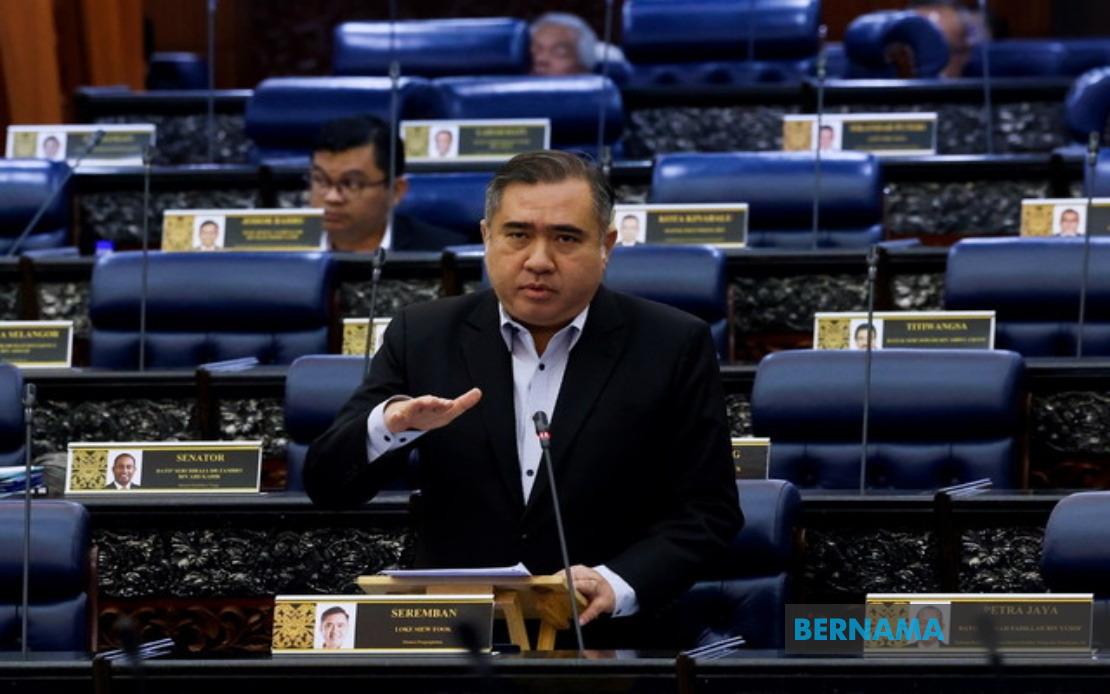
Malaysia's Transport Ministry is moving forward with proposals to establish a structured compensation mechanism for road accident victims and their families, marking a significant shift towards protecting vulnerable road users through enhanced legal remedies. Minister Anthony Loke announced to Parliament that the ministry seeks amendments to the Road Transport Act 1987 that would empower courts to impose compensation orders on offenders convicted of serious driving-related offences, particularly those resulting in death or grievous bodily harm.
The proposed legislative framework represents a recognition that ordinary traffic penalties have proven inadequate in addressing the human and financial costs inflicted by reckless drivers. Under the new system, judicial authorities would assess compensation based on multiple factors including the severity of injuries sustained, the extent of losses incurred by victims' families, and the financial capacity of the convicted offender to pay. This graduated approach aims to ensure that penalties remain proportionate while still providing meaningful redress to those harmed.
Legislators have particularly focused on dangerous driving behaviours that pose extreme risks to public safety. Minister Loke emphasised that drivers who cause deaths through reckless conduct and those involved in illegal street racing will face substantially harsher consequences than ordinary traffic violators. This distinction acknowledges the criminal nature of such behaviour and its devastating community impact, particularly in a country where road fatalities constitute a serious public health crisis.
Complementing the compensation framework, the government has already passed the Road Transport (Amendment) Bill 2026, which introduced specific legal provisions targeting illegal racing activities. The legislation creates distinct penalties for racing offences that escalate with repeat violations. First-time offenders face fines ranging from RM2,000 to RM10,000 alongside potential imprisonment of up to two years, while subsequent offences carry significantly heavier penalties including fines between RM5,000 and RM20,000 and imprisonment extending to five years.
A critical innovation in the amended legislation is its preventive scope. Previously, authorities could only prosecute individuals involved in illegal racing after accidents occurred, limiting intervention to post-incident situations. The revised framework enables law enforcement to take action against participants in illegal racing activities regardless of whether an accident has transpired, effectively criminalising the dangerous behaviour itself rather than requiring bodily harm as a precondition for prosecution. This represents a meaningful expansion of police powers to combat organised street racing networks.
Enforcement operations have already intensified across the country as the ministry moves to implement these tougher measures. Recent operations in Johor demonstrate the scale of the illegal racing problem, with authorities apprehending 16 individuals and confiscating 260 motorcycles in a single enforcement drive. These operations target both the perpetrators and the equipment used in dangerous racing activities, disrupting the logistical networks that enable such behaviour.
The urgency of these initiatives became evident in the tragedy at Km27 of Jalan Renggam-Simpang Renggam in Johor on June 1, which claimed five lives. The Attorney-General's Chambers directed that investigations into this incident proceed under Section 302 of the Penal Code, the most serious criminal provision addressing unlawful killing. This escalated investigative approach reflects governmental determination to treat road fatalities as serious crimes rather than mere regulatory violations.
Beyond legislative and enforcement measures, Minister Loke stressed the necessity of behavioural transformation and sustained public awareness campaigns. The challenge facing Malaysia extends beyond punitive mechanisms, as road accidents claim more than 6,000 lives annually—a figure that indicates systemic failures in driver behaviour and road culture. The minister articulated that addressing this crisis requires engagement across all societal levels, encompassing not only government enforcement but also cooperation from community leaders, educational institutions, and the general public.
The proposed cross-ministerial national strategy for combating illegal racing reflects recognition that road safety transcends transportation policy, intersecting with law enforcement, health services, and social development. Minister Loke's appeal for depoliticisation of road safety issues suggests that previous fragmented approaches may have undermined coherent policy implementation. He emphasised that genuine progress requires abandoning partisan positioning around safety initiatives and instead mobilising collective societal commitment to safer roads.
The compensation mechanism proposed by the Transport Ministry carries particular significance for Malaysian families devastated by preventable road tragedies. Currently, victims' families often pursue compensation through civil courts, a protracted and costly process requiring private legal resources. By embedding compensation powers within criminal proceedings, the government aims to simplify access to financial redress while simultaneously reinforcing the criminal gravity of dangerous driving offences.
Implementation of these provisions will require careful coordination between judiciary, law enforcement agencies, and victim support services to ensure consistent application and adequate compensation assessments. Courts will require clear guidelines for determining appropriate compensation levels, considering both the quantum of damages and the offender's payment capacity to avoid orders that become unenforceable. The success of these mechanisms will depend heavily on the judiciary's commitment to robust compensation awards rather than nominal amounts.
The broader context reveals Malaysia's ongoing struggle with preventable traffic fatalities despite relatively modern road infrastructure and vehicle safety technology. International comparisons often show Malaysian fatality rates exceeding those of comparably developed nations, suggesting that behavioural and cultural factors, rather than infrastructure limitations, constitute the primary challenge. These legislative initiatives target driver conduct directly, recognising that legal deterrence remains an essential component of comprehensive road safety strategy, though insufficient without parallel public education and social norm changes.
Looking forward, these amendments will test Malaysia's commitment to treating road fatalities with the seriousness accorded to other criminal harms. The compensation scheme's effectiveness will ultimately depend on whether courts consistently exercise these new powers and whether substantial awards create sufficient deterrence to motivate behavioural change among high-risk drivers. Regional observers will likely monitor this initiative closely, as many Southeast Asian nations grapple with similar road safety crises and may consider similar legislative models.

