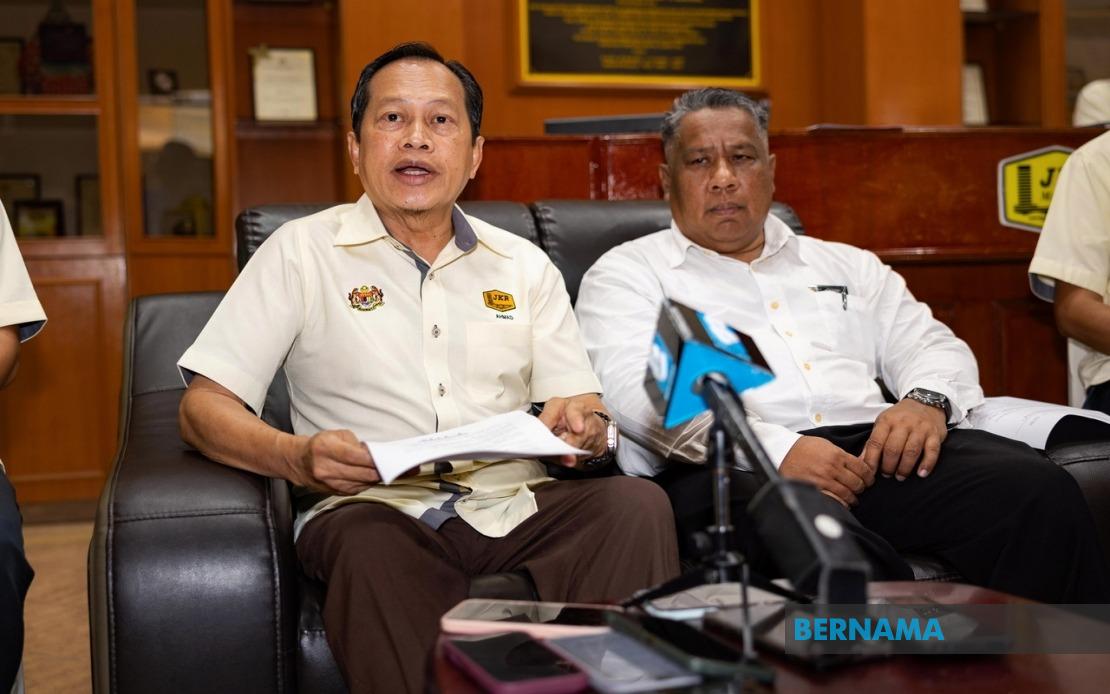
Deputy Works Minister Datuk Seri Dr Ahmad Maslan has clarified the longstanding question of who bears responsibility for tree maintenance along Malaysia's federal roads, stating unequivocally that local authorities hold the primary duty under existing legislation. Speaking during a working visit to the Manjung District Engineer's Office in Perak, Ahmad addressed growing public concern about falling trees following a fatal incident on the FT68 Bentong-Kuala Lumpur Old Road that claimed four lives.
The minister pointed to Section 101(b) of the Local Government Act 1976 as the legal foundation for local authority responsibility. This provision explicitly empowers municipal and district councils to plant, prune, or remove trees within their jurisdictions, including those positioned on federal road reserves that fall under their administrative purview. Ahmad stressed that this is not a matter of the Public Works Department attempting to evade accountability, but rather a clear delineation of roles established through decades of legislation and most recently affirmed through court proceedings that examined the legal basis for tree management along federal thoroughfares.
The clarification comes in response to calls from Bentong Member of Parliament Young Syefura Othman for JKR and private maintenance concessionaires to bolster their collaboration with certified arborists and slope specialists. Following the tragic tree-felling incident, Young Syefura had urged enhanced periodic technical assessments of mature trees along federal roads. Ahmad's statement seeks to redirect such expectations toward the appropriate authorities while simultaneously offering JKR's support in implementing any coordinated safety measures.
A critical distinction Ahmad made concerns the scope of concession agreements between the government and private road maintenance companies. He explained that these contractual arrangements contain no explicit provision permitting the proactive cutting or removal of standing trees. The concessionaires are only authorised to clear fallen trees that already obstruct roadways—a reactive rather than preventive approach. This limitation, Ahmad indicated, reflects the narrower mandate of concession agreements focused on general road upkeep and safety features such as barriers, signage, and road furniture rather than arboricultural management.
The minister's remarks highlight a structural gap in Malaysia's road safety framework that may require legislative or administrative recalibration. Currently, the responsibility for assessing tree health and conducting preventive maintenance rests with local authorities, yet the maintenance companies operating on federal routes may lack the contractual authority to act on such assessments even when risks are identified. This division of responsibility could potentially delay response times to emerging hazards, particularly in districts where coordination between PBT offices and concessionaire operations remains underdeveloped.
During his visit to Manjung, Ahmad received comprehensive briefings on the district's infrastructure projects and maintenance operations. He underscored the importance of sustained vigilance across the three tiers of the Works Ministry's operational structure—national, state, and district levels—to ensure projects meet technical specifications, timelines, and budget allocations. This emphasis on multi-level monitoring suggests the ministry recognises that infrastructure safety depends not merely on legal assignments of responsibility but on active coordination and regular oversight.
The Works Ministry's position on this matter carries implications for how Malaysia addresses broader public safety challenges on its road network. While Ahmad affirmed JKR's willingness to collaborate with local authorities on safety improvements, the reaffirmation of existing legal boundaries implies that meaningful change may require either local authorities to enhance their tree management capacities or amendments to concession agreements to grant maintenance companies greater latitude in hazard mitigation. Without such adjustments, the reactive stance toward fallen trees may persist despite elevated public awareness following recent tragedies.
Ahmad also conveyed the ministry's commitment to ensuring that public infrastructure remains secure, functional, and comfortable for all users. This statement, though broadly framed, acknowledges the emotional resonance of recent fatal accidents and the public expectation that government agencies will take decisive action to prevent recurrence. The challenge facing the ministry and local authorities is translating such commitments into concrete operational changes that enhance safety without creating regulatory confusion or jurisdictional conflicts.
For Malaysian road users and residents in proximity to federal highways, the clarification offers important context but also raises questions about preventive capacity. The shifting of responsibility to local authorities places the onus on municipal and district councils, which in many areas already contend with resource constraints and competing priorities. The effectiveness of this model will ultimately depend on whether councils conduct the regular assessments and timely interventions necessary to identify and address tree hazards before they become life-threatening. Ahmad's invitation for JKR to assist suggests the ministry recognises the need for complementary support, yet formalising such assistance through enhanced coordination mechanisms or revised concession frameworks may prove necessary to translate good intentions into measurable safety outcomes on Malaysia's federal road network.

