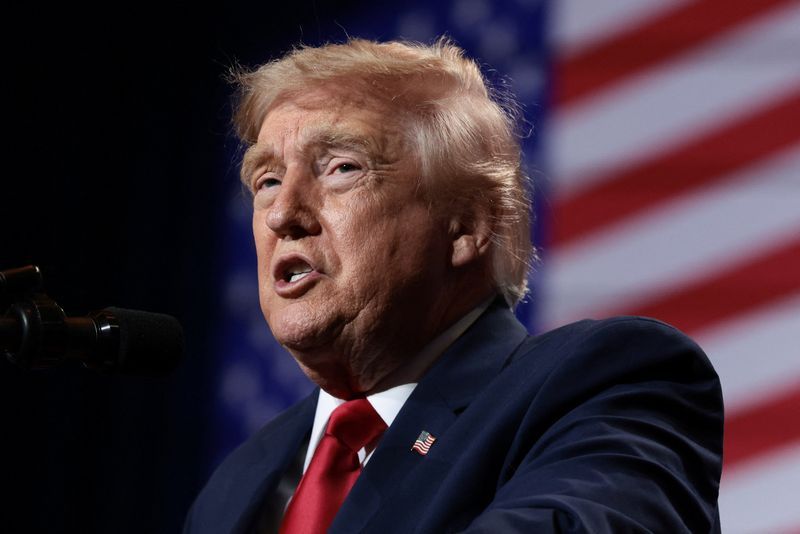
President Donald Trump has signed a national security presidential memorandum that establishes a formal framework for conducting cyber operations against transnational criminal organizations headquartered outside the United States. The directive, announced by the White House on Wednesday, represents a significant expansion of how American authorities may pursue criminal networks that target US citizens and infrastructure through digital means, enlisting private sector companies as operational partners in what amounts to an unprecedented civilian-military cyber campaign.
The memorandum aims to harness the technical capabilities and innovation resident within America's private technology sector to support federal law enforcement and national security objectives. Rather than relying solely on government agencies, the framework envisions private companies entering into formal agreements with federal departments, state authorities, and local governments to gather intelligence on criminal organizations and propose cyber countermeasures. This hybrid public-private approach seeks to leverage competitive advantages in speed, technical sophistication, and specialization that commercial firms possess.
According to the White House fact sheet, the administration has identified a substantial threat landscape involving ransomware campaigns, investment fraud schemes, identity theft operations, and other serious crimes directed by foreign-based criminal entities against American targets. These "transnational criminal organizations" operate with relative impunity across multiple jurisdictions, exploiting gaps in international law enforcement cooperation and the difficulty of pursuing criminals across borders through traditional means. The cyber authorization represents an attempt to level the playing field by allowing American entities to operate more aggressively within foreign territories.
The operational structure places the Department of Homeland Security at the center of coordination through its National Coordination Center, which will oversee a program designed to conduct specific cyber disruption operations against designated foreign criminal networks. Both DHS and the Department of Justice will maintain supervisory authority over participating private companies, creating a chain of command intended to prevent unauthorized or rogue operations. The framework requires that companies wishing to participate undergo a vetting process to ensure reliability and trustworthiness before receiving authorization.
Once cleared, participating private firms will be permitted to undertake two categories of cyber activity: surveillance operations and what the memorandum terms "cyber effects operations." The latter encompasses a broad range of digital interventions, including the manipulation, disruption, denial, degradation, or destruction of information systems and networks controlled by criminal targets, as well as the manipulation of data housed within those systems. This language grants considerable discretionary power to conduct operations with potentially far-reaching consequences.
The financial safeguards built into the program require participating companies to maintain a bond or escrow account of at least one million dollars, serving as insurance against damages or unintended consequences arising from their cyber operations. This requirement reflects awareness among policymakers that cyber activities, even when carefully planned, carry inherent risks of escalation, collateral damage, or inadvertent harm to unintended targets. The escrow mechanism provides a financial mechanism for accountability, though questions remain about whether such sums adequately cover potential damages.
This approach of enlisting private sector participation in offensive cyber operations is not unprecedented in American security policy, yet it remains contentious within national security circles. Previous iterations of similar programs have faced criticism from analysts and former officials concerned about oversight gaps, the potential for operations to escalate beyond their intended scope, and coordination failures between civilian agencies, the military, and intelligence services. The decentralized nature of involving multiple private companies introduces additional complexity in ensuring consistent doctrine and preventing conflicts between simultaneous operations.
For Southeast Asian nations and Malaysian stakeholders specifically, this development carries implications worth monitoring. Transnational criminal organizations operating in the region, whether based in sympathetic nations, ungoverned territories, or countries with weak law enforcement capacity, may now face more aggressive American cyber operations. If these organizations target Malaysian citizens or businesses, the region could benefit from improved disruption of their infrastructure and criminal capabilities. However, the expansion of unilateral American cyber operations in foreign territories also raises questions about sovereignty, the potential for inadvertent regional spillover effects, and whether other nations might cite this precedent to justify their own offensive cyber activities.
The White House has not provided detailed implementation timelines or specifics about which criminal organizations constitute priority targets, nor has it disclosed how it will manage the inherent complexity of coordinating multiple private companies operating simultaneously against overlapping criminal networks. Both DHS and the White House declined to offer additional clarification in response to media inquiries about program mechanics, suggesting that operational security and flexibility remain significant considerations in the rollout.
The memorandum ultimately reflects an American policy evolution toward treating transnational criminal organizations as national security threats warranting the full arsenal of cyber capabilities, including those wielded by the private sector under governmental direction. Whether this framework succeeds in disrupting genuine criminal networks without producing unintended consequences or sovereignty violations will likely determine whether other nations adopt similar models or express diplomatic concerns about American unilateral cyber operations in foreign territory.

