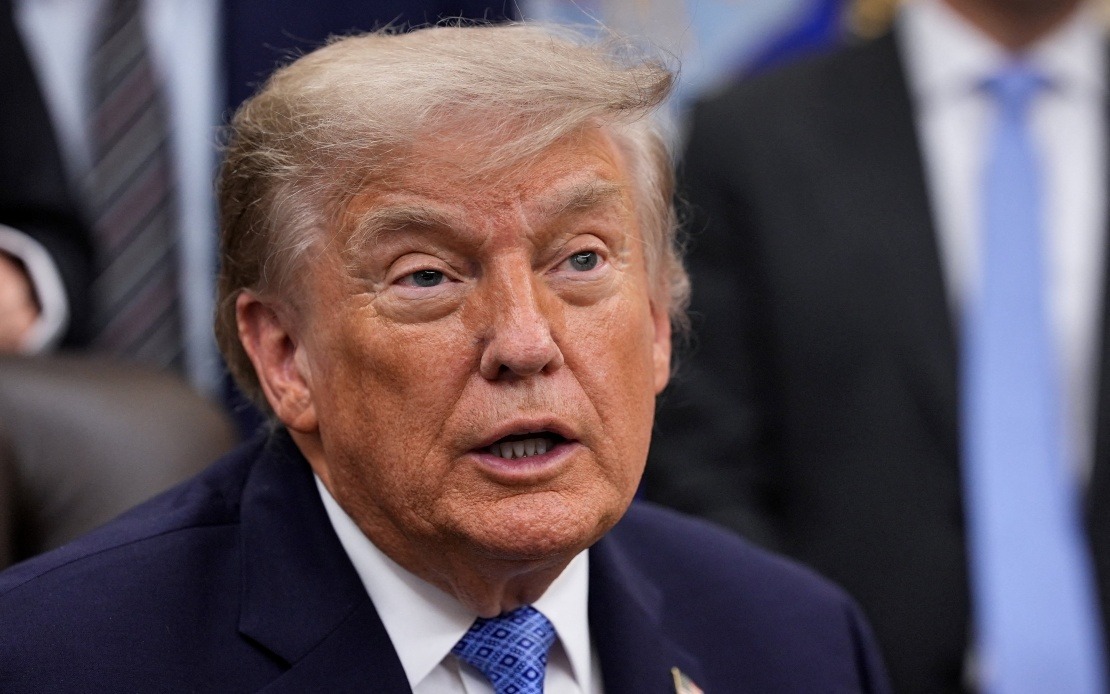
US President Donald Trump has escalated tensions with Canada over wildfire smoke drifting across the border, using the environmental crisis as a pretext to threaten further trade restrictions. On Friday, Trump announced via his Truth Social platform that the costs associated with the air pollution should be factored into tariffs Canada already faces, marking another instance of the American leader weaponising cross-border environmental issues for commercial leverage.
The smoke affecting much of northeastern North America originates primarily from dozens of active wildfires burning across Ontario and Minnesota, with the haze spreading across major population centres including Toronto, Chicago, Detroit, and Washington. New York experienced particularly severe visibility reductions, with residents reporting the persistent smell of smoke throughout the city. The phenomenon illustrates how environmental hazards respect no borders and create shared challenges that traditionally require coordinated international responses.
Trump's core complaint centred on alleged Canadian negligence in forest management, asserting that inadequate maintenance of woodland areas and failure to clear accumulated brush and debris had directly contributed to the fires' severity and spread. He characterised the resulting air quality as an unwanted invasion of "filthy, polluted, and unhealthy air" that posed unacceptable dangers to American citizens. The president indicated his intention to contact Prime Minister Mark Carney to demand explanations and commitments regarding Canada's response strategy, suggesting potential policy consequences if answers proved unsatisfactory.
However, the scientific consensus on North American wildfire causation diverges sharply from Trump's framing. Extensive research overwhelmingly links the region's escalating wildfire activity to climate change rather than forest management practices alone. Rising temperatures have extended fire seasons, reduced moisture levels in vegetation, and created conditions favourable for more frequent and intense burns. This distinction matters significantly because it reframes the issue from one of negligence into a systemic environmental challenge affecting both nations equally.
Ontario Premier Doug Ford responded swiftly and pointedly to Trump's criticism, rejecting the blame narrative while invoking a history of cross-border cooperation. Ford reminded the American president that Canada has consistently provided assistance during American disasters and crises, emphasising that constructive collaboration should supersede recriminations. His statement underscored a fundamental principle of continental relationships: environmental emergencies demand mutual aid rather than adversarial posturing.
The wildfire smoke situation carries particular significance for Southeast Asian observers monitoring US-Canada relations and broader North American environmental governance. Malaysia and other regional nations face comparable transboundary pollution challenges, particularly during seasonal haze periods affecting multiple countries. The manner in which developed democracies address such cross-border environmental emergencies offers instructive lessons regarding institutional capacity, political will, and the tension between nationalist rhetoric and practical cooperation.
Trump's tariff threat represents a substantive escalation beyond standard diplomatic disagreement. By explicitly linking environmental outcomes to trade penalties, the president signals willingness to instrumentalise shared environmental challenges for unilateral economic advantage. This approach potentially sets problematic precedents for how nations might weaponise environmental interdependencies, particularly in contexts where smaller or less economically powerful states face pressure from larger trading partners.
The timing of Trump's intervention also reflects broader patterns in American environmental discourse. Rather than acknowledging the climate change dimension or proposing joint mitigation strategies, the president's approach emphasises blame assignment and financial penalties. This rhetorical strategy allows for deflection of American responsibility while creating leverage for trade concessions, a pattern consistent with Trump's broader protectionist economic philosophy.
Canada's vulnerabilities to such pressure remain considerable despite its economic prominence. The country's energy and resource exports to the United States make it inherently susceptible to tariff threats, particularly when tariffs can be justified through ostensibly legitimate grievances rather than naked protectionism. Trump's willingness to frame environmental issues in commercial terms therefore creates genuine policy complications for Canadian policymakers navigating the delicate balance between environmental responsibility and trade relationship preservation.
The wildfire crisis simultaneously illuminates genuine management challenges facing Canadian provinces and American states. While climate change provides the broader context, regional responses to fuel accumulation, controlled burns, and forest health genuinely matter for mitigation outcomes. Ontario and Minnesota authorities must pursue strategies that demonstrate serious environmental stewardship while navigating political pressure from southern neighbours.
Looking forward, the incident highlights how environmental cooperation increasingly intersects with trade disputes and nationalist politics in North America. Malaysia and Southeast Asian nations watching these dynamics should recognise that effective transboundary environmental governance requires depoliticising environmental challenges and building institutional frameworks that transcend electoral cycles and commercial disputes. The Trump-Carney interaction demonstrates the risks of allowing trade logic to dominate environmental discourse, particularly when climate change inherently requires coordinated, long-term responses.

