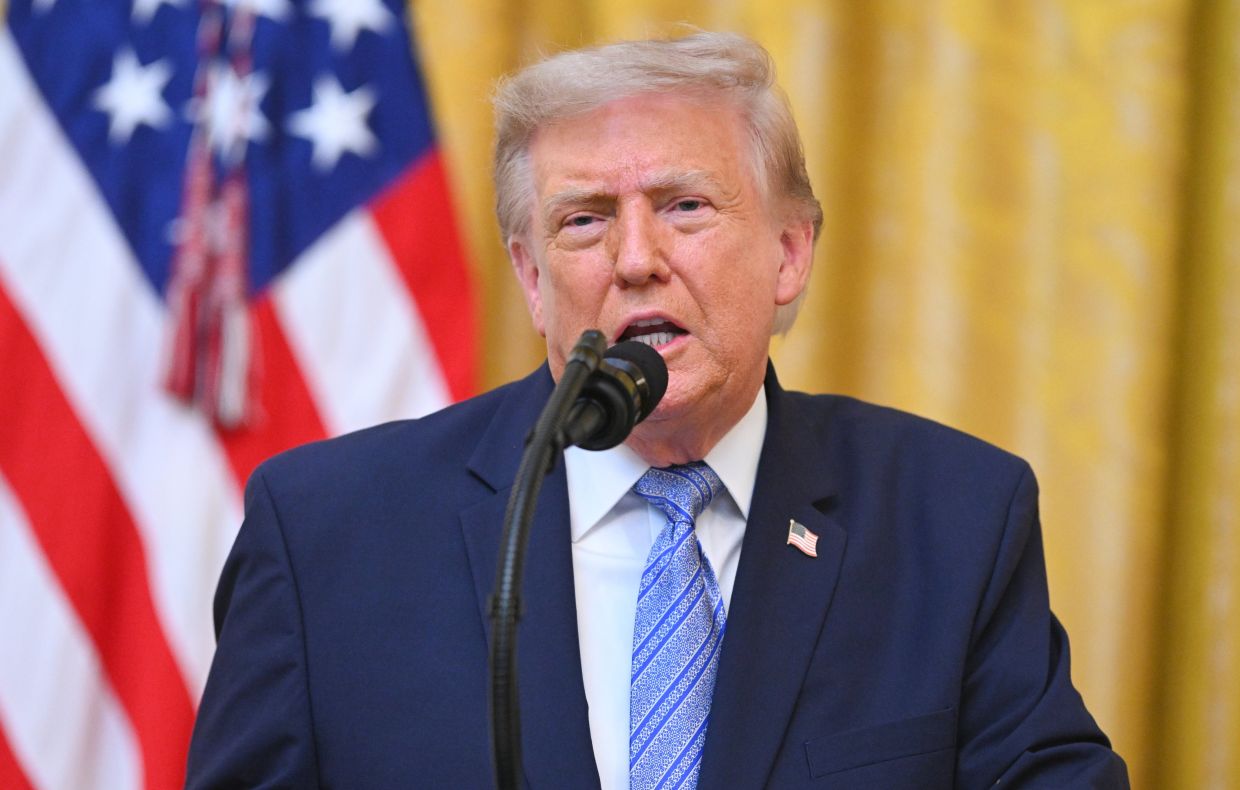
In a notably combative address from the White House, President Trump delivered one of his sharpest attacks on China since his second term began, interweaving accusations of election interference with demands for sweeping electoral reforms ahead of this year's midterm elections. The speech represented an intensification of confrontational messaging on both domestic and international fronts, explicitly targeting Beijing's alleged involvement in American electoral processes while simultaneously raising the stakes on long-standing geopolitical rivalries involving Iran.
At the centre of Trump's remarks lay an assertion that China had orchestrated what he characterised as the largest compromise of election data in the nation's history. The claim positioned alleged Chinese interference as an urgent national security matter requiring immediate governmental response. This framing elevated election integrity from a traditional domestic policy debate into a critical component of broader US-China strategic competition, suggesting that electoral vulnerability constitutes a form of technological and political warfare that demands urgent defensive measures.
Beyond the data breach claim, Trump expanded his allegations to encompass what he described as a pattern of Chinese influence operations targeting American elites. He asserted that Beijing had systematically sought to manipulate influential business leaders and members of the media establishment, encouraging them to adopt positions hostile to his administration. This characterisation portrays Chinese interference not merely as technical sabotage but as a sophisticated campaign to shape American political discourse and undermine support for his leadership.
The president further contended that China's interference campaign possessed a specifically targeted dimension during his first term, arguing that Beijing's election interference was deliberately calibrated to threaten his political survival. This claim adds a personalised element to broader accusations of state-sponsored meddling, suggesting that Chinese operations were designed to influence outcomes directly affecting his presidency rather than representing a generalised effort to destabilise American democracy. For Malaysian observers and other Southeast Asian nations monitoring US-China relations, such rhetoric signals an intensification of competition between the superpowers that will likely shape regional geopolitical alignments.
The speech devoted substantial attention to domestic election security concerns, with Trump repeatedly emphasising anxieties about electoral vulnerabilities and past instances of fraud. His focus on the integrity of midterm voting processes reflects persistent conservative concerns about ballot security and registration procedures, concerns that have remained central to American political discourse since the 2020 presidential election. By connecting these domestic worries to allegations of foreign interference, Trump constructed a narrative suggesting that election security encompasses both protecting the ballot box from external threats and implementing stricter internal controls.
Central to Trump's electoral reform agenda was advocacy for concrete policy measures tied to the SAVE America Act framework. He specifically championed voter identification requirements and proof-of-citizenship provisions, proposals that have long divided American policymakers along partisan lines. Voter ID laws remain contentious, with supporters arguing they prevent fraud and critics contending they create barriers to legitimate voting. By embedding these proposals within a national security context emphasising foreign threats, Trump sought to reframe election security not primarily as a partisan voting access debate but as an urgent defensive measure against external enemies.
Beyond electoral matters, Trump used the platform to signal a fundamental shift in how his administration approaches broader strategic competition with China. He explicitly declared an end to what he termed American "complacency" regarding Chinese actions, positioning his address as announcing a more aggressive posture toward Beijing across multiple domains. This rhetorical repositioning suggests the administration intends to pursue more confrontational policies in trade, technology, and military competition, moving beyond previous diplomatic approaches that critics argued had been insufficiently robust.
The inclusion of Iran within the speech's framework reflected the administration's simultaneous management of multiple regional crises. By weaving together concerns about Chinese electoral interference, Iranian military activities, and domestic voting security, Trump presented an overarching national security challenge requiring comprehensive governmental attention. For regional observers, particularly those in Southeast Asia navigating relationships with both superpowers, such framing underscores how American security policy increasingly intertwines distant geopolitical conflicts with domestic American political processes.
A particularly striking element of the address involved Trump's direct challenge to American media institutions. He indicated serious consideration of revoking broadcast licences held by television networks ABC and NBC, framing this potential action as a response to what he characterised as hostile or misleading coverage. This threat against major news organisations represents an extraordinary escalation in tensions between the executive branch and the fourth estate, raising constitutional concerns about press freedom and government overreach that extend beyond the immediate policy disputes under discussion.
The convergence of these themes—foreign electoral interference, domestic voting reforms, China-specific accusations, and confrontational media rhetoric—suggests Trump intends to prosecute his political agenda by simultaneously attacking external adversaries and reshaping domestic institutions. Malaysian and Southeast Asian policymakers monitoring this address should recognise that American domestic polarisation increasingly affects regional stability, as factional American disputes influence how Washington conducts diplomacy across Asia and beyond.

