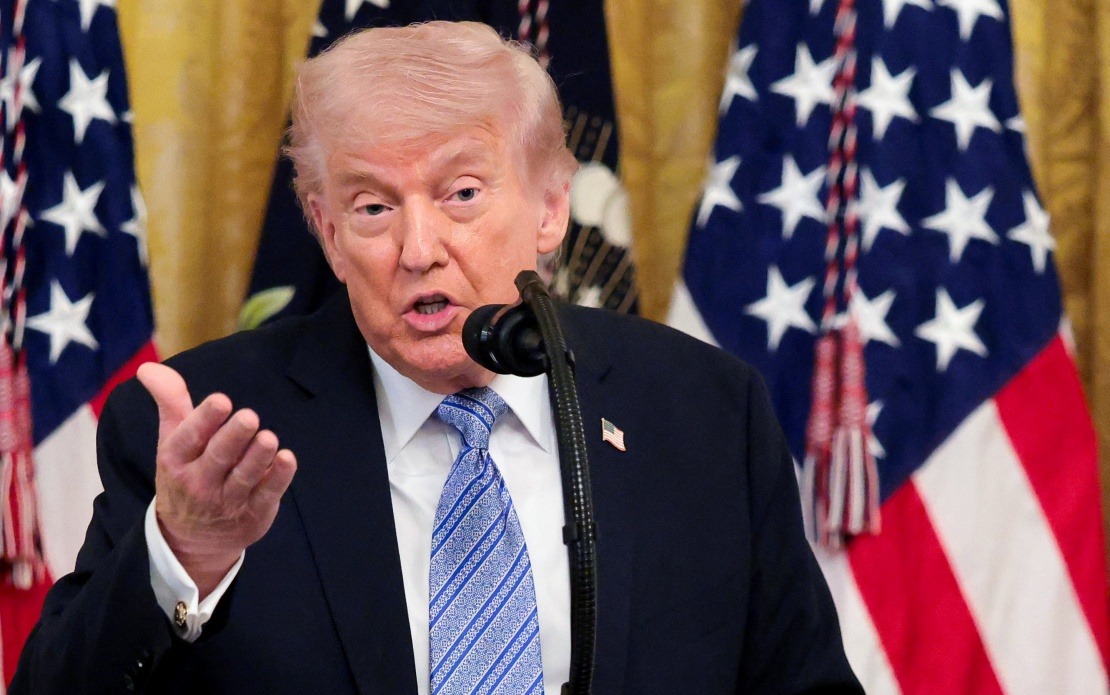
US President Donald Trump expressed optimism about his initial engagement with Britain's new Prime Minister Andy Burnham, describing their telephone conversation as productive and wide-ranging. Speaking through his Truth Social platform on Monday, Trump characterised the discussion as a positive step in cementing the historic partnership between Washington and London, suggesting that direct dialogue at the highest level remains central to how the two nations will navigate shared geopolitical challenges and economic opportunities in the coming period.
The conversation between the two leaders touched upon several substantial areas of bilateral and regional concern, reflecting the depth of the US-UK relationship that extends across security, commerce, and diplomatic interests. Trump specifically identified North Sea oil resources as part of the discussion, a topic that carries significance given current energy market volatility and Western efforts to diversify energy supplies away from potentially unreliable sources. The inclusion of this agenda item signals American interest in strengthening energy security ties with London, particularly as European nations continue reassessing their resource dependencies following geopolitical turbulence.
Trade relations featured prominently in Trump's characterisation of the call, underscoring how economic cooperation remains a cornerstone of transatlantic engagement. The incoming dynamics of US-UK commerce take on heightened importance given broader shifts in global trading patterns and the need for stable, mutually beneficial commercial arrangements between major developed economies. Trump's emphasis on trade discussions suggests that his administration views the United Kingdom as a crucial economic partner in shaping favourable conditions for American businesses and workers in the European sphere.
Military alliance strengthening was another explicit focus of the conversation, reflecting the enduring NATO framework and the broader defence partnerships that bind the two nations. This dimension remains especially pertinent given contemporary security concerns in Europe and the broader Euro-Atlantic region. The discussion of military cooperation underscores how defence collaboration between Washington and London continues evolving to address emerging threats and maintain deterrence capabilities that benefit not only bilateral interests but also regional stability more broadly.
Trump referenced the demining of the Hormuz Strait as a topic of discussion, a geopolitical matter with significant implications for global maritime commerce and regional security. The strategically vital waterway represents a critical chokepoint for international energy shipments, making its security a concern for Western powers and their allies. The inclusion of this topic suggests that Trump and Burnham are aligned on maritime security challenges and possibly coordinating approaches to ensuring freedom of navigation in one of the world's most important shipping lanes.
Beyond the specifically enumerated topics, Trump characterised the conversation as touching upon numerous other subjects, indicating that the call ranged across the full spectrum of contemporary international concerns that preoccupy Washington and London. This breadth of discussion suggests substantive engagement rather than mere ceremonial acknowledgement, positioning the two leaders as having genuine common ground on multiple fronts. The president wished Burnham success in his new role, a diplomatic gesture that signals American confidence in the British leadership transition and commitment to productive working relations moving forward.
The substance and tone of Trump's remarks carry particular significance for regional observers, including Southeast Asian nations with interests in transatlantic stability and the role that Anglo-American partnership plays in global order. The United States and United Kingdom remain the dominant Western powers shaping responses to challenges ranging from trade protectionism to regional conflicts in Europe and the Middle East. Malaysia and other ASEAN members maintain important bilateral relationships with both countries and benefit from the stability that robust US-UK cooperation provides in maintaining rules-based international frameworks.
The president's statement that he and Burnham would meet "in the not too distant future" suggests concrete plans for a state visit or bilateral summit, formalising the positive sentiment expressed in their initial conversation. Such high-level meetings typically result in formal agreements, memoranda of understanding, and coordinated policy announcements that can reshape bilateral relations and have ripple effects throughout the international system. The prospective face-to-face engagement indicates that both leaders view the relationship as sufficiently important to prioritise in their schedules during a period of multiple competing demands on their time and attention.
For Malaysia and the broader Southeast Asian region, the strength of transatlantic ties carries practical implications for trade negotiations, security arrangements, and the broader architecture of global governance. A well-functioning US-UK partnership tends to reinforce Western consensus on international matters, influencing how Western powers approach issues affecting Asian nations. The conversation between Trump and Burnham, while focused on bilateral and North Atlantic matters, reflects broader patterns of great power coordination that ultimately shape the environment in which smaller and mid-sized powers like Malaysia must operate.
The timing of this dialogue also merits consideration, as new administrations often use initial conversations with longstanding allies to signal continuity even as they pursue adjusted priorities. Trump's emphasis on the "outstanding relationship" with the UK suggests his intent to maintain the special relationship that has defined US-British ties since the Second World War, while his specific focus on energy, trade, and military matters indicates where his administration expects this partnership to deliver concrete benefits. The conversational tone and detailed policy discussion reveal an administration engaged substantively with traditional allies rather than merely perfunctory in its diplomatic engagement.
Looking forward, the establishment of positive working relations between Trump and Burnham creates a foundation for negotiating agreements that will influence transatlantic policy for years ahead. The direction of US-UK relations, in turn, influences how Western powers collectively approach global challenges from technology regulation to response to authoritarian competitors. For Malaysian policymakers monitoring the international environment, the health of the US-UK relationship represents a significant variable in forecasting Western political cohesion and the stability of the liberal international order upon which much of Southeast Asian prosperity depends.

