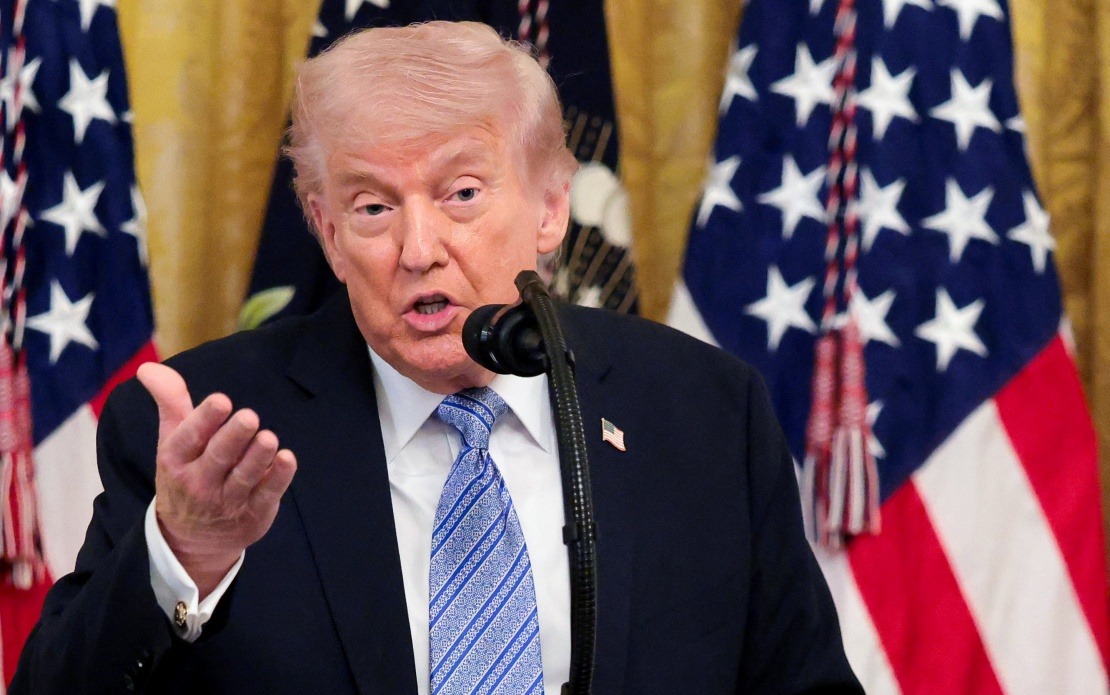
President Donald Trump declared on Tuesday that the United States has suspended all diplomatic engagement with Iran, with no negotiations underway or scheduled for the foreseeable future. The announcement, posted on his Truth Social platform in Istanbul, represents a significant hardening of Washington's posture toward Tehran and signals an abrupt reversal following weeks of reported back-channel communications between American envoys and Iranian officials.
The timing of Trump's statement carries particular significance for Southeast Asian nations dependent on stable Middle Eastern geopolitics. Regional observers have long monitored US-Iran relations closely, given the direct implications for maritime security in the Persian Gulf and broader global energy markets. Trump's assertion that the Strait of Hormuz remains fully operational under American naval oversight underscores Washington's determination to maintain freedom of navigation through one of the world's most critical shipping lanes, through which roughly one-third of global seaborne traded oil passes. For Malaysia and other ASEAN economies heavily reliant on energy imports, any disruption to Gulf shipping routes carries immediate economic consequences.
The abruptness of Trump's reversal becomes more striking when examined against recent diplomatic developments. According to CNN reporting citing US officials, Trump had instructed top administration negotiators—including Vice President JD Vance, special envoy Steve Witkoff, and senior advisor Jared Kushner—to cease all communications with Iranian counterparts. This directive followed what multiple sources characterised as constructive preliminary discussions that had generated sufficient momentum to warrant continued engagement. The halt represents not merely a pause but an intentional termination of nascent diplomatic channels.
Cushner's presence in Israel on Monday to meet with Prime Minister Benjamin Netanyahu underscores the regional dynamics influencing American decision-making. The discussion of Gaza and wider Middle Eastern questions likely informed the subsequent policy reversal, suggesting that domestic Israeli political considerations and regional alliance maintenance may have superseded earlier diplomatic calculations. Kushner's comments to Fox News immediately following the Netanyahu meeting—stating that US-Iran communications had become "more robust" than ever—now read as dated given Trump's swift reversal just hours later.
The shifting strategic framework, as described by CNN sources citing White House officials, reveals evolving thinking within Trump's national security apparatus. Rather than pursuing immediate confrontation with Tehran, officials now favour a prolonged "strangling" approach designed to constrain Iran's economic and military capabilities over extended time. This represents a tactical recalibration rather than fundamental philosophical disagreement, suggesting that pressure mechanisms—likely including expanded sanctions, military posturing, and diplomatic isolation—will form the administration's preferred toolkit for managing Iranian power.
The historical context illuminates why this moment matters for regional stability. Tehran and Washington had previously achieved a ceasefire agreement in April, followed by a June memorandum of understanding intended to halt military hostilities and establish frameworks for lasting peace. That agreement deteriorated catastrophically last month when both sides engaged in direct military exchanges spanning nearly two weeks. Trump's sudden cessation of American strikes appeared to signal openness to reviving diplomatic channels, creating momentary hope for de-escalation. His Tuesday statement definitively closes that door.
For Malaysian policymakers and regional security analysts, the implications extend beyond bilateral US-Iran relations. Any American military action against Iranian targets or infrastructure inevitably creates ripple effects throughout the Indian Ocean region and Southeast Asia, affecting shipping patterns, insurance premiums, and geopolitical alignments. The recent pattern of escalation followed by negotiation attempts followed by renewed pressure suggests instability may characterise the medium term, complicating regional economic planning and supply chain management.
The naval blockade Trump referenced reflects American military dominance in Gulf waters, a capability that Washington has wielded with increasing assertiveness. The claim that all water mines have been removed or detonated relates to threats Iran had previously deployed, signalling continued American effort to maintain absolute control over maritime access. For nations relying on predictable energy imports and stable shipping costs, such military dominance theoretically provides reassurance, yet the accompanying political volatility introduces corresponding risks.
Looking forward, the suspension of talks suggests that Trump administration officials have concluded that engagement with Iranian representatives produces insufficient diplomatic gains to justify continued diplomatic exposure. Whether this reflects genuine breakdown in negotiating positions or merely reflects the political costs of engagement remains unclear. Regardless, the reversal demonstrates that diplomatic initiatives in this administration remain contingent on evolving strategic assessments and domestic political calculations, making long-term collaboration with Iran substantially more difficult to achieve or sustain.

