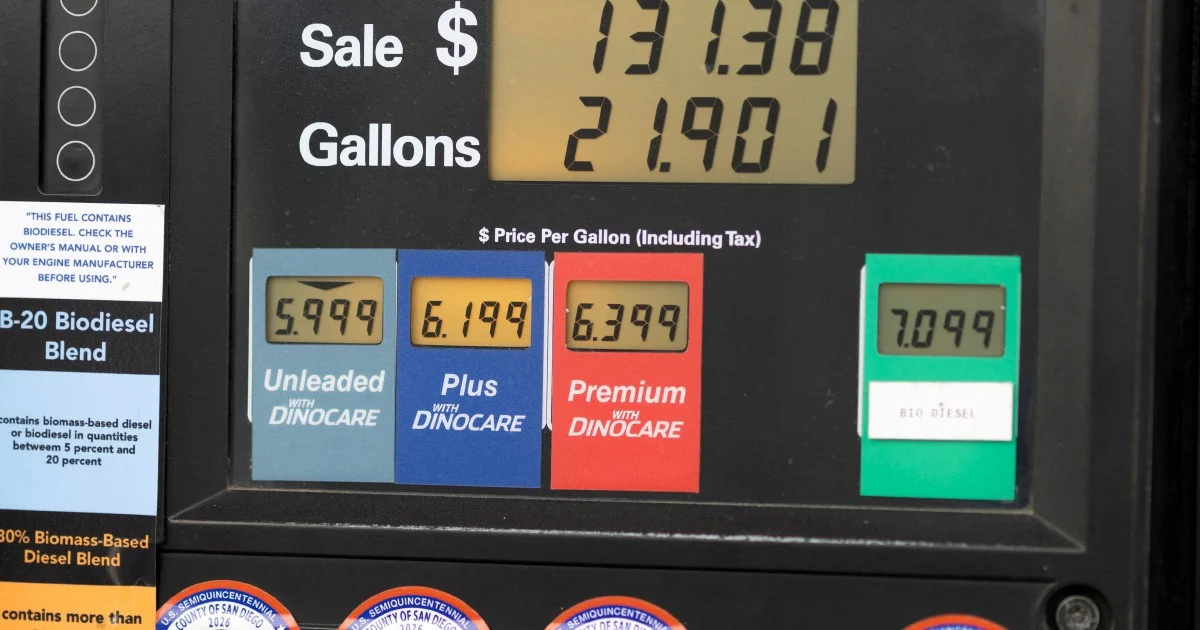
Donald Trump announced on Wednesday that he has directed authorities to scrutinise major oil companies, expressing frustration that petrol prices have not descended as swiftly as anticipated. The decision comes as the American president faces mounting pressure over the economic repercussions of the Middle East conflict and its ripple effects on global energy markets.
The investigation signals Trump's desire to demonstrate action on an issue that resonates with ordinary American households. Energy costs remain a sensitive political matter, particularly as consumers face persistent inflation across multiple sectors. By targeting oil producers directly, the administration aims to shift responsibility away from its own policies and suggest that market manipulation or insufficient effort by industry players is keeping prices elevated.
Gasoline prices in the United States have remained comparatively robust despite broader expectations that they would fall more dramatically following certain market adjustments. The disconnect between anticipated price trajectories and actual market behaviour has fuelled accusations that oil corporations are not passing savings to consumers or are deliberately constraining supply to maintain margins.
For Malaysian readers and regional observers, this development carries several implications. Southeast Asia's energy security remains closely linked to global oil market dynamics. Sustained high petroleum prices in major Western economies can influence investment decisions for refining capacity, renewable energy transitions, and infrastructure development across the region. Malaysia's own downstream petroleum sector and the broader ASEAN energy marketplace operate within this global pricing framework.
The geopolitical context amplifies these concerns. Middle Eastern tensions have created uncertainty in oil supply chains, encouraging traders to maintain elevated price buffers against potential disruptions. Whether an American investigation can materially alter these structural factors remains questionable, though symbolic gestures by major economies often influence market psychology and investor confidence.
Trump's approach reflects a broader tendency among political leaders to blame private enterprise when economic indicators disappoint voters. Rather than addressing underlying supply constraints, geopolitical risks, or the global nature of commodity pricing, directing scrutiny at oil companies provides immediate visual political cover. Whether such investigations yield meaningful remedies or merely serve as performative governance remains to be seen.
The investigation's actual scope and methodology remain undefined. Potential areas of inquiry might include production decisions, refining capacity utilisation, export policies, or allegations of price collusion—though proving such collusion across international markets presents formidable legal and logistical challenges. The Federal Trade Commission and Department of Energy could each play roles in any systematic examination.
Industry observers note that oil companies face complex constraints beyond executive discretion. Capital investments in new extraction and refining capacity require years to materialise, limiting their ability to rapidly expand supply in response to political demands. Additionally, the transition toward renewable energy has discouraged some large-scale petroleum infrastructure investments that might otherwise increase production capacity and competitive pricing pressure.
The Middle East conflict specifically complicates global energy supply calculations. Concerns about potential disruptions to shipping routes, production facilities, or political stability in key producing regions naturally encourage market participants to maintain higher price buffers. This risk premium exists independent of any individual company's pricing decisions and reflects rational responses to genuine geopolitical uncertainty.
For Malaysia, which has significant petroleum and liquefied natural gas export interests, high global prices create mixed consequences. They enhance revenue from energy exports but simultaneously impose costs on energy-intensive industries and consumers. The regional economy's growth prospects depend partly on energy price stability, making external investigations—however well-intentioned—ultimately less decisive than structural market forces.
The timing of Trump's announcement deserves consideration within the broader political calendar. Addressing economic concerns through executive action on visible targets appeals to domestic constituencies, even when such measures produce ambiguous real-world effects. Other administrations facing similar pressures have pursued comparable strategies, from antitrust actions against technology firms to investigations into pharmaceutical pricing.
Looking ahead, the investigation's outcome may matter less than the precedent it establishes for future government-industry relations in energy sectors. If successful in lowering prices, it validates direct executive intervention; if unsuccessful, it may prompt more aggressive regulatory measures. For regional governments monitoring this development, the American experience will inform their own policy approaches to energy affordability and corporate accountability within their respective jurisdictions.