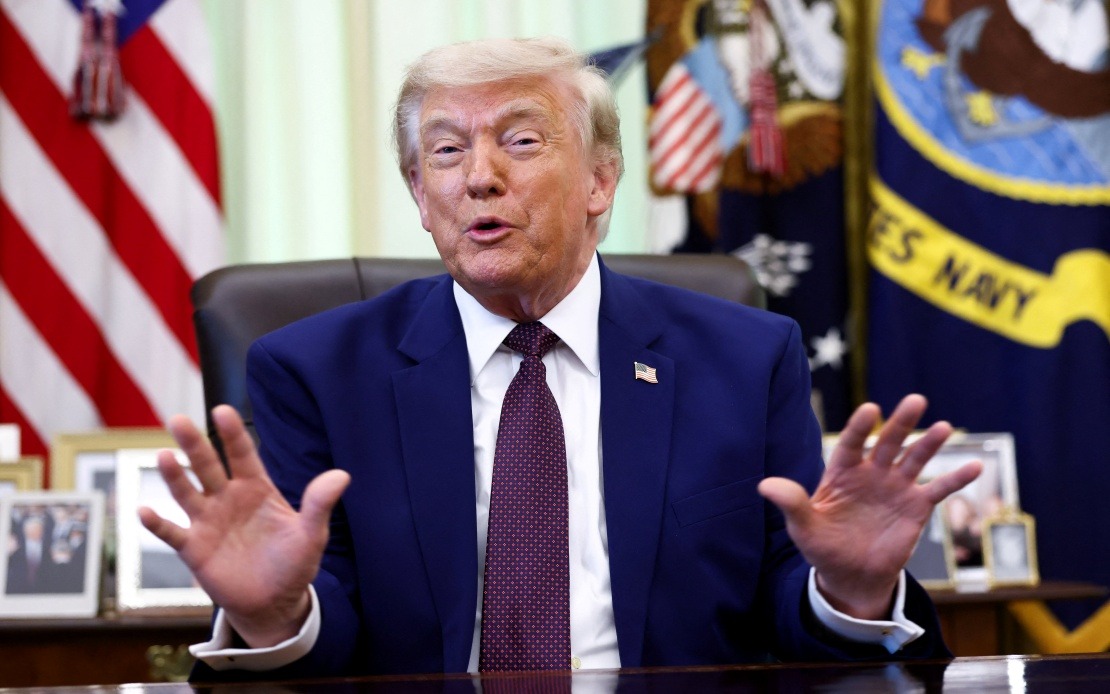
President Donald Trump has intensified pressure on Republican senators to prioritize the passage of the SAVE America Act before Congress breaks for summer recess in August, signalling growing impatience with the legislative pace on his signature voting restriction agenda. The timing of Trump's public demand through Truth Social underscores the administration's determination to secure legislative wins on election integrity before the political calendar tightens further, a strategy relevant to Southeast Asian observers monitoring how democracies handle voting procedures and election administration.
The SAVE (Safeguard American Voter Eligibility) America Act represents a cornerstone of the Republican legislative programme on elections, requiring all US voters to present official documentation such as a passport or birth certificate when registering to vote in federal elections. Proponents argue the measure closes potential vulnerabilities that allow foreign nationals and undocumented immigrants to register in jurisdictions where document verification remains inconsistent across states. This position reflects broader conservative arguments about election security that have dominated American political discourse since 2020, though such requirements remain contentious among Democrats and voting rights advocates.
Trump's immediate frustration appears directed at Senate Majority Leader John Thune and the broader Republican caucus, with White House Press Secretary Karoline Leavitt recently indicating that the president's patience with Thune was wearing thin. The tension between the executive and legislative branches over legislative priorities and speed demonstrates the complex dynamics within Republican leadership, where not all senators may view the SAVE America Act as equally urgent. For Malaysian political observers, this internal Republican disagreement illustrates how coalition management challenges persist even within unified government control of the presidency and both congressional chambers.
Central to Trump's push is his argument that Republicans must eliminate the filibuster—the Senate procedural rule requiring 60 votes to advance most legislation—before Democrats potentially regain power and employ the same tactic to pass measures Republicans oppose. Trump contends that Democrats would unquestionably abolish the filibuster if they controlled the Senate, making preemptive Republican action strategically justified. This reasoning reflects a hardening approach to legislative procedure, where partisan advantage outweighs institutional preservation arguments that traditionally limited filibuster elimination proposals.
The proposed legislative package extends beyond voting rules alone. Trump has grouped the SAVE America Act alongside budget legislation and upcoming debt ceiling negotiations as items requiring immediate passage. This bundling approach suggests the administration views voting restrictions not in isolation but as part of a comprehensive legislative agenda requiring expedited movement through Congress before August. The interconnection of these disparate policy areas indicates how voting legislation has become entangled with broader fiscal matters in Republican strategy.
For regional democracies in Southeast Asia, Trump's approach to voting administration carries broader implications regarding how electoral systems balance accessibility with security concerns. Many nations in the region have implemented voter identification requirements of varying stringency, navigating similar tensions between ensuring eligible participation and preventing irregular voting. The SAVE America Act's specific documentation requirements—passports or birth certificates—represent one particular model for verification that differs from approaches adopted in other Western democracies and most Southeast Asian nations.
The August congressional recess deadline carries real political significance, as it marks the point after which legislative schedules become compressed with approaching midterm election cycles and year-end holidays. Trump's emphasis on this timeline suggests recognition that windows for legislative accomplishment narrow significantly in the latter half of congressional sessions. This temporal pressure may be influencing negotiations within the Republican caucus, as senators weigh the political costs of either supporting controversial legislation or appearing obstructionist to their party's president.
The ideological stakes surrounding the SAVE America Act extend beyond technical voting procedures. Supporters frame documentation requirements as common-sense election security, while critics characterise such measures as voter suppression targeting minority communities with lower rates of document possession. This framing dispute reflects deeper disagreements about American democracy's direction and who should participate in electoral processes. The contentious nature of voting access questions means even Republican support for the bill cannot be assumed universally, particularly among senators from swing states or districts where voting restrictions prove unpopular.
Trump's invocation of Democratic hypocrisy regarding the filibuster represents a common argument employed when one party seeks to abandon institutional norms. The assertion that opponents would similarly act if positions reversed attempts to neutralise arguments that filibuster elimination represents dangerous institutional degradation. However, such logic has supported progressive institutional erosion across democracies, where each side justifies norm-breaking by pointing to perceived threats from opponents. This dynamic remains instructive for emerging and consolidating democracies worldwide, including in Southeast Asia, which must develop institutional resilience against partisan temptation to abandon procedural constraints.
The White House's public pressure campaign through Trump's social media presence reflects evolving executive communication strategies, bypassing traditional press channels to address legislators directly through public statements. This approach combines democratic accessibility with potential coercion, as public messaging creates pressure on elected officials who must answer to constituents and party primary voters. The effectiveness of such tactics in the modern media environment remains a subject of significant political analysis, particularly regarding how direct public appeals influence legislative behaviour.
Senate Republicans now face genuine pressure to demonstrate responsiveness to Trump's agenda while managing their own legislative and political calculations. The August deadline creates urgency, but also potential divisiveness if significant portions of the caucus resist filibuster elimination or the specific terms of the SAVE America Act. How Senate leadership navigates these crosscurrents will determine whether Trump's legislative ambitions on voting restrictions advance or stall, potentially reshaping the legislative landscape for subsequent congressional sessions and establishing precedents for future filibuster confrontations.

