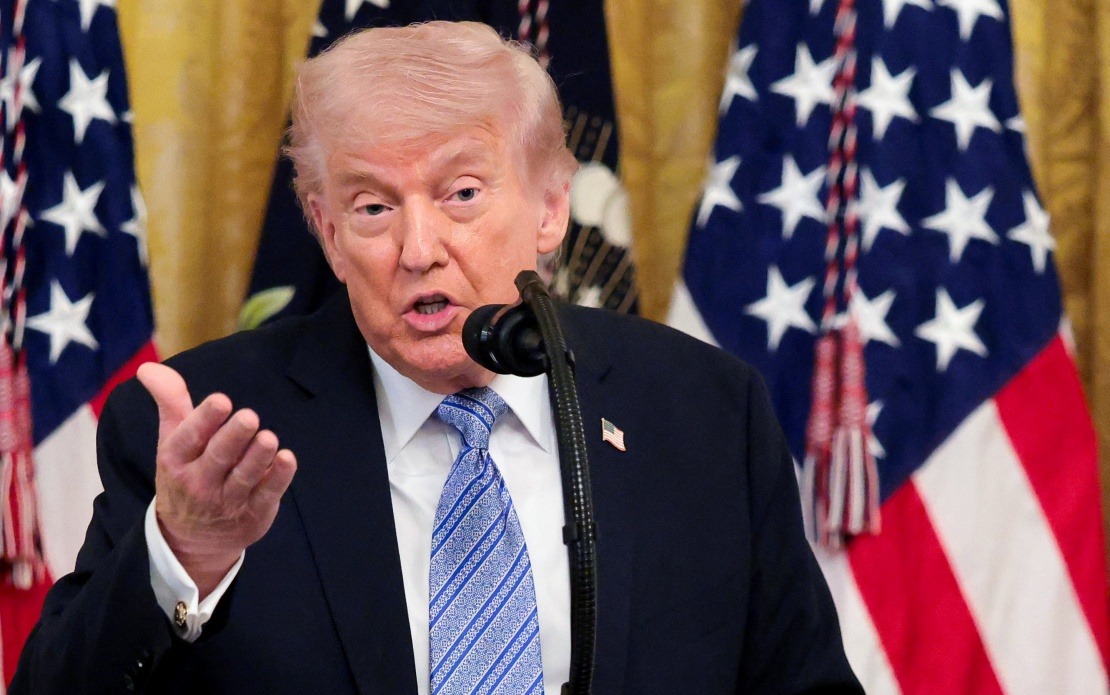
Donald Trump is championing FIFA President Gianni Infantino as the next Secretary-General of the United Nations, according to reporting from the New York Post citing sources familiar with the American president's thinking. The unconventional proposal marks another chapter in Trump's contentious relationship with the global body, even as it positions him as an active player in shaping its future leadership during a period when the organisation faces mounting criticism and reduced American financial support.
According to Trump's circle, the president views Infantino as uniquely positioned to restore the UN's credibility and effectiveness on the world stage. In Trump's assessment, the FIFA chief possesses widespread international respect and demonstrates an exceptional capacity to forge consensus among diverse nations—qualities Trump believes the organisation desperately needs as it confronts crises from regional conflicts to humanitarian emergencies. This backing appears to reflect genuine conviction rather than political maneuvering, according to those briefed on Trump's position.
The bond between Trump and Infantino, 56, crystallised during this year's FIFA World Cup, when the Swiss-born sports administrator undertook a deliberate campaign to cultivate the American leader's favour. The relationship deepened considerably in December when Infantino presented Trump with FIFA's inaugural Peace Prize, a ceremonial gesture that underscored the sports executive's willingness to align himself with the returning US president and his foreign policy agenda. The timing and nature of these interactions suggest a calculated effort by Infantino to position himself within Trump's orbit at a moment when access to the American president confers significant geopolitical influence.
The position of UN Secretary-General will become vacant on January 1, 2027, when incumbent António Guterres concludes his tenure. Whoever holds the post will assume leadership during a period of intensifying global fragmentation, with traditional international mechanisms struggling to contain proliferating regional conflicts and the emerging great-power competition reshaping geopolitical alignments. The secretary-general's role as the organisation's chief administrator and symbolic figurehead makes the position one of the most diplomatically sensitive appointments in contemporary international relations.
The UN Charter establishes a complex appointment process that would present formidable obstacles to Infantino's candidacy. Article 97 stipulates that the General Assembly elects the secretary-general on the basis of a recommendation from the Security Council, creating a dual-approval requirement. More significantly, any of the five permanent Security Council members—the United States, Russia, China, France, and Britain—possesses absolute veto authority over the nominee. This structural constraint means that even Trump's robust backing would prove insufficient if Russia, China, or another permanent member objected to Infantino's appointment.
Infantino's sports administration background stands in striking contrast to the traditional profile of UN secretaries-general, who typically emerge from diplomatic, political, or international civil service backgrounds. While his two decades in football administration have afforded him extensive exposure to global governance challenges and demonstrated capacity to navigate contentious stakeholder interests, critics would likely question whether sports leadership experience translates effectively to managing a sprawling international bureaucracy confronting existential geopolitical pressures. His relative inexperience in security affairs, humanitarian crises, and great-power diplomacy could become flashpoints during Security Council deliberations.
Trump's enthusiasm for Infantino must be understood within the broader context of his sustained institutional scepticism toward the UN and multilateral organisations generally. The president has repeatedly lambasted what he characterises as the organisation's ineffectiveness in preventing or resolving major conflicts, from the Middle East to Eastern Europe. Rather than reforming existing structures, Trump has pursued parallel diplomatic initiatives, including the creation of a US-led Board of Peace that some observers interpreted as a deliberate alternative to UN-centred conflict resolution, though the administration denied this characterisation.
Since resuming office, Trump has dramatically accelerated his administration's retreat from global multilateralism through concrete policy measures. American contributions to UN operations have been substantially reduced, reflecting the president's conviction that the organisation absorbs resources disproportionate to its returns. The withdrawal from the World Health Organization exemplifies this broader pattern of institutional disengagement, signalling Trump's willingness to abandon century-old frameworks when he judges them misaligned with American interests or insufficiently responsive to American leadership.
For Southeast Asian nations and Malaysia particularly, the prospect of Infantino's appointment carries substantial implications. These countries depend significantly on UN mechanisms for mediating regional disputes, advancing development agendas through international forums, and maintaining frameworks for maritime and transnational governance. An unconventional secretary-general with limited multilateral diplomacy experience could fundamentally alter how the organisation functions, potentially diminishing its capacity to facilitate consensus on issues of direct relevance to the region, from climate policy to trade governance and maritime security disputes in the South China Sea.
The geopolitical calculation underlying Trump's proposal warrants scrutiny. By advancing a candidate perceived as pragmatic and business-oriented rather than wedded to traditional multilateral consensus-building, Trump may be signalling his intention to reshape the UN into an instrument more responsive to American strategic preferences. Infantino's demonstrated willingness to cultivate political relationships suggests he could prove amenable to navigating complex dynamics where powerful states seek greater influence over the organisation's agenda and operations. Whether other Security Council members would view this dynamic favourably remains deeply uncertain.
The path toward Infantino's potential nomination faces profound structural and political complications that should not be underestimated. Securing approval from all permanent Security Council members represents a formidable hurdle, particularly given the current state of great-power relations and competing visions for the UN's future. Russia and China, in particular, might resist what they perceive as American attempts to install a preferred candidate, potentially using their veto authority to block the appointment or extracting significant concessions in exchange for their acquiescence. The General Assembly approval process would also prove contentious should the Security Council recommendation proceed, as developing nations and non-aligned movement members might question Infantino's independence from American influence.
Ultimately, Trump's endorsement of Infantino represents a provocative attempt to insert his preferences into processes traditionally governed by diplomatic consensus and institutional precedent. Whether the FIFA president emerges as a genuine contender or merely a trial balloon testing international receptivity to unconventional leadership remains to be determined. The coming months will reveal whether other major powers view Infantino as a constructive choice capable of revitalising the organisation, or whether they regard the proposal as emblematic of American attempts to subordinate multilateral institutions to singular national interests.

