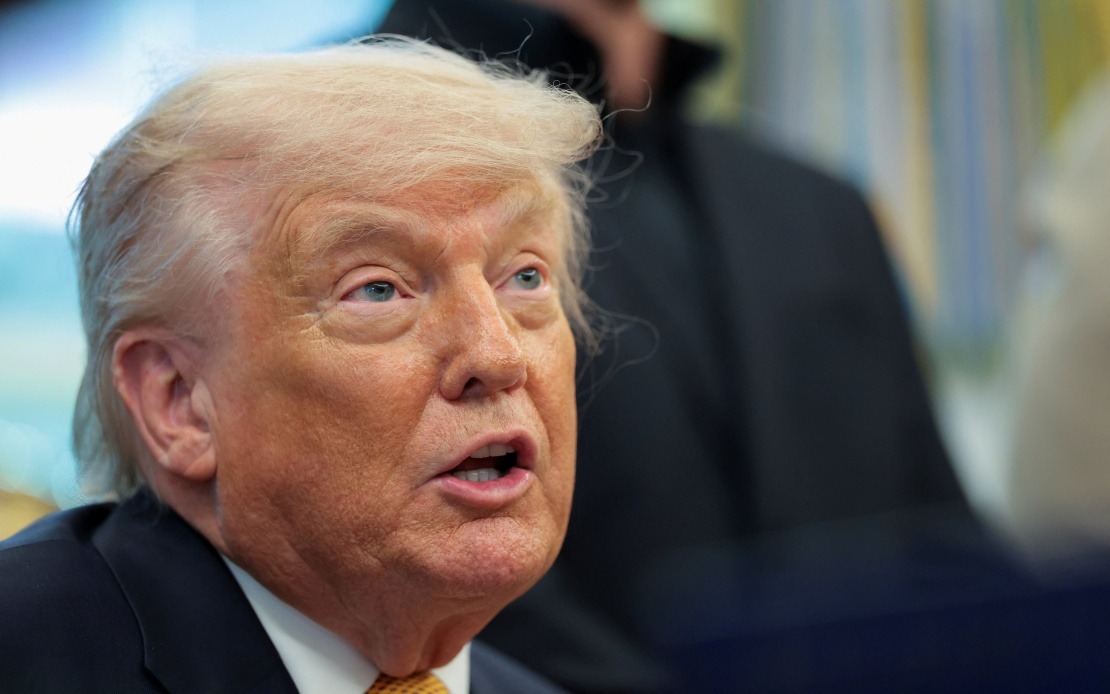
President Donald Trump declared on Wednesday that negotiations over Iran's nuclear programme are progressing favourably, offering an optimistic assessment as high-level discussions continue in Doha through American intermediaries. Departing for North Dakota, Trump characterised the ongoing diplomatic efforts as successful, stating that his representatives have achieved meaningful results in recent meetings. The remarks underscore a significant shift towards engagement after months of military escalation between Washington and Tehran, signalling that the world's leading military power is willing to invest in negotiated solutions despite substantial strategic differences with the Iranian government.
Trump's envoys Steve Witkoff and Jared Kushner are currently stationed in Qatar, where they have been conducting preliminary discussions aimed at establishing the framework for broader negotiations. The presence of these high-profile negotiators in the Gulf state reflects the seriousness with which the Trump administration is approaching the matter. Qatar's role as a neutral intermediary is particularly significant for the region, given its diplomatic relationships with both Washington and Tehran. This positioning suggests that any eventual agreement would likely require substantial involvement from Gulf states, which have their own strategic interests in containing Iranian regional influence.
Despite the upbeat rhetoric from the White House, Trump acknowledged the military dimension that preceded these diplomatic overtures. He noted that American forces had recently struck Iranian targets with considerable force, yet maintained that the current diplomatic trajectory represents the more effective path forward. This balance between demonstrating military capability and pursuing negotiation is a calculated strategy aimed at conveying strength whilst simultaneously showing willingness to resolve differences through dialogue. The approach reflects a broader geopolitical calculation that military solutions alone cannot resolve the fundamental tensions between Washington and Tehran.
Iranian officials, however, have maintained a more cautious public stance on the negotiations. Tehran has formally denied that direct meetings with American representatives are occurring, instead insisting that all communications happen through intermediaries. This distinction is diplomatically significant, as it allows Iran to engage in substantive discussions whilst avoiding the appearance of capitulating to American pressure or legitimising direct bilateral engagement at a time when domestic political sensitivities remain acute. The intermediary format also provides both sides with plausible deniability should negotiations falter, preserving room for face-saving withdrawals if necessary.
A recent memorandum of understanding brokered by Pakistan and electronically signed by both Iranian President Masoud Pezeshkian and Trump has now formally entered into effect. This document provides the foundational structure for negotiations, establishing mutual commitments to pursue peaceful resolution of their conflict that escalated in late February. The involvement of Pakistan as broker reflects the complex web of regional relationships that underpin Middle Eastern diplomacy, with Islamabad maintaining relationships with both Washington and Tehran that allow it to serve constructive roles in defusing tensions.
The scope of the anticipated agreement is expansive, addressing multiple dimensions of US-Iranian competition. Discussions encompass ceasing hostilities across all fronts, including the volatile Lebanese theatre where proxy forces have engaged in sustained conflict. Sanctions relief represents another crucial element, as punishing economic restrictions have severely impacted Iran's economy and constrain its ability to project power regionally. The nuclear programme remains central to negotiations, with Washington seeking assurances regarding Tehran's atomic capabilities whilst Iran seeks recognition of its right to nuclear technology for civilian purposes under international safeguards.
Additional negotiating points include reopening the Strait of Hormuz to full international traffic, a waterway of global economic significance through which roughly a third of seaborne traded oil passes. Blockade or disruption of this critical chokepoint would have severe consequences for energy markets worldwide and would particularly impact Asian economies heavily dependent on Gulf oil, including those in Southeast Asia and across the Indian Ocean region. Broader regional security architecture also features prominently, with both parties seeking to establish frameworks that address their respective security concerns and reduce the risk of future escalation.
According to reporting from Bloomberg, technical discussions in Qatar have yielded tangible progress on specific issues, suggesting that negotiators have moved beyond exchanging positions and are beginning to identify areas of potential compromise. This granular progress on technical matters often precedes breakthroughs on higher-level political issues, as it allows both sides to demonstrate good faith engagement and build momentum for subsequent phases of negotiation. The pace of these technical discussions will likely determine whether broader diplomatic gains become possible in the coming weeks and months.
For Malaysia and other Southeast Asian nations, the outcome of these negotiations carries significant implications. Regional stability in the Middle East directly affects shipping lanes, energy security, and the broader geopolitical environment that influences Asian security arrangements. A successful de-escalation between the United States and Iran could reduce volatility in energy markets and lower insurance costs for maritime commerce through critical waterways. Conversely, a breakdown in these discussions could trigger renewed military confrontation with unpredictable consequences for global commerce and stability.
The Trump administration's apparent preference for diplomatic engagement over sustained military operations represents a meaningful departure from recent patterns of confrontation. However, scepticism regarding Iran's nuclear intentions persists within Washington policymaking circles, and substantial disagreements remain on verification mechanisms and the pace of sanctions removal. The coming weeks will test whether both sides can sustain the current diplomatic momentum and whether preliminary progress can translate into a comprehensive agreement addressing the full spectrum of outstanding issues between these strategic rivals.

