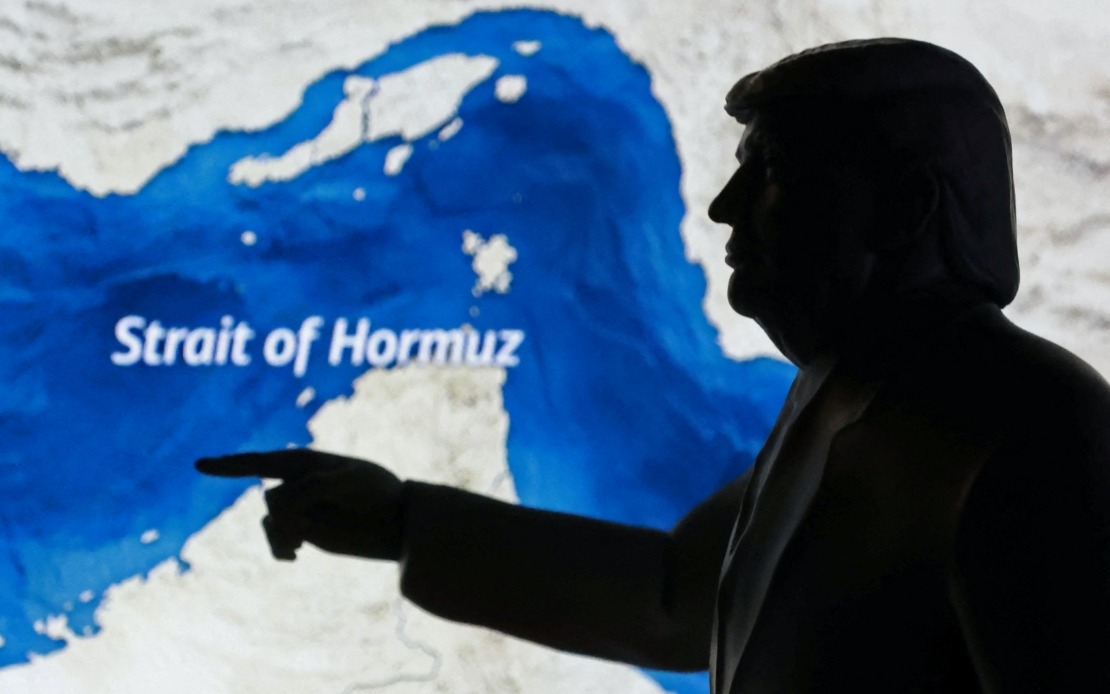
Tensions in the Persian Gulf have reached a critical juncture as US President Donald Trump issued a stark warning on Wednesday, declaring that Washington will launch retaliatory strikes against Iranian infrastructure in response to any attacks on commercial vessels transiting the Strait of Hormuz. In a statement posted on his Truth Social platform, Trump specified that American forces would target bridges or power plants within Iran, including facilities located in Tehran itself, for each incident involving Iranian missile, rocket, or drone strikes against shipping in one of the world's most strategically vital waterways.
The Strait of Hormuz represents one of global commerce's most critical chokepoints, with approximately one-third of all seaborne traded oil passing through its narrow waters annually. Any sustained disruption to shipping traffic through this passage would have profound implications not only for international energy markets but also for the broader Asia-Pacific region, including Malaysia and other Southeast Asian economies heavily dependent on stable energy supplies and reliable maritime trade routes. The escalatory rhetoric from Trump underscores how fragile regional stability remains despite diplomatic efforts to contain the conflict.
This latest warning follows a pattern of tit-for-tat military operations that have characterized the past week, with American forces conducting a series of strikes deep within Iranian territory. Tehran has responded with its own strikes targeting what it characterised as US military facilities and bases distributed across multiple countries throughout the region. The cycle of retaliation has persisted even in the face of formal diplomatic agreements, suggesting that both sides maintain significant military establishments committed to prosecuting their dispute through armed action rather than negotiation.
A Pakistani-brokered framework agreement signed in June between Washington and Tehran was intended to provide a pathway toward ending hostilities that initially erupted in February. That accord was supposed to establish the foundation for comprehensive peace negotiations and a lasting resolution to the conflict. However, the continued military exchanges and Trump's explicit threat of escalating infrastructure attacks demonstrate that the underlying tensions remain unresolved and that military leadership on both sides continues to view armed confrontation as a viable strategic option.
The specificity of Trump's threat—targeting critical infrastructure including power generation facilities and transportation networks—represents a significant escalation in the nature of potential conflict. Rather than focusing solely on military installations, the targeting of civilian infrastructure such as power plants raises concerns about the humanitarian dimensions of any sustained military campaign. Disruption to electrical power systems and transportation networks could have cascading effects on civilian populations, potentially affecting hospitals, water treatment facilities, and essential services far removed from military operations.
For regional stakeholders like Malaysia, such escalation carries substantial economic and security implications. Malaysia's substantial maritime trade passes through or near corridors affected by Persian Gulf tensions, and any significant disruption to shipping could impact Malaysian ports, increase insurance costs for vessels, and disrupt supply chains integral to the Malaysian economy. Additionally, the precedent of targeting civilian infrastructure sets concerning standards for regional conflict management that could influence how other disputes in Southeast Asia are resolved.
The continued breakdown of diplomatic mechanisms despite the June framework agreement suggests that structural obstacles to peace remain fundamentally unaddressed. Both the United States and Iran appear to be pursuing parallel military and diplomatic tracks, with military operations continuing unabated even as negotiators ostensibly work toward a comprehensive settlement. This dynamic raises questions about the actual commitment of either side to the negotiated framework and whether the necessary conditions for sustained peace—including de-escalation of military operations and confidence-building measures—have been established.
The international community has largely remained muted in response to these developments, with major powers seemingly reluctant to intervene directly or impose consequences on either party. This apparent lack of meaningful international pressure may embolden further escalation, as both sides appear confident they can pursue military objectives without facing substantial diplomatic or economic penalties. For smaller nations concerned with stability, the absence of effective international restraint creates a concerning precedent.
Looking forward, the trajectory appears oriented toward further military confrontation rather than meaningful negotiation. Trump's public threat represents not merely a tactical warning but a strategic statement intended to communicate American resolve to both Iranian leadership and regional allies. However, such explicit threats, particularly involving attacks on civilian infrastructure, risk triggering further Iranian retaliation rather than deterring it, potentially creating a dangerous escalatory spiral that could draw in regional allies and destabilize maritime commerce throughout the Indian Ocean and Persian Gulf regions.
The implications for Malaysia and Southeast Asia extend beyond immediate economic concerns about energy and trade. The breakdown of conflict resolution mechanisms and the apparent acceptance of strategic bombing campaigns against civilian infrastructure could establish problematic precedents for regional behaviour. As tensions in the South China Sea and broader Indo-Pacific region remain elevated, the international community's response—or lack thereof—to Persian Gulf escalation sends signals about acceptable standards for great power conduct that may influence how similar disputes are managed elsewhere.

