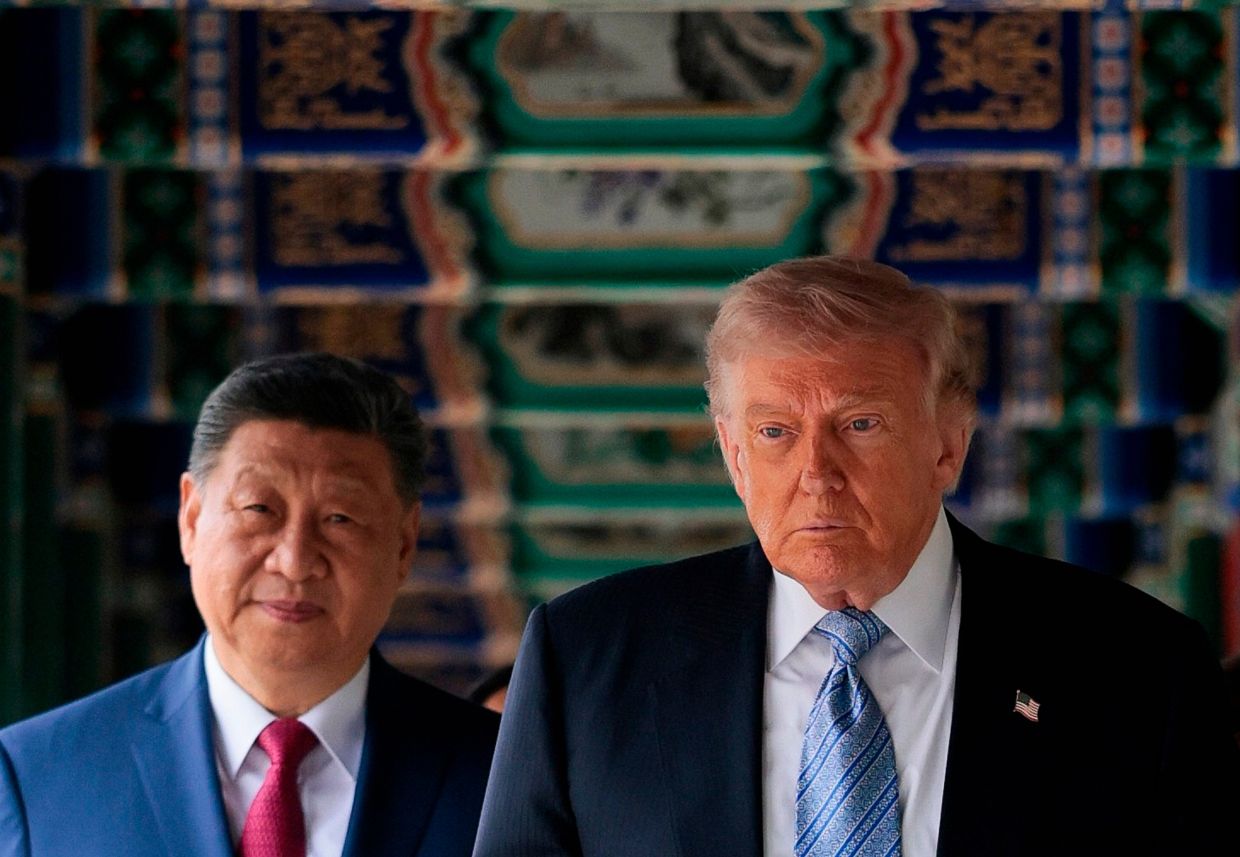
The Trump administration's approach to Beijing remains marked by sharp contradictions, with the American leader simultaneously levelling serious accusations against China while keeping diplomatic channels open for an upcoming state visit. This fractured approach crystallised when Trump responded to reports that China was supplying weapons to Iran, telling journalists that he would find such activity "surprising" but acknowledging that Xi Jinping had promised him otherwise during their May meeting. Trump's statement—that he would be "quite disappointed" if Beijing violated that commitment—encapsulates the tension between confrontational rhetoric and pragmatic engagement that has characterised his China policy throughout his administration.
The weapons allegations centre on intelligence reports suggesting that military hardware would be transported from western China through Pakistan to Iranian forces, with the transaction valued between US$60 million and US$70 million. Reuters reported these developments as tensions over Iran's broader military capabilities remain elevated across the region. For Malaysia and Southeast Asia, such weapons transfers carry significant implications, as regional stability depends partly on restraint by major powers in arming actors with destabilising influence. Pakistan's reported role as a transit point underscores how Great Power competition can draw smaller nations into strategic competitions not of their making.
Beijing's official response was swift and categorical. The Chinese foreign ministry dismissed the weapons report as "untrue and not factual at all", reiterating that China remained committed to de-escalation and ending the conflict in the Middle East. This denial follows Beijing's previous rejection of similar allegations in May, when Trump's visit to China had prompted reports of Chinese weapons supplies to Iran—claims the ministry then dismissed as "completely groundless". The consistency of Beijing's denials suggests a coordinated strategy to maintain plausible deniability while managing Trump's sensitivities ahead of Xi's scheduled visit to the United States on September 24.
Trump's own response reveals the calculation underlying his diplomacy with China. Rather than treating the weapons reports as grounds for sanctions or public confrontation, Trump framed the matter as a test of Xi's personal credibility. By emphasising that the Chinese leader had "told me very strongly" during their May encounter that China would not assist Iran, Trump created space for Beijing to maintain its position while preserving the relationship. This approach reflects Trump's preference for bilateral personal relationships over institutionalised mechanisms of enforcement or verification—a style that offers flexibility but creates ambiguity about American commitment to stated principles.
The contradictions extended beyond the weapons question. Hours before his comments on Iran, Trump launched a sustained social media attack on Dr Anthony Fauci, the long-time US health official, resurrecting claims that the Covid-19 pandemic originated in a Wuhan laboratory and accusing Fauci of consistently attempting to "protect China". Trump stated that "Fauci strongly disagreed, always trying to protect China" regarding the lab-leak theory, framing the scientific debate as one animated by political loyalties rather than evidence. This line of attack, while primarily directed at a domestic political opponent, carries implications for US-China relations by keeping sensitive issues in the public eye and potentially constraining Trump's own diplomatic flexibility.
The broader scientific consensus on Covid-19's origins has coalesced around a natural spillover hypothesis, with international investigations suggesting transmission from animals to humans rather than laboratory escape. Trump's repeated promotion of the lab-leak theory, particularly his invocation of Fauci's disagreement as evidence of protective behaviour toward China, reflects the politicisation of pandemic questions in American discourse. For Southeast Asian audiences, the persistence of these debates matters because they influence how major powers frame their relationship with China and how they respond to shared challenges like infectious disease control.
Trump's China policy has oscillated dramatically between fiery accusations and diplomatic engagement. Just 12 days before his remarks about weapons supplies to Iran, Trump had delivered a prime-time address accusing Beijing of executing "the largest compromise of election data in history", claiming that China had illicitly obtained 220 million American voter files. He declassified documents he said supported this allegation and described the situation as an "unprecedented election security nightmare", language suggesting a fundamental breach warranting serious consequences. Yet these explosive claims have produced no demonstrable response: no new sanctions, no trade penalties, no diplomatic démarches beyond the rhetoric itself.
This absence of follow-through distinguishes Trump's criticism from his administration's actual policy implementation. The continued planning for Xi's September visit proceeded without interruption despite the election security accusations, suggesting that Trump views the bilateral relationship as transcending specific grievances. Last week, Trump had further muddied the waters by claiming that neither China nor Russia were "participating" in what he termed the "Iran war", asserting that Xi had promised him during their May Beijing visit that China would not assist Tehran under any circumstances. Trump added that he took the Chinese leader "at his word", a personal confidence that seemed at odds with intelligence reports of weapons transfers and allegations of data theft.
Yet Trump also issued a warning, telling Beijing that "if they did" assist Iran militarily, "it would be very bad for them—certainly not in their best interests". This formulation attempted to maintain both personal trust and deterrent messaging, a delicate balance that risks satisfying neither objective. The implicit threat lacks credibility precisely because it follows similar unexecuted warnings and comes amid continued diplomatic preparations rather than mounting pressure. For regional observers in Southeast Asia, the pattern suggests that Trump prioritises personal diplomatic relationships with Xi over consistent enforcement of stated American interests, a calculation that shapes how Beijing assesses the costs and benefits of various actions.
The timing of Xi's visit—scheduled for September 24—cannot be separated from Trump's management of these competing messages. A successful state visit requires a baseline of diplomatic civility and forward momentum, creating incentives for Trump to avoid escalation even when he voices serious concerns. The planned engagement provides Beijing a deadline by which Trump must appear to have resolved grievances or at least contained them within acceptable bounds. This dynamic gives Xi leverage: the longer Beijing can maintain diplomatic engagement, the more difficult it becomes for Trump to execute the escalatory measures that his rhetoric implies without appearing inconsistent or damaging the relationship he values.
The contrast between Trump's rhetorical intensity and his diplomatic restraint raises questions about the credibility of American commitments regarding security threats and electoral interference. If Beijing observes that accusations of data theft elicit no tangible consequences, it may calculate that future violations carry manageable risks. Similarly, if weapons supplies to Iran generate only disappointed comments rather than punitive measures, the deterrent effect diminishes. For Malaysia and other Southeast Asian nations that depend partly on American security guarantees and technological partnership, this uncertainty about American follow-through complicates strategic planning and raises questions about the reliability of American leadership in addressing challenges that require sustained, credible pressure.
The broader pattern reveals an administration comfortable with cognitive dissonance in its foreign policy. Trump can simultaneously accuse Xi of election interference and express confidence in his word; he can cite weapons transfers to Iran and continue diplomatic planning without interruption; he can attack health officials for sympathising with China while maintaining the bilateral relationship at the highest levels. This compartmentalisation works as long as neither China nor American allies demand consistency, but it creates fragility when expectations collide with reality. As Xi's September visit approaches, the administration faces an implicit choice between vindicating its toughest rhetoric through concrete action or accepting that personal diplomatic relationships will supersede stated principles.

