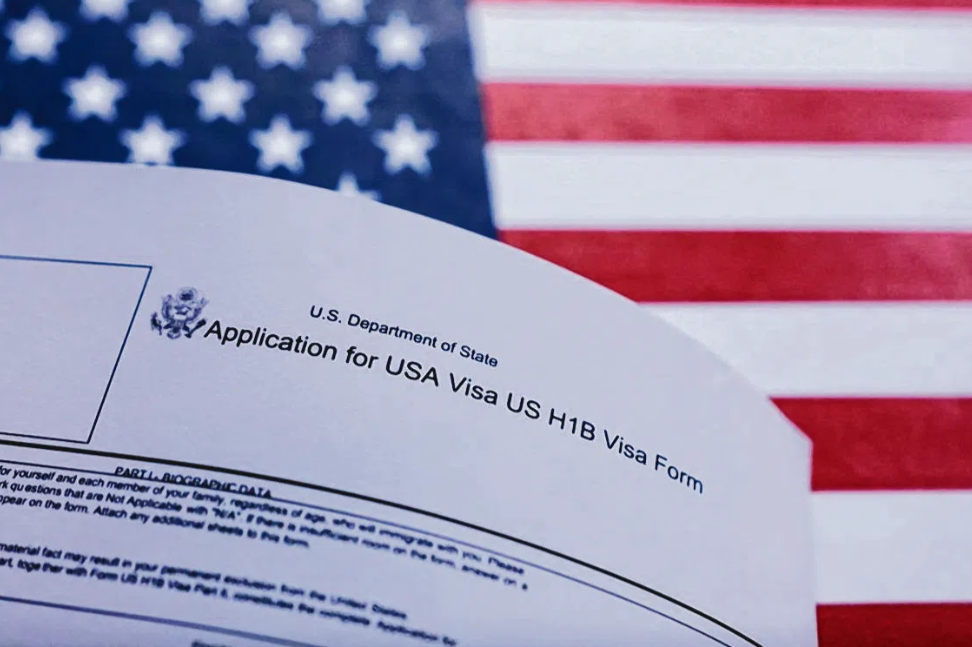
The exodus of skilled foreign technology professionals from the United States represents a historic reversal of decades-long patterns of talent migration. When Deepak departed America in May alongside his wife and two children, he was not simply changing jobs or relocating—he was dismantling a carefully constructed life accumulated over fifteen years to return to India. His decision encapsulates a broader phenomenon now reshaping the global technology workforce: the retreat of Indian and Chinese professionals from American soil, driven by increasingly restrictive immigration policies and the uncertainty surrounding work visa sponsorship.
Deepak's personal journey illustrates the calculus that now confronts H-1B visa holders across the United States. Though he secured new employment shortly after his October layoff, he ultimately concluded that the instability and anxiety inherent in the current immigration environment outweighed the benefits of remaining in America. The prospect of losing visa status if unable to secure sponsorship within sixty days of termination transformed employment insecurity into existential uncertainty. For Deepak and thousands like him, returning to India offered not prosperity but simply stability—the absence of constant worry about maintaining legal status became a compelling advantage.
The Trump administration's escalating assault on the H-1B programme has fundamentally altered the economics of hiring foreign talent. Initial proposals to impose a US$100,000 application fee on new H-1B visas—twenty-five times the existing cost—sent shockwaves through the tech industry, creating confusion about whether the surcharge would apply to transfers and renewals. Although a federal judge invalidated that particular policy in June, the administration has persisted with alternative measures, now proposing a separate US$4,000 charge for visa extensions and renewals beginning September. Each barrier, whether struck down or implemented, reinforces the message that Washington views foreign workers with suspicion.
The cumulative impact of these policy shifts manifests starkly in the data. Indian professionals returning home jumped to approximately 15,100 in 2025 from 9,800 the previous year, with 7,300 already repatriating in the first part of 2026 according to Bengaluru-based talent consultancy Xpheno. Chinese talent flows reveal similar momentum: the Ministry of Education reported 536,000 students returning to China following graduation in 2025, an eight percent increase year-on-year. These statistics represent more than numbers—they signal the erosion of American competitiveness in the global talent marketplace. The so-called American Dream, which for generations attracted the world's brightest minds to Silicon Valley and tech hubs nationwide, is losing its lustre.
For decades, American technology companies have treated the H-1B programme as an essential recruitment pipeline, particularly for advanced technical roles requiring specialised expertise. The visa category, renewable every three years and regarded as a pathway toward permanent residence through green card sponsorship, enabled firms like Amazon, Meta, Apple and Microsoft to assemble globally diverse engineering teams. Indians constitute approximately seventy percent of H-1B visa holders, while Chinese nationals represent around twelve percent. Yet the administration's restrictive stance is already reducing visa approvals: petitions approved for the top one hundred employers are tracking toward a decline exceeding ten percent in fiscal year 2026 compared with the previous year.
The deterioration of employment prospects compounds visa-related pressures. Substantial layoffs and hiring freezes have become routine across major technology companies, triggered both by economic weakness and artificial intelligence-driven restructuring. Meta, Visa, Amazon and numerous other industry leaders have shed thousands of positions, creating a bloated labour market where foreign professionals face disproportionate squeeze-out. One unnamed professional at a prominent German software firm noted that only the most exceptional foreigners are now advancing through hiring processes. For visa-dependent workers like Carrie, a Chinese data analyst facing job termination after three years on H-1B status, the mathematics became brutally simple: she submitted thirty job applications daily at her most desperate, then watched that number collapse to five per day as rejection emails accumulated. Without employer sponsorship, she faced departure by late August.
Social hostility has intensified alongside policy hostility. Reports from organisations including the AAPI Equity Alliance document escalating racist attacks and discriminatory sentiment directed at Indian and Chinese immigrants, despite these populations representing America's most educated and highest-earning foreign-born cohorts. The hostile environment extends beyond isolated incidents into systematic disadvantage within hiring processes and workplace interactions. Returning to India represented not merely an economic calculation but a flight from degrading circumstances—a choice between diminished prospects abroad and restored dignity at home.
Yet returning professionals confront their own challenges and complications. Nupur Dave, a Bengaluru-based consultant assisting thousands of repatriated tech workers, observes that the exodus has accelerated beyond earlier expectations as recent layoffs overcome earlier reluctance to abandon American careers. However, the domestic Indian market for returnees remains structurally constrained. Traditional IT services and outsourcing sectors—former employment anchors—are contracting. The bright spot emerges from India's expanding ecosystem of Global Capability Centres (GCCs), multinational companies' India-based innovation hubs that have collectively hired approximately 100,000 employees annually since 2023. Xpheno's research indicates that the top 125 GCCs absorbed roughly 7,000 mid-level and senior technology professionals during the preceding twelve months, including 2,800 returnees from America.
Yet returnees must adjust expectations regarding compensation and valuation. Indian companies rarely offer premiums for overseas experience unless candidates possess specialised expertise in data science or artificial intelligence. Salary packages typically shrink substantially compared with American equivalents, even accounting for cost-of-living differentials. For mid-career professionals accustomed to American compensation scales, the financial reality of repatriation represents significant downward mobility. Simultaneously, some returnees embrace this constraint as liberation. Ram, a thirty-eight-year-old product manager who returned to Bengaluru in early 2025 after nine years in Connecticut, has chosen to subsist on accumulated savings rather than immediately re-entering the workforce. His uncertainty—whether to resume product management, launch a business venture, or pursue agriculture—reflects a psychological shift impossible during his H-1B years. The structured ambition required to maintain visa sponsorship has yielded to what he describes as an unprecedented luxury of choice.
The reverberations of this talent reorientation extend far beyond American borders and Indian shores. Southeast Asian technology hubs, including Malaysia, Thailand, and Vietnam, occupy an intermediate position in a reconfiguring global talent landscape. As Indian and Chinese technical professionals consolidate at home and strengthen regional economies' technological capabilities, Southeast Asian nations must recognise both threat and opportunity. The talent that previously funnelled through America's immigration system may now circulate within Asia, creating competition for the region's own ambitions to develop technology sectors. Simultaneously, Southeast Asia might capture overflow from India and China's absorptive capacity, particularly professionals seeking regional alternatives to both expensive Silicon Valley and economically constraining home markets.
The Trump administration's immigration policies have triggered unintended consequences that extend far beyond their stated objectives. Rather than protecting American workers, the restrictions appear to be hollowing out American competitive advantage in precisely those sectors—artificial intelligence, software development, advanced engineering—where American leadership depends upon global talent synthesis. India and China, meanwhile, find unexpected opportunity in talent that previously would have been permanently extracted. The reversal of brain drain into brain gain represents a profound realignment in global economic geography, one that transcends trade disputes and geopolitical competition to reshape where innovation occurs and where opportunity resides. For Malaysia and its Southeast Asian neighbours, this moment demands strategic clarity about positioning within this reorganising ecosystem.

