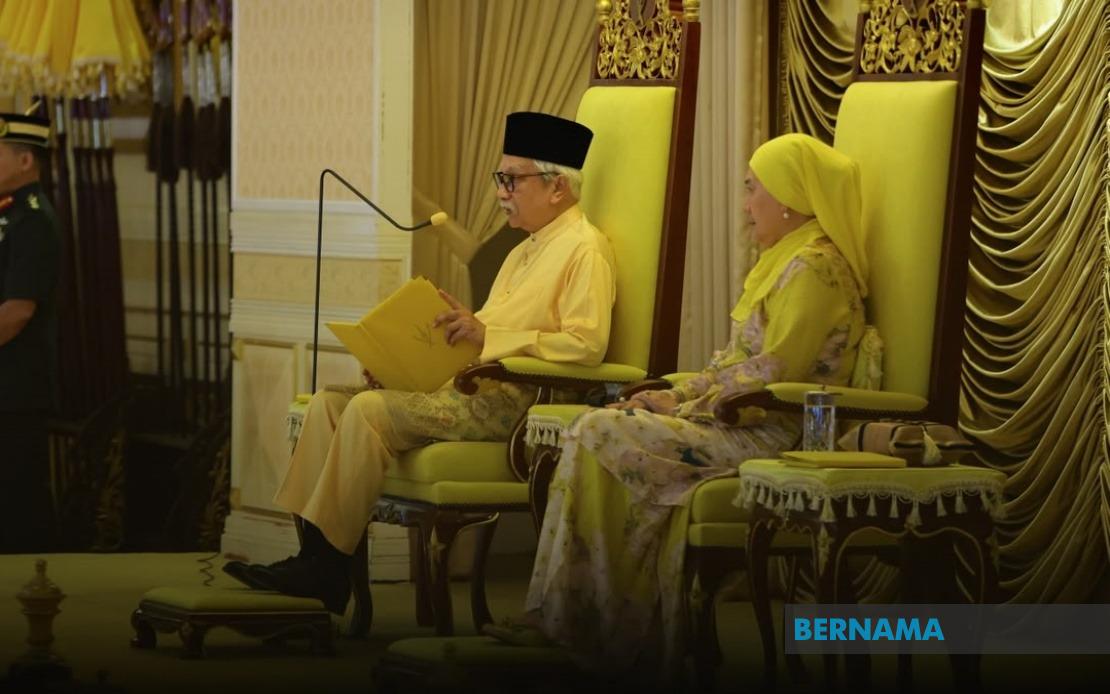
The Yang Dipertuan Besar of Negeri Sembilan, Tuanku Muhriz Tuanku Munawir, has issued a pointed reminder to members of the State Legislative Assembly that their foremost duty lies in championing the interests of the state and its constituents, rather than pursuing political or personal agendas. The directive was delivered during a ceremony in Kuala Pilah on August 2 in which the new Menteri Besar was formally appointed and sworn in at Istana Besar Seri Menanti.
This exhortation carries particular significance in the Malaysian constitutional context, where the position of the Yang Dipertuan Besar serves as a custodian of state institutions and public values. When a reigning monarch addresses legislators directly on matters of principle and governance, it signals a reassertion of the unifying role that constitutional rulers play in channelling the aspirations of their subjects. Tuanku Muhriz's intervention underscores the expectation that elected representatives should view their tenure as a sacred trust rather than a vehicle for factional advancement.
The timing of this address, coinciding with a change in executive leadership, carries additional resonance. A newly appointed Menteri Besar typically charts the administration's priorities and establishes its tone. By positioning his remarks at this juncture, Tuanku Muhriz has effectively set a benchmark against which the incoming leadership and the assembly as a whole must measure their performance. The emphasis on people-centric governance serves as both a blessing upon the new administration and an implicit contract binding it to public accountability.
Tuanku Muhriz articulated the foundational responsibility that underpins representative democracy: legislators function as conduits through which the lived experiences, hopes, and grievances of ordinary citizens reach the halls of power. This conception of elected office rejects the notion that representatives are primarily agents of their party machines or vehicles for their own ambitions. Instead, it posits that every assemblyman or assemblywoman derives their legitimacy from their constituents' mandate and therefore owes primary allegiance to those who elected them.
The Yang Dipertuan Besar stressed that policy formulation, strategic planning, and executive decisions must be grounded in an authentic understanding of public sentiment and aspirations rather than ideological doctrine or factional calculation. This formulation implies a critique of governance models in which top-down directives override grassroots concerns or in which legislative bodies become mere rubber stamps for pre-determined agendas. By insisting that state policies must remain anchored to the welfare and continuous advancement of Negeri Sembilan, Tuanku Muhriz has articulated a standard of governance that privileges tangible improvements in citizens' lives over rhetorical commitments or partisan posturing.
For elected representatives, the implications are multifaceted. Legislators must resist the temptation to use their positions as stepping stones to higher office or as platforms for cultivating personal networks that transcend their duty to their constituents. The call for loyalty directed toward the state and the people, rather than toward political parties or influential patrons, represents a recalibration of hierarchies within the political ecosystem. This stance aligns with the constitutional principle that politicians are servants of the public, not masters wielding power for their own enrichment or glory.
In the broader Malaysian context, this pronouncement carries implications that extend beyond Negeri Sembilan's borders. Multiple states have experienced legislative dysfunction, corruption scandals, and partisan conflicts that have undermined public trust in democratic institutions. When a reigning monarch articulates a vision of governance centred on public welfare and transcendent loyalty to the state, it provides a moral and constitutional counterweight to the centrifugal forces of factionalism and self-interest that frequently destabilize legislatures. Such interventions, though measured and symbolic in nature, reinforce the principle that Malaysia's constitutional monarchy plays a vital role in anchoring political behaviour to foundational principles of integrity and public service.
The address also carries implications for state-level development and resource allocation. Negeri Sembilan, while relatively prosperous compared to several other Malaysian states, continues to face infrastructure gaps, economic diversification challenges, and disparities between urban and rural areas. Tuanku Muhriz's emphasis on the "continued development of Negeri Sembilan" signals that legislators must subordinate their own interests to the collective project of advancing the state's competitiveness and inclusive growth. This framing transforms governance from a zero-sum competition for spoils into a collaborative endeavour directed toward shared prosperity.
The ceremonial setting of the address—the appointment of a new Menteri Besar at the royal palace—amplifies its symbolic weight. Istana Besar Seri Menanti represents continuity of authority and institutional legitimacy that supersedes temporary political configurations. By hosting the swearing-in and delivering his remarks within that space, Tuanku Muhriz has invoked the constitutional monarchy as a repository of democratic values and as an institution standing above partisan contestation. This positioning reassures citizens that democratic governance in Malaysia operates within a framework of constitutional checks and moral authority vested in the institution of the monarchy.
Moving forward, Negeri Sembilan's legislators face the practical challenge of translating these principles into legislative action and budgetary priorities. The effectiveness of Tuanku Muhriz's intervention will ultimately be measured not by the rhetoric of politicians but by their decisions regarding resource allocation, policy implementation, and their responsiveness to constituent concerns. Whether the assembly will genuinely place public interest above factional loyalties remains an open question that will shape the state's trajectory in the coming years.

