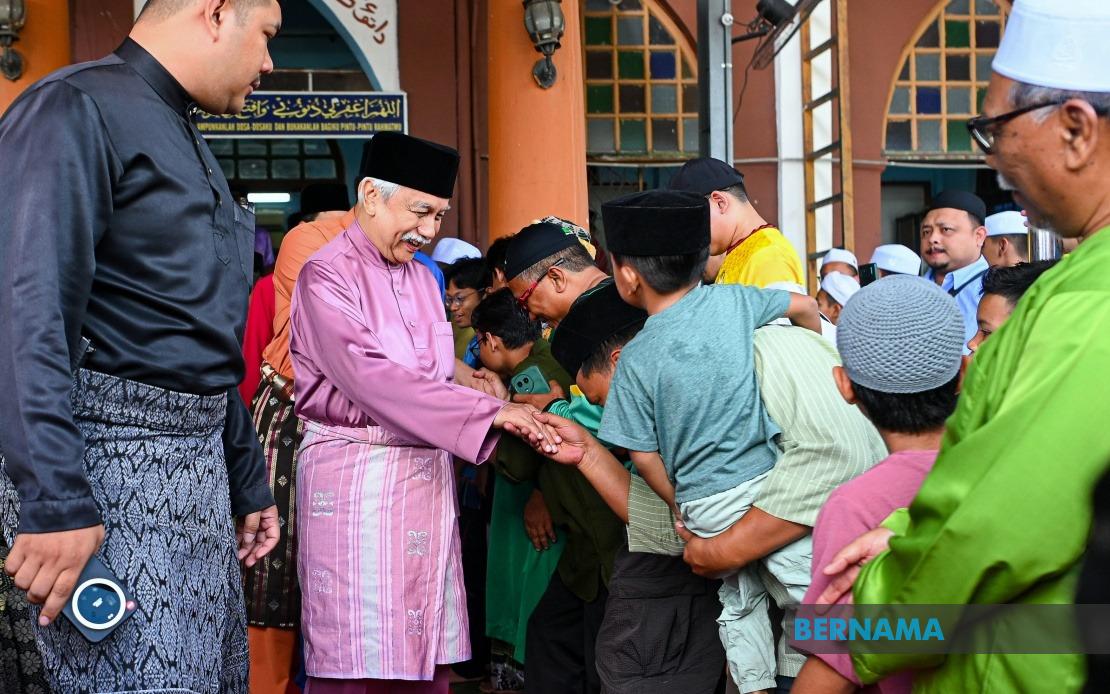
Tuanku Muhriz Tuanku Munawir, the Yang Dipertuan Besar Negeri Sembilan, participated in congregational Friday prayers at Masjid Kariah Pantai in Seremban on July 17, joining over 500 worshippers for the midday service. The royal attendance underscored the significance of communal Islamic practice among Malaysia's leadership, demonstrating the integration of constitutional monarchical duties with personal religious observance that remains central to the institution of the Malay-Muslim sultanate.
The Yang Dipertuan Besar was accompanied by two of his sons, Tunku Besar Seri Menanti Tunku Ali Redhauddin and Tunku Zain Al-'Abidin, reflecting the family's commitment to participating in the wider Muslim community's religious activities. Such joint attendance by the sultan and his heirs carries symbolic weight within Negeri Sembilan's traditional governance structure, where the royal household maintains close ties to both state institutions and local religious communities.
Among other dignitaries present was the Undang of Luak Sungei Ujong, Datuk Klana Petra Muhammad Faris Johari, representing the traditional chieftaincy system that operates in parallel with the state's modern administrative framework. Menteri Besar Datuk Seri Aminuddin Harun's presence highlighted the alignment between the state executive and ceremonial religious observances, a common feature across Malaysia's nine monarchical states where Friday prayers often serve as occasions for high-level political engagement with constituents.
Immediately before the congregation performed their prayers, Imam Amru Zubair Abu Hanifah delivered the Friday sermon, or khutbah, which traditionally addresses topical religious and social concerns. On this occasion, the sermon focused on contemporary threats to faith, a theme that resonates across Malaysia's diverse Muslim population grappling with questions about religious identity, secular influences, and the role of traditional Islamic institutions in modern society. Such sermons often reflect broader conversations occurring within Muslim-majority nations regarding the preservation of religious values amid rapid social and technological change.
The choice of subject matter for the khutbah suggests awareness of current preoccupations within Malaysian Islamic discourse, where religious scholars and leaders frequently address challenges including materialism, social fragmentation, and the influence of non-traditional interpretations of Islam. By delivering a sermon centred on safeguarding faith, the imam aligned with Malaysia's state-endorsed approach to Islam, which emphasizes moderate, institutionally-sanctioned Islamic practice while attempting to counter what authorities characterise as extremist ideologies or heterodox movements.
Following the completion of the midday prayers, Tuanku Muhriz and his sons engaged directly with members of the congregation, moving among the assembled worshippers to exchange greetings and strengthen personal connections within the community. This practice of post-prayer interaction by senior royal figures serves multiple functions: it demonstrates accessibility and commitment to ordinary citizens, reinforces social bonds within the religious community, and provides opportunities for individuals to present concerns or requests to their leaders in an informal setting.
During this post-prayer engagement, the Yang Dipertuan Besar and his family presented financial contributions to children who had attended the Friday prayers, a gesture that combines religious encouragement with practical support for younger members of the congregation. Such contributions reflect traditional Islamic values regarding the nurturing of the next generation's religious education and participation, while also acknowledging the financial constraints many Malaysian families face in supporting their children's engagement with religious institutions.
The event at Masjid Kariah Pantai exemplifies how Malaysia's constitutional monarchies maintain active roles in their states' religious and social fabric, distinct from the ceremonial-only character of monarchies in some other Commonwealth nations. The Yang Dipertuan Besar's regular participation in communal religious activities reinforces his constitutional position as the religious head of Islam in Negeri Sembilan, a responsibility that extends beyond ceremonial duties to include demonstrated personal commitment to Islamic observance and community welfare.
For Malaysian readers, particularly those in Negeri Sembilan, such occasions represent important demonstrations of leadership engagement with grassroots communities and religious institutions. The attendance of state officials alongside traditional rulers and family members illustrates the interwoven nature of modern Malaysian governance, where elected administrators, hereditary monarchies, and religious hierarchies cooperate in managing state affairs and maintaining social cohesion. The Friday prayer gathering also serves as a reminder of Islam's institutional centrality within Malaysia's constitutional framework, where the federal government and state rulers share authority over Islamic matters according to the Federal Constitution.

