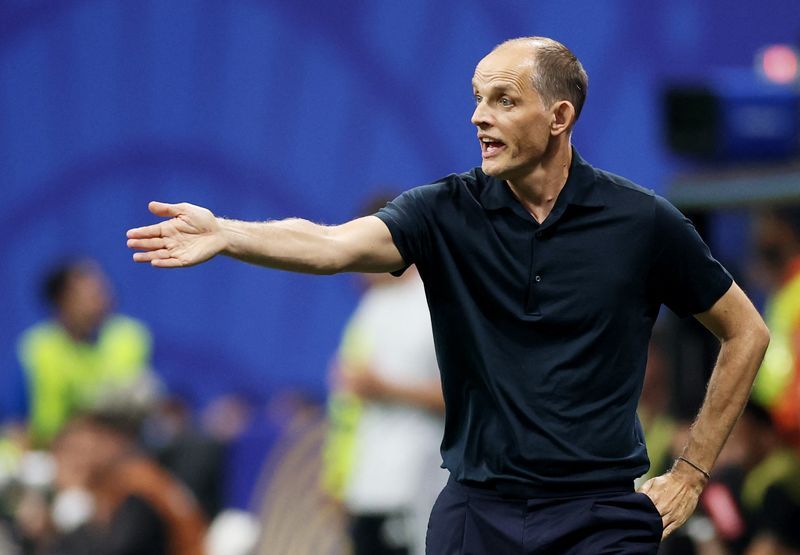
Thomas Tuchel arrived at the England job as the manager most likely to end the nation's 58-year World Cup drought, yet his tenure has already faced a withering examination after England's dramatic elimination by Argentina in the semi-finals. The German tactician, appointed in October 2024 as Gareth Southgate's successor and tasked with finally capturing that elusive second World Cup title, has become the focus of considerable scrutiny. However, the reality of England's defeat extends far beyond the tactical adjustments made during the match, revealing systemic challenges that may require more than managerial acumen to overcome.
The aftermath of the semi-final loss has unleashed predictable recriminations, with critics converging on Tuchel's defensive reshuffling following Anthony Gordon's early goal as the pivotal moment that cost England the match. Former West Ham and Crystal Palace manager Alan Pardew offered perhaps the most balanced criticism, suggesting that fear and poor organisation had undermined the team's mentality. Yet such analysis, while not without merit, risks overlooking the formidable opponent England faced—Argentina, defending world champions still propelled by what many regard as the greatest footballer alive in Lionel Messi, a player operating at an extraordinary level of control and inspiration.
FAFA Chief Executive Mark Bullingham had positioned Tuchel's appointment as England's pathway to tournament glory, declaring in his unveiling statement that the club-level serial winner represented the nation's best chance at the next World Cup. Tuchel himself had stepped into the role with characteristic confidence, vowing to secure that long-elusive second star on the English shirt. The manager's pedigree—including a Champions League triumph with Chelsea and sustained success across multiple leagues—suggested he possessed the tactical sophistication and winning mentality required to navigate international football's unique demands. Yet his first major tournament exposed the gulf between club dominance and the volatility of knockout football on the world stage.
Tuchel's own post-match assessment pointed to something more fundamental than his tactical decisions. He argued that no structural arrangement could have prevented the outcome, instead diagnosing a deeper problem rooted in England's footballing culture and approach to possession. His observation that controlling the ball may not sit naturally within English DNA—contrasting it with the intrinsic comfort Spain and Argentina possess in dictating play through possession—suggests a philosophical misalignment that cannot be resolved through mid-match adjustments. This admission, while perhaps uncomfortable for English football traditionalists, reflects an honest appraisal of the tactical challenge posed by opponents who treat the ball as an extension of their superiority.
The broader context of managerial development at the international level offers perspective often lost in the immediate aftermath of defeat. Didier Deschamps, France's architect of sustained World Cup success, required six years before steering Les Bleus to the 2018 title, subsequently achieving a runners-up finish four years later. Similarly, Aime Jacquet needed five years to develop the French team that captured the 1998 trophy. By this measure, Tuchel's first major tournament reaching the semi-finals represents a respectable if not spectacular achievement, matching Southgate's 2018 effort. The experience gained from navigating the unique pressures and rhythms of tournament football—from group stages through knockout rounds—represents invaluable education that cannot be accelerated, regardless of managerial reputation.
Yet Argentina's path to the semi-final deserves equal analytical weight in understanding England's defeat. Lionel Scaloni's defending champions progressed through the group phase smoothly but encountered repeated crises in the knockout stages that tested their resolve and cohesion. Cape Verde pushed them to the limit, while Egypt required three late goals to prevent an upset in the last 16. A quarter-final against 10-man Switzerland extended to extra time before Argentina prevailed. These narrow escapes might suggest vulnerability, yet they instead revealed a quality fundamental to championship teams: the unwillingness to surrender, combined with the presence of a transcendent talent capable of producing decisive moments when most required.
Messi's performance against England illustrated precisely why Argentina reached the semi-final despite such challenges. The 39-year-old footballer, still operating at elite levels, delivered the creative brilliance that produced assists for both late goals from Enzo Fernandez and Lautaro Martinez. England's attempted defensive compaction, visible in their minimal passing in Argentina's half during the final 20 minutes—just two passes compared to Argentina's 111—made little difference to Messi's ability to orchestrate play from the right flank and exploit spaces. Thierry Henry, who spent three seasons observing Messi at Barcelona, offered perhaps the most insightful commentary on the Argentine's mentality and capability, describing how Messi's response to perceived disrespect or defensive provocation triggers an almost unstoppable competitive intensity.
The statistical reality of the match reveals how thoroughly Argentina dominated possession and chance creation in the latter stages, a period when Tuchel's tactical shift was supposed to provide defensive solidity. Instead, it exposed the fundamental gap between England's footballing approach and Argentina's control of the game's rhythm and tempo. England's retreat into a defensive posture, rather than providing safety, handed Argentina the initiative to dictate terms through possession and set the tempo for play. This inversion of the typical dominant-nation football model—where possession and control are assumed prerequisites for victory—suggests that against opponents of Argentina's quality, especially with Messi orchestrating play, defensive passivity becomes counterproductive.
The challenge ahead for Tuchel involves reconciling England's technical limitations in possession-based football with the demands of modern international competition, where teams must impose themselves through control rather than merely react to opponents. Malaysia and Southeast Asian observers, watching from a region where English football enjoys considerable following, will note that Tuchel's task extends beyond tactical adjustment or personnel changes. The fundamental question concerns whether England's footballing philosophy can evolve toward the possession-oriented, technically sophisticated approach that now appears essential for World Cup success. Without such evolution, even the most accomplished manager will struggle against opponents capable of executing sustained possession-based dominance.
Tuchel's recent contract extension through 2026 indicates the FA's commitment to his project despite the semi-final exit, a decision that acknowledges both the long-term nature of international football development and the unrealistic expectations that follow England's periodic tournament runs. His experience at Chelsea and Bayern Munich provides evidence of his capacity to build sustained winning cultures, yet international football operates according to different timescales and pressures. The path forward requires patience from English football's stakeholders, genuine reform in approach to technical development, and perhaps most importantly, the emergence of individual players capable of matching Messi's transformative influence on their team's performance. Until such elements align, managers—however accomplished—will find themselves vulnerable to the same criticism Tuchel now faces.

