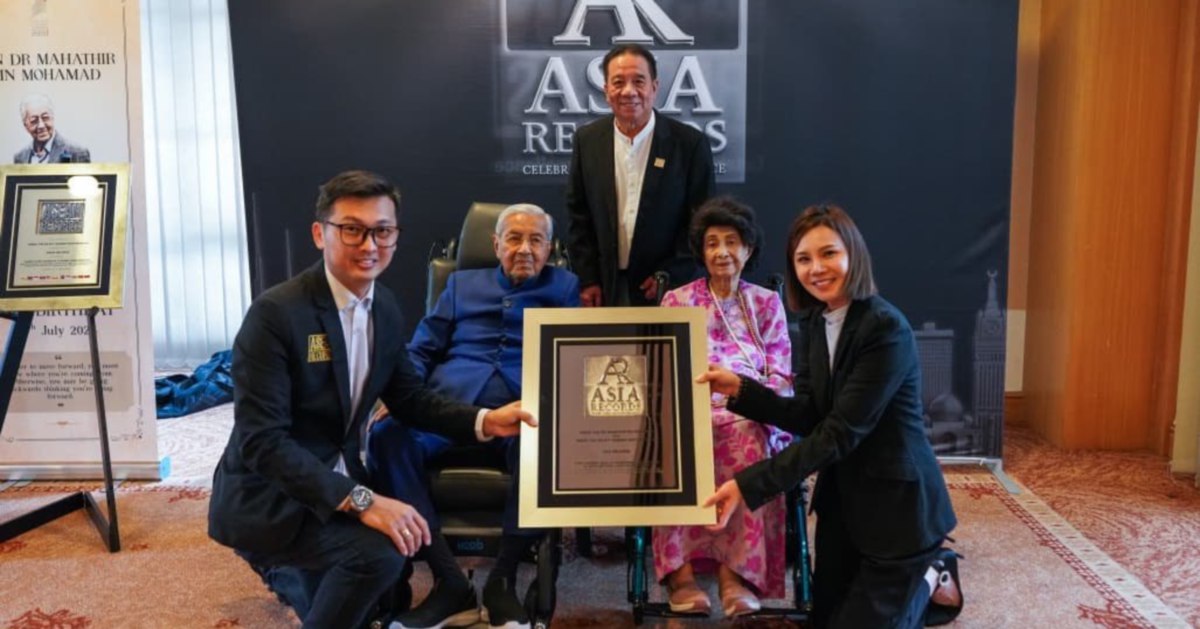
Malaysia's most prominent political figure, former Prime Minister Tun Dr Mahathir Mohamad, and his wife Tun Dr Siti Hasmah Mohd Ali, have etched their names into the historical record books following the conferment of three official recognitions that celebrate their extraordinary longevity and joint accomplishments. The accolades underscore not merely their individual lifespans but also the distinctive character of their partnership, which has weathered decades of Malaysia's most tumultuous political and social transformations.
The significance of these records extends well beyond the realm of personal achievement. In a region where demographic studies have traditionally focused on individual lifespans rather than marital longevity, this recognition represents a notable shift in how societies acknowledge enduring partnerships. The couple's combined years of vitality offer a fascinating case study for researchers examining health outcomes, family stability, and the social determinants of exceptional longevity in Southeast Asia. Malaysia, alongside other ASEAN nations, faces an ageing population crisis, making the health trajectories of long-lived individuals increasingly relevant to public policy discussions.
Tun Dr Mahathir's personal achievements before this honour had already made him a towering figure in the region's modern history. His tenure as Prime Minister spanned two distinct periods, during which he championed ambitious infrastructure projects and economic policies that fundamentally reshaped Malaysia's development trajectory. Yet this latest recognition pivots focus away from his individual professional legacy towards the private sphere, acknowledging the role partnership plays in sustaining wellbeing and meaning across a century or more of life.
Tun Dr Siti Hasmah's role throughout this extended lifespan deserves particular scrutiny, as she has remained largely out of the public spotlight compared to her husband, yet has clearly maintained the physical and mental vigour necessary to support both her own wellbeing and the household they have shared. Historical documentation of spouses in such positions often underestimates their contributions to their partners' health outcomes, emotional resilience, and overall quality of life. Her recognition alongside Tun Dr Mahathir begins to correct this imbalance in how marital partnerships are valued and acknowledged.
From a gerontological perspective, the case of this couple presents intriguing questions about the relationship between active engagement with life, intellectual stimulation, and longevity. Tun Dr Mahathir has remained publicly engaged with political commentary and analysis well into his later years, continuing to offer perspectives on national and regional affairs. Such ongoing engagement, researchers increasingly suggest, may contribute to maintaining cognitive function and overall vitality in ways that pure retirement does not. The couple's apparent maintenance of an engaged lifestyle offers implicit lessons for Malaysia's rapidly ageing population.
The institutional recognition of these records carries broader implications for how Malaysia positions itself within global conversations about health, longevity, and ageing. As societies across Southeast Asia grapple with the economic and social challenges posed by ageing populations, celebrating examples of extended, healthy lives becomes not merely a matter of honouring individuals but of acknowledging proven models of resilience and longevity. These records may serve to underscore that extended lifespans are achievable within this region and that cultural, economic, and social conditions here can support exceptional human longevity.
Furthermore, the recognition illuminates generational differences in how achievements are measured and celebrated. Where earlier eras might have focused exclusively on professional accomplishments or political legacies, contemporary Malaysia increasingly recognises the validity and importance of personal milestones and family achievements. This expansion of what constitutes a record-worthy achievement reflects changing social values and a more holistic understanding of human success and contribution to society.
The records themselves warrant closer examination, as they appear to encompass not only the individual lifespans of both parties but specifically their longevity as a married couple. This distinction is crucial, as it acknowledges that certain achievements cannot be celebrated in isolation but rather derive their significance from the interplay between two individuals. The marriage of Tun Dr Mahathir and Tun Dr Siti Hasmah has endured through Malaysia's most consequential decades, providing stability through periods of significant national change and personal evolution.
For younger Malaysians and regional audiences, the story of this centenarian couple offers a counternarrative to contemporary anxieties about modern life's sustainability and the challenges of maintaining meaningful relationships amid rapid social change. Their sustained partnership across an entire century provides tangible evidence that commitment, partnership, and engagement with life can yield measurable, celebrated outcomes. As Malaysia confronts its demographic future, the visibility of such exemplary longevity may influence public discourse around ageing and end-of-life planning.
The recognition of these records also reinforces Malaysia's position as a country capable of producing individuals of exceptional longevity and achievement. Within the competitive landscape of Southeast Asian nations, where development indices and human achievement benchmarks shape national reputation, such recognitions contribute to a broader narrative of Malaysian excellence and capability. The centenarian couple's achievements become, in this sense, achievements of the nation itself, reflecting the quality of life and opportunities the country provides to its citizens.
Moving forward, these records are likely to spark increased interest in gerontological research within Malaysia and the broader ASEAN region. Institutions may be incentivised to study the health histories, lifestyle choices, and genetic factors that have contributed to the exceptional longevity of both Tun Dr Mahathir and Tun Dr Siti Hasmah. Such research could yield insights applicable to healthcare policy and interventions designed to extend healthy lifespan across the Malaysian population.

