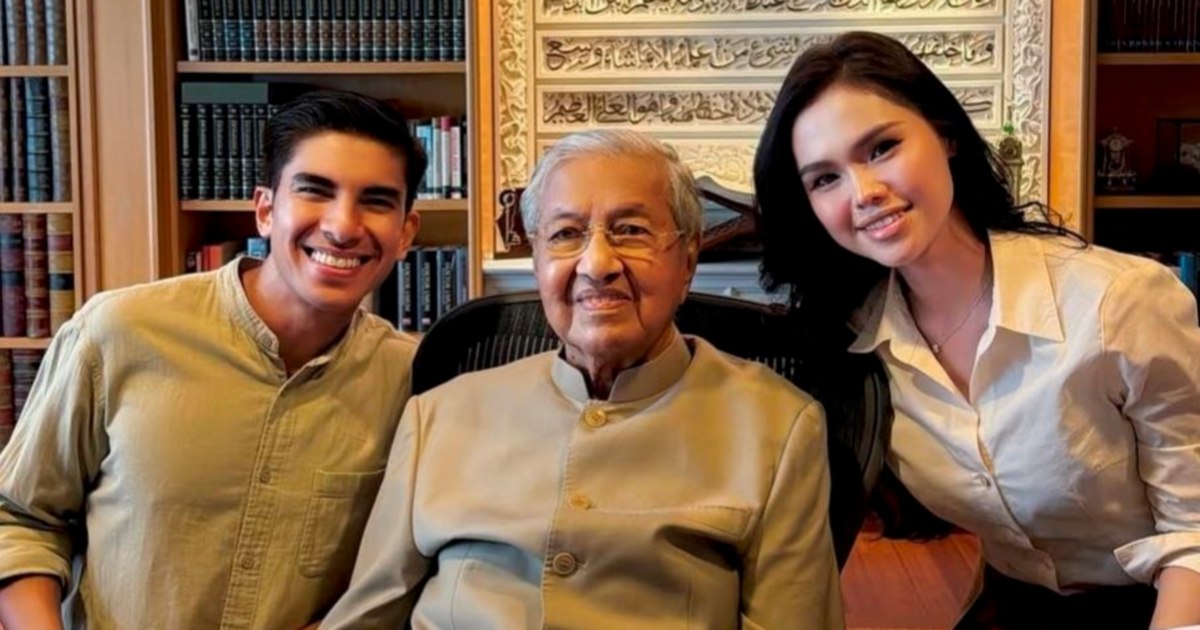
Entertainer and vocalist Bella Astillah has publicly shared that former prime minister Tun Dr Mahathir Mohamad extended matrimonial wisdom during a recent engagement where she was accompanied by her betrothed, Syed Saddiq Syed Abdul Rahman, the parliamentary representative for Muar. The revelation underscores an intriguing crossover between Malaysia's entertainment sphere and its political establishment, highlighting how established figures continue to command influence across professional boundaries.
The encounter between the younger generation and the elder statesman carries symbolic weight in Malaysian society, where respect for seniors and reverence for former leaders remain culturally significant. Tun Mahathir, whose tenure as premier spanned nearly two decades across non-consecutive periods, has maintained a prominent voice in national discourse since stepping down from office. His willingness to engage with personalities from entertainment and politics alike reflects the interconnected nature of Malaysia's public figures, where social events frequently bring together individuals from disparate professional domains.
Syed Saddiq's presence at the meeting signals the compatibility between his parliamentary responsibilities and his personal life trajectory. As one of Malaysia's younger parliamentarians, the Muar MP represents a demographic shift within political leadership, embodying a generation that navigates traditional customs while embracing contemporary values. The decision to present himself alongside his fiancée for such an encounter demonstrates an openness to seeking counsel from revered figures, suggesting that despite generational differences, respect for institutional wisdom remains valued among younger political actors.
Bella Astillah's background in entertainment positions her as a public personality accustomed to media attention and social scrutiny. As both actress and singer, she operates within Malaysia's creative industries where visibility and personal narrative intersect with professional identity. Her disclosure of this private meeting reveals the degree to which even intimate life moments become subject to public interest when involving recognisable figures, a hallmark of celebrity culture in Malaysia and across Southeast Asia.
The significance of receiving counsel from Malaysia's most recognisable former leader extends beyond mere social courtesy. Tun Mahathir's extensive experience navigating leadership, governance, and public life positions him as an figure whose perspectives on matters such as marriage, stability, and personal commitment carry perceived gravitas. For a younger generation contemplating matrimony, accessing such perspective represents a form of intergenerational knowledge transfer that transcends formal institutional channels.
The engagement between Bella Astillah and Syed Saddiq merges two prominent sectors of Malaysian public life—entertainment and politics. While such intersections occur with increasing frequency in contemporary Malaysia, the deliberate involvement of a senior political figure in validating or blessing such unions remains newsworthy precisely because it illustrates how Malaysia's leadership maintains engagement with society across multiple domains. This represents a departure from more compartmentalised approaches to public and private life sometimes observed in other societies.
Marriage advice within Malaysian cultural contexts often emphasises virtues of stability, mutual respect, and commitment to family values. Tun Mahathir, having long projected himself as an advocate for national cohesion and institutional strength, would likely frame matrimonial guidance through such lenses. The public nature of this disclosure suggests that the couple welcomes association with elder guidance, implicitly endorsing the cultural narrative that important life decisions benefit from wisdom derived from experience and age.
For entertainment observers, Bella Astillah's openness about receiving counsel indicates a maturation of public perception regarding her personal development. Rather than framing marriage as purely a romantic achievement, the presentation of seeking guidance from respected figures situates matrimony within broader frameworks of responsibility and social continuity. This positioning may resonate with Malaysian audiences who value traditional narratives of courtship and commitment despite evolving social dynamics.
The convergence of showbiz, politics, and elder statesmanship evident in this interaction reflects Malaysia's relatively interconnected circles of influence. Unlike larger nations where such spheres remain largely compartmentalised, Malaysia's compact geography and close-knit elite circles facilitate frequent encounters across professional boundaries. This networking effect means that prominent individuals frequently move between contexts, creating opportunities for figures like Tun Mahathir to maintain relevance and visibility long after formal retirement from designated positions.
Moving forward, the public disclosure of this encounter will likely influence how Malaysian audiences perceive both Bella Astillah's maturity as an entertainer and Syed Saddiq's engagement with tradition and respect for established authority. For observers of Malaysian political culture, the Muar MP's participation signals comfort with maintaining ceremonial and social relationships with elder figures who retain symbolic authority. The engagement thus becomes more than a personal matter—it becomes a cultural statement about how Malaysia's younger generation navigates respect, ambition, and tradition within a modernising society.

