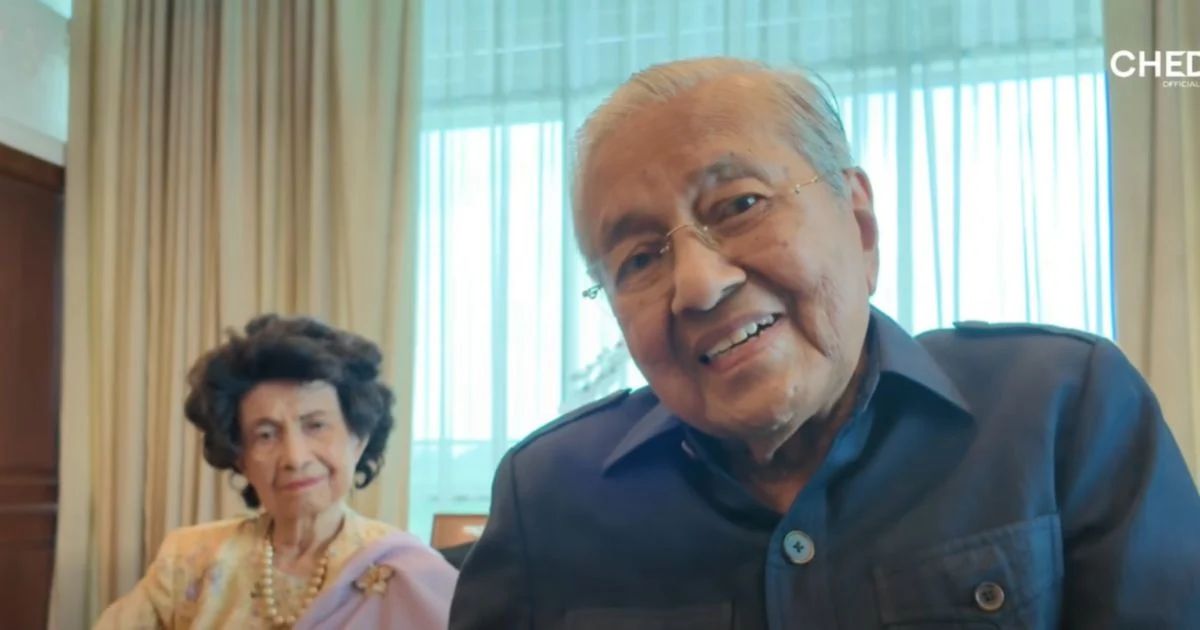
Tun Dr Mahathir Mohamad, Malaysia's longest-serving prime minister and the nation's elder statesman, has publicly acknowledged the groundswell of affection and well-wishes from across the country marking his milestone 101st birthday. The nonagenarian released a statement of thanks, noting the profound impression the cascade of greetings and cards has left upon him and underscoring the enduring connection he maintains with Malaysians despite his advancing years.
The outpouring of birthday tributes to Tun Mahathir reflects his status as a towering figure in Malaysia's modern political history. His tenure as prime minister, spanning 1981 to 2003 and returning briefly from 2018 to 2020, left an indelible imprint on the nation's development trajectory, economic policies, and international standing. Malaysians across generations, from those who lived through his initial decades in office to younger citizens who experienced his recent return to power, participated in extending their best wishes during this significant personal milestone.
Reaching 101 years of age constitutes an extraordinary longevity achievement, particularly for a public figure who has maintained active engagement with Malaysian affairs well into his centennial decade. Tun Mahathir's continued presence in the national consciousness speaks to the complexity of his legacy—one that sparks continued debate and reflection among different constituencies within Malaysian society. His decision to publicly thank the nation for these gestures suggests a reflective mood, acknowledging the bonds formed through decades of public service and political engagement.
The reception Tun Mahathir received demonstrates the multi-generational appreciation many Malaysians hold for his contributions to nation-building, infrastructure development, and the pursuit of Malaysia's economic advancement during formative decades. Large-scale industrialization projects, the Petronas Twin Towers, highway networks, and the Multimedia Super Corridor represent tangible reminders of initiatives undertaken during his stewardship. These visible legacies continue to shape the Malaysian landscape and daily experience of millions, providing a foundation for the positive sentiments expressed in recent birthday wishes.
Beyond the formal tributes, the abundance of greeting cards and personal messages underscores the personal dimension of Tun Mahathir's relationship with ordinary Malaysians. Many individuals who sent wishes were not simply recognizing a politician, but rather acknowledging a figure who has become emblematic of Malaysian perseverance and longevity. His extended lifespan and continued intellectual engagement have made him almost a living historical archive, with direct memories spanning nearly a century of national transformation and regional change.
Tun Mahathir's public expression of gratitude reveals a softer, more appreciative facet of his personality, contrasting with the stern, no-nonsense demeanor that often characterized his public projection during peak political years. This shift in tone reflects a natural progression as elder statesmen move from active governance to reflecting on legacy and legacy-building. The act of thanking Malaysians collectively serves both as personal acknowledgment and subtle affirmation of the reciprocal relationship between leader and nation that has defined much of his life's work.
From a broader perspective, the enthusiastic response to Tun Mahathir's birthday represents a peculiarly Malaysian phenomenon—the capacity to celebrate contested historical figures while simultaneously maintaining diverse views about their governance and decisions. Even those who fundamentally disagreed with particular policies or positions recognized the importance of acknowledging this birthday milestone as a moment of national reflection rather than political reckoning. This suggests a maturing political culture capable of holding multiple truths simultaneously.
The timing of Tun Mahathir reaching 101 years coincides with ongoing national conversations about governance, economic direction, and Malaysia's regional role—matters upon which his opinions continue to carry weight despite his stepping back from executive power. His longevity itself has become a kind of national resource, offering institutional memory and perspective on how Malaysia navigated previous crises and challenges. The birthday wishes implicitly affirm this value that many Malaysians perceive in his continued presence.
Tun Mahathir's expression of thanks also carries symbolic weight regarding respect for elders within Malaysian culture, a value that transcends party politics or ideological boundaries. Reaching 101 represents not merely a statistical achievement but embodies decades of service, sacrifice, and commitment to national development. For many Malaysians, extending birthday greetings to someone of Tun Mahathir's stature represents an opportunity to reaffirm cultural values around respecting accumulated wisdom and lived experience.
As Malaysia continues evolving and navigating contemporary challenges ranging from economic restructuring to technological adaptation, figures like Tun Mahathir serve as temporal anchors—reminding the nation of how far it has traveled and suggesting possibilities for endurance and continued growth. His 101st birthday represents not merely a personal accomplishment but a national moment of reflection on progress achieved, lessons learned, and the complex legacies that great historical actors bequeath to their societies.

