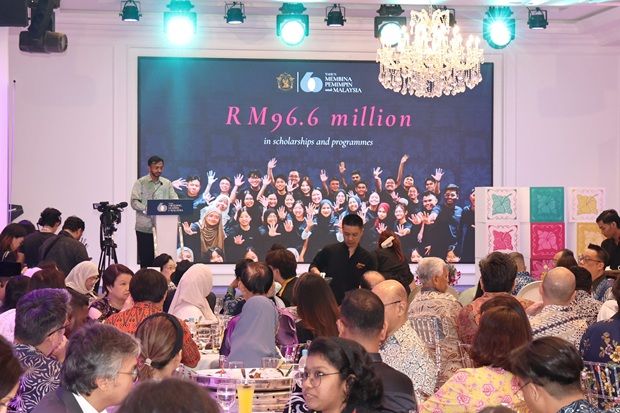
The Tunku Abdul Rahman Foundation (YTAR) marked a significant milestone in the nation's educational landscape by commemorating six decades of service on August 13 at Bangunan Sultan Abdul Samad. Established through an act of national solidarity to honour Malaysia's founding Prime Minister, the foundation has evolved into a cornerstone institution dedicated to unlocking opportunities for Malaysian youth regardless of background. The anniversary celebration recognised not only the foundation's historical achievements but also its continuing relevance in shaping the country's human capital development strategy.
The foundation's genesis reflected the entrepreneurial spirit of post-independence Malaysia. What began as a proposal to create an education fund honouring Tunku Abdul Rahman Putra al-Haj transformed into a grassroots movement when Utusan Melayu initiated a national crowdfunding campaign on the late prime minister's birthday. This early mobilisation of public resources raised more than M$60,170.20—equivalent to approximately RM380,000 in contemporary monetary value—demonstrating the widespread conviction that education represented the nation's future. The momentum generated by this community-driven effort caught the attention of policymakers, particularly the then-Education Minister Tan Sri Mohamed Khir Johari, who advocated for formal governmental backing.
The subsequent establishment of the foundation through the Tunku Abdul Rahman Foundation Fund Act 1966 (Act 43) represents a pivotal moment when grassroots initiatives gained institutional permanence. By converting a citizen-led campaign into legislative reality, Malaysia institutionalised its commitment to meritocratic advancement through education. This legislative framework ensured that the foundation would transcend individual leadership and become a perpetual vehicle for national development, embedded within Malaysia's governance structures while maintaining independence in its operational decisions.
Over six decades, YTAR has extended support to more than 12,000 Malaysian youth, directing RM96.6 million towards scholarships, study loans, financial assistance, and employability programmes. As National Unity Minister Datuk Aaron Ago Dagang highlighted during the ceremony, the foundation's impact extends beyond mere financial transactions—it has evolved into an ecosystem that identifies talent, facilitates access to educational opportunities, and cultivates human potential. This multifaceted approach acknowledges that sustainable development requires not only removing financial barriers but also providing mentorship, skills development, and pathways to meaningful employment.
The foundation's institutional philosophy reflects a fundamental belief in education's transformative power for individuals and society. Tunku Abdul Rahman himself articulated this vision in 1964, emphasising that a young nation's present and future depend substantially on the quality and opportunity afforded to its youth. This foundational principle has remained constant even as the foundation's methods and reach have expanded. The shift from purely providing financial aid to actively developing potential demonstrates sophisticated understanding of how educational institutions can multiply their impact through comprehensive support systems rather than isolated interventions.
The late prime minister's granddaughter, Datin Sri Sharifah Menyalara Syed Hussein, who serves as YTAR chairperson, articulated how the foundation's evolution honours rather than diminishes Tunku's legacy. She emphasised that the founder conceived education not narrowly as academic credentials but as the foundation of character and civic purpose—enabling young people to locate themselves meaningfully within society and contribute substantively to national advancement. This interpretation guides contemporary programming, ensuring that scholarship recipients emerge not merely as credentialed professionals but as engaged citizens committed to nation-building across diverse sectors.
The anniversary celebration featured two particularly instructive narratives of long-term impact. Ch'ng Kim See, among the foundation's earliest recipients in 1967, received her scholarship during acute financial hardship, enabling her continuation of tertiary studies when other funding avenues had closed. Her subsequent career as one of Malaysia's most prominent librarians with regional expertise in South-east Asian history and library science exemplifies how targeted support at critical junctures can catalyse decades of professional contribution. Similarly, Dr Zakaria Ali's journey—facilitated by a fortuitous encounter with an American instructor who advocated on his behalf to national leaders—demonstrates how educational investment can identify and nurture the nation's cultural and artistic leadership.
These personal narratives reveal patterns of intergenerational gratitude and reciprocal obligation that characterise the foundation's informal culture. Both alumni expressed deep appreciation for their opportunities and demonstrated commitment to supporting subsequent generations, embodying Tunku's conviction that educated citizens become agents of broader social development. Their professional trajectories illustrate how foundation-supported scholars populate leadership positions across law, medicine, civil service, education, and the arts—creating a distributed network of accomplished individuals united by shared conviction in nation-building.
The foundation's current leadership, represented by chief executive officer Kularetnam Vijayakumar, emphasises that YTAR's six-decade continuity reflects not individual heroism but cumulative commitment of multiple generations of custodians and supporters. This institutional humility—recognising that the foundation succeeds through distributed effort rather than singular vision—distinguishes it from personalised philanthropic initiatives. By embedding the foundation within Malaysia's constitutional framework and cultivating broad stakeholder participation, it has achieved sustainability that transcends individual leadership transitions.
Minister Aaron Ago's remarks during the ceremony extended the foundation's significance beyond educational circles into the corporate social responsibility agenda. His call for private sector companies to prioritise talent development and education within their CSR frameworks suggests that the foundation model offers valuable template for broader societal engagement. By demonstrating that systematic investment in youth development yields measurable returns across professional and civic domains, YTAR provides evidence-based rationale for corporate participation in educational advancement.
The announcement of the 2026 Pingat Tunku Award nominations, opening August 31 through September 30, introduces innovation by permitting self-nominations from graduates of both public and private institutions throughout Malaysia. This democratisation of the nomination process broadens the opportunity for recognition and could identify accomplished alumni who might otherwise escape institutional notice. The expansion reflects confidence that six decades of foundation support have generated sufficient alumni cohort to enable peer-driven recognition alongside traditional patronage-based selection.
Looking forward, the foundation confronts the challenge of maintaining relevance as Malaysia's educational landscape diversifies and economic dynamics shift. The emergence of digital learning, evolving career pathways, and changing skill requirements demand that YTAR continuously reassess how it identifies talent and structures support. Yet the anniversary celebration suggests an institution with sufficient institutional maturity to adapt its methods while preserving its philosophical commitment to meritocratic advancement and nation-building through human development. For Malaysian policymakers and corporate leaders, YTAR's six-decade trajectory offers instructive lessons in converting public sentiment into institutional permanence and sustaining impact across generational transitions—model applicable well beyond educational philanthropy.

