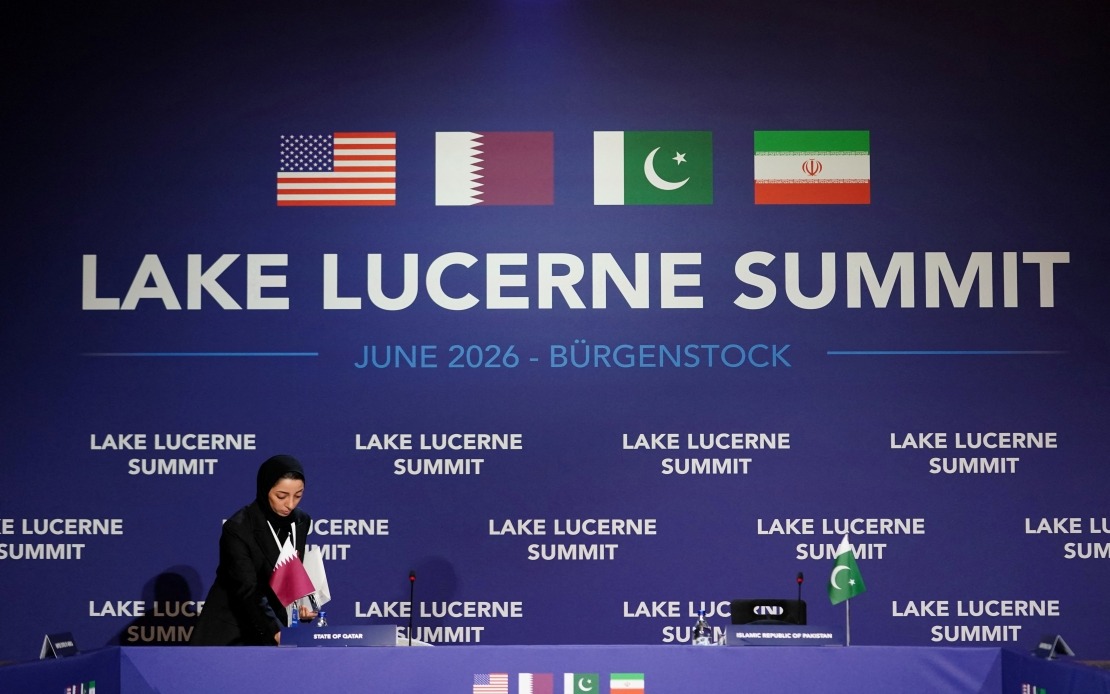
Four influential Muslim-majority nations have thrown their support behind a newly signed memorandum between the United States and Iran, viewing the diplomatic accord as a meaningful contribution to regional stability. Foreign ministers representing Türkiye, Egypt, Pakistan and Saudi Arabia issued a coordinated statement on Sunday following talks in Cairo, cementing a rare moment of consensus among major regional and international players on a matter that has long divided opinion across the Middle East and beyond.
The joint declaration specifically lauded the signing of the Islamabad Memorandum of Understanding, characterizing it as a constructive pathway away from escalation and toward resolving a conflict that has posed substantial dangers to regional security architecture. The ministers emphasized that the accord's significance extends well beyond diplomatic niceties, recognizing that ongoing tensions in West Asia have tangible consequences for global economic systems, shipping lanes, supply chain resilience and international commerce.
The four nations gave particular credit to the mediation efforts that made the agreement possible, with Pakistan earning prominent recognition for its role in orchestrating the negotiation framework and hosting the signing ceremony in Islamabad. Qatar's supportive diplomatic engagement throughout the process also received explicit acknowledgment, highlighting the vital role smaller regional actors play in facilitating dialogue between major powers with deeply entrenched positions.
For Southeast Asian observers, this development carries implications beyond immediate West Asian concerns. Malaysia and its ASEAN neighbours depend heavily on stable maritime passages and predictable energy supplies from the Gulf region. Any escalation of US-Iran tensions typically triggers price volatility in oil markets and heightens shipping insurance costs, directly affecting import-dependent economies throughout Southeast Asia. The endorsement by these four nations suggests a coordinated regional effort to prevent such disruptions from recurring.
The foreign ministers stressed that the diplomatic momentum must be maintained and accelerated toward a comprehensive, long-term settlement of outstanding disputes. They called for any subsequent agreements to incorporate durable verification mechanisms and prove mutually acceptable to all parties, while explicitly ensuring that the security aspirations of Gulf states and nations in the Levant receive proper consideration and protection.
Beyond the US-Iran question, the statement revealed how interconnected regional concerns have become among these four nations. All parties devoted substantial attention to the Israeli-Palestinian conflict, framing resolution of this dispute as fundamental to achieving genuine and lasting peace throughout West Asia. This positioning underscores how regional powers view the Palestinian issue as inseparable from broader stability objectives.
The ministers reaffirmed their commitment to the internationally recognized framework for Palestinian statehood, explicitly endorsing the establishment of an independent Palestinian state within the 1967 borders and designating East Jerusalem as its capital. This position aligns with established United Nations resolutions and represents a consolidated diplomatic stance from an influential coalition spanning North Africa, the Arabian Peninsula and South Asia.
The timing of this joint statement carries strategic weight. By coordinating their position immediately following the Islamabad Memorandum signing, Türkiye, Egypt, Pakistan and Saudi Arabia have effectively created diplomatic cover for the agreement's implementation and signaled to other regional actors that major powers support moving forward. This collective endorsement may help insulate the accord from sabotage by spoiler groups opposed to US-Iran engagement.
The emphasis on involving diverse stakeholders in future negotiations reveals pragmatic recognition that durable settlements require consensus building across traditional rival camps. Pakistan's central role in hosting and facilitating talks demonstrates how smaller nations can punch above their weight in high-stakes diplomacy when they possess credibility with multiple parties and geographical positioning conducive to dialogue.
For Malaysia and the broader ASEAN community, the success of this diplomatic initiative holds instructive value. The region faces its own complex geopolitical challenges requiring similar multilateral coordination and confidence-building measures. The approach taken by these four nations—emphasizing shared regional interests in stability while respecting security concerns of all parties—offers a template applicable to Southeast Asian disputes involving larger and smaller states.
Moving forward, observers should monitor whether this four-nation consensus can withstand inevitable challenges during implementation phases. The statement's emphasis on verifiable agreements and mutual acceptability suggests the parties recognize that trust remains fragile and that ambiguities or perceived unfair burden-sharing could derail progress. Malaysian policymakers and regional analysts will watch closely to see whether this diplomatic achievement translates into sustained de-escalation or merely represents a temporary pause in long-standing rivalries.

%22%2F%3E%3C%2Fpattern%3E%3C%2Fdefs%3E%3Crect%20width%3D%22100%25%22%20height%3D%22100%25%22%20fill%3D%22url(%23ph6m3xg)%22%2F%3E%3Crect%20width%3D%22100%25%22%20height%3D%22100%25%22%20fill%3D%22url(%23ph6m3xp)%22%2F%3E%3Ctext%20x%3D%2250%25%22%20y%3D%2250%25%22%20text-anchor%3D%22middle%22%20dominant-baseline%3D%22central%22%20fill%3D%22rgba(255%2C255%2C255%2C0.95)%22%20font-family%3D%22Georgia%2C%20'Times%20New%20Roman'%2C%20serif%22%20font-weight%3D%22700%22%20font-size%3D%22320%22%20letter-spacing%3D%22-0.02em%22%3E32%3C%2Ftext%3E%3C%2Fsvg%3E)