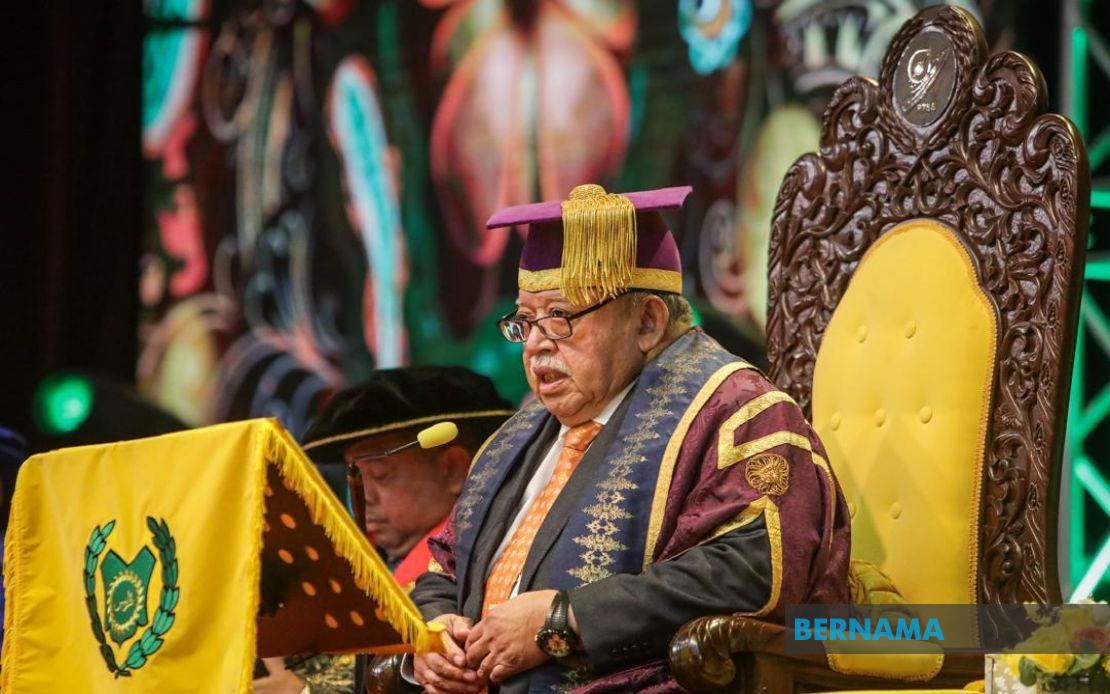
Technical and vocational training has emerged as a cornerstone of Malaysia's strategy to develop a competitive and adaptable workforce capable of navigating profound economic transformation. At the 2026 Northern Zone Polytechnic and Community College Convocation Ceremony held at Politeknik Tuanku Syed Sirajuddin in Arau on August 3, the Raja of Perlis, Tuanku Syed Sirajuddin Jamalullail, underscored the indispensable nature of TVET in cultivating skilled, creative and innovative talent equipped to tackle emerging challenges in an increasingly complex global environment.
The Ruler's remarks reflect a growing recognition among Malaysia's leadership that the nation's future prosperity depends heavily on its ability to develop human resources capable of driving innovation across industries. As artificial intelligence, automation, robotics and digital technologies fundamentally reshape employment patterns and industrial structures worldwide, TVET institutions must position themselves as primary engines of economic adaptation. The transformation is not merely technological in nature—it represents a wholesale restructuring of how work is organised, what skills remain relevant, and how employees must continually reinvent themselves throughout their careers.
Tuanku Syed Sirajuddin articulated a vision of innovation that extends beyond abstract conceptualisation to practical implementation. He stressed that fostering a culture of innovation within polytechnic institutions and among their graduates requires more than encouraging creative thinking. Rather, it demands a deliberate commitment to translating theoretical knowledge and imaginative ideas into tangible solutions that address genuine societal needs and advance national development objectives. This distinction carries significant implications for how TVET curricula are designed and delivered, suggesting a movement toward problem-based and industry-integrated learning approaches.
The convocation ceremony brought together 6,104 graduates from polytechnic and community college programmes across three northern states—Perlis, Kedah and Penang—representing the scale of technical education provision in the region. This substantial cohort of newly qualified professionals embodies Malaysia's investment in skills development and vocational pathways as alternatives and complements to traditional university education. The geographic concentration of the ceremony in the northern corridor reflects broader regional economic development strategies and the particular importance of technical skills in supporting manufacturing, services and emerging technology sectors in these states.
Beyond technical competence, the Ruler emphasised that excellence in professional life cannot be divorced from ethical conduct and moral grounding. His remarks addressing graduates directly challenged a prevalent assumption that technical skill alone constitutes adequate preparation for meaningful careers. Instead, Tuanku Syed Sirajuddin advocated for a holistic conception of professional development wherein integrity, honesty, trustworthiness and moral principles form the bedrock upon which expertise is built. This emphasis on character and values reflects broader concerns within Malaysian society about maintaining social cohesion and ethical standards amid rapid modernisation.
The ceremony recognised Teerti Ganapathi Rao, a 22-year-old Diploma in Digital Technology graduate from the Department of Information and Communication Technology at Politeknik Tuanku Syed Sirajuddin, with the Director-General of Polytechnic and Community College Education Award. The recognition of excellence in digital technology fields signals institutional priorities and the perceived importance of information and communication technology skills within the broader TVET ecosystem. Young professionals entering the digital technology sector will likely experience significant career opportunities and influence, making the selection of award recipients meaningful for both recognising merit and signalling valued competencies.
Malaysia's emphasis on TVET reflects international trends recognising vocational education's role in addressing skills gaps and preparing workforces for technological disruption. Unlike traditional university pathways that emphasise theoretical knowledge and extended study periods, TVET programmes typically compress learning timeframes and integrate industry engagement, allowing graduates to enter employment relatively quickly. This efficiency becomes increasingly valuable in contexts where technological obsolescence accelerates and employers require workers capable of rapid skill acquisition and adaptation.
The northern zone convocation ceremony, extending from August 3 through August 9, represents an extended celebration of achievement and investment in human capital development. The extended duration reflects the scale of graduations being recognised and potentially allows for more personalised recognition of individual achievement. Such ceremonies serve important symbolic functions beyond credential conferral—they publicly validate vocational pathways as legitimate and respectable career routes, countering lingering social perceptions that treat technical education as inferior to university qualifications.
The timing and location of the Raja's remarks carry particular significance for Malaysia's broader economic strategy. As the nation pursues high-income status and seeks to transition away from dependence on low-skilled manufacturing and resource extraction, the capacity to develop and retain skilled technical workers becomes increasingly critical. TVET institutions in Perlis and surrounding states must position themselves as essential contributors to this transition, preparing workers not merely for existing industrial structures but for emerging sectors including advanced manufacturing, renewable energy, digital services and high-value-added production.
Looking forward, the integration of innovation culture with ethical grounding suggested by the Raja's remarks points toward TVET institutions needing to balance multiple objectives simultaneously. Graduates must emerge technically proficient in their chosen fields, capable of continuous learning and adaptability, equipped with entrepreneurial mindsets suited to independent problem-solving, yet simultaneously guided by strong moral compasses and commitment to broader social welfare. Achieving this balance requires thoughtful curriculum design, educator training emphasising both technical mastery and value formation, and institutional cultures that reward ethical excellence alongside technical innovation.

