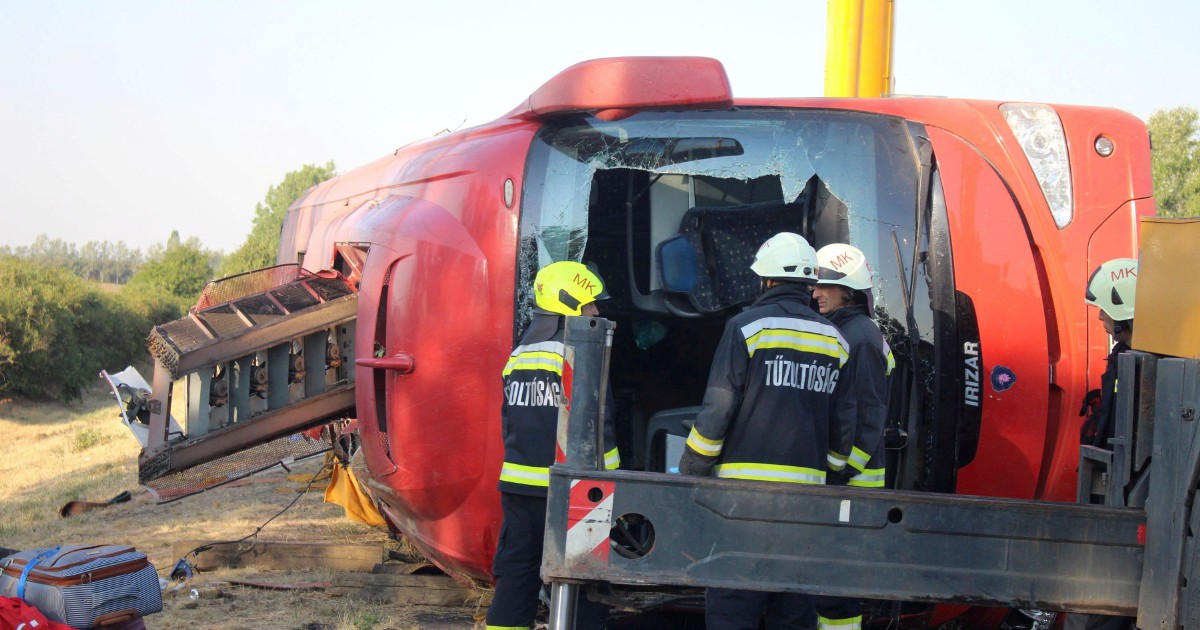
A devastating road accident claimed the lives of twelve people when a Polish coach flipped over on a Hungarian motorway in the pre-dawn hours of Sunday. Prime Minister Peter Magyar and other Hungarian authorities confirmed the tragedy, which also left a minimum of ten passengers nursing severe injuries from the impact.
The collision unfolded on one of Hungary's principal highway routes, an artery of considerable importance for cross-border travel between Poland and southern Europe. Early morning journeys across this corridor are routine for long-distance coaches serving the substantial Polish diaspora communities scattered throughout Western and Central Europe, as well as tourists and business travellers navigating the continent.
Emergency services descended on the crash site in the darkness, launching what would become a major rescue and recovery operation. The sheer number of casualties suggests the impact was violent and the coach's occupants had minimal protection once the vehicle left the roadway. Hungarian rescue teams faced the grim task of extracting passengers from the wreckage while simultaneously providing medical attention to the injured.
The circumstances that caused the bus to overturn remain subject to investigation. Officials are examining multiple potential factors including weather conditions in the early morning hours, road surface conditions, possible mechanical failure, and driver fatigue—all common lines of inquiry in such incidents. Motorway accidents involving coaches often prove catastrophic given the vehicles' size, weight, and the number of occupants they carry.
This incident adds to a sobering record of coach accidents across Central and Eastern Europe, a region where long-distance bus travel remains a cost-effective transportation option for millions of residents and migrants. The prevalence of such services reflects economic realities in the region, where affordable coach networks have expanded dramatically over the past two decades to connect communities across borders.
Polish coach operators have become a significant presence throughout Europe, with many companies competing fiercely on price and routes. These services have democratised cross-border mobility for working-class Europeans, enabling people to travel for employment, family visits, and tourism at minimal cost. However, the industry has faced periodic safety concerns, with questions raised about driver working hours, vehicle maintenance standards, and insurance coverage.
Hungary's motorway network, whilst generally well-maintained, has witnessed numerous serious accidents over the years. The crash highlights the ongoing challenge of managing safe passage for the tens of thousands of vehicles traversing these routes daily, particularly during off-peak hours when traffic management and visibility present distinct hazards.
The victims' families face an unimaginable ordeal as authorities work to formally identify the deceased and notify next of kin. Polish consular officials in Hungary would be coordinating with local authorities to provide assistance to affected Polish nationals, whilst establishing the precise origin point of the coach and its intended destination.
This tragedy will inevitably prompt renewed discussion across the European Union regarding transport safety standards, particularly for international coach operations. The European Commission has previously emphasised the importance of rigorous enforcement of driving time regulations, vehicle safety inspections, and driver training requirements, yet implementation remains inconsistent across member states.
The incident serves as a stark reminder of the risks inherent in long-distance coach travel, despite its environmental and economic advantages over individual vehicle use. Safety advocates have long called for stricter monitoring of operators, mandatory use of advanced driver assistance systems, and improved rest facilities to combat fatigue-related accidents.
For Malaysia and Southeast Asian readers, the incident echoes concerns about safety standards in regional coach operations. The association of Eastern European coaches with affordable but sometimes risky travel mirrors discussions about bus safety across Southeast Asia, where low-cost operators and passenger volume create similar tensions between accessibility and security.
Hungarian emergency authorities have pledged a thorough investigation into the accident's root causes. Their findings, when released, may prompt European transport regulators to revisit existing safety protocols and consider additional measures to prevent similar tragedies.

