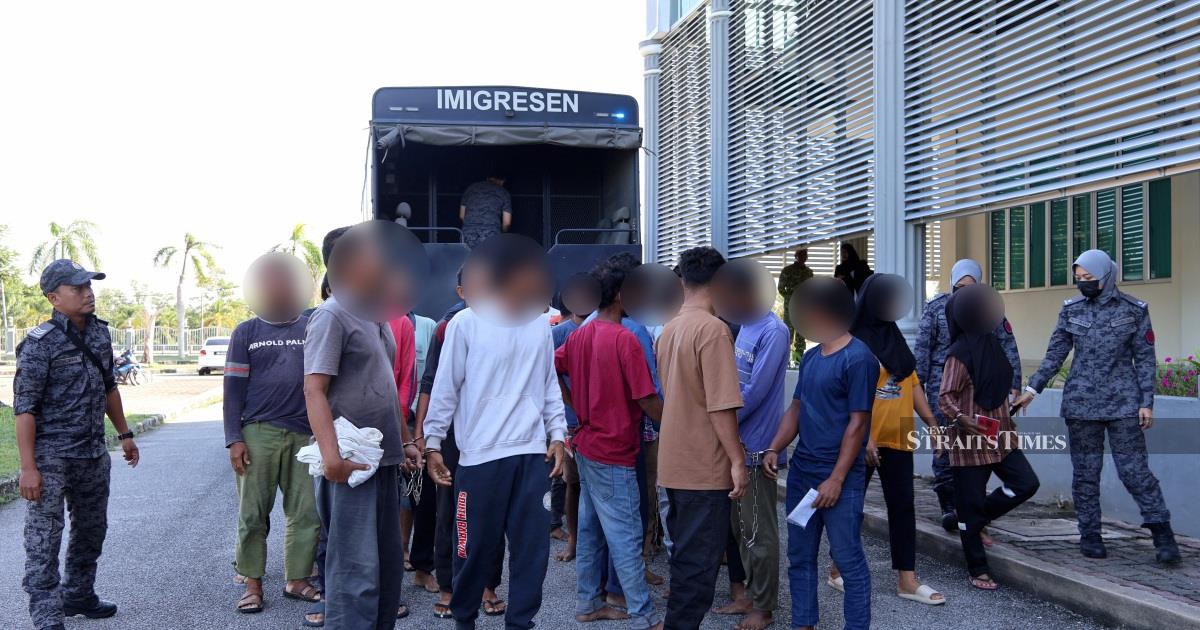
The Sessions Court in Pasir Mas handed down penalties against 29 undocumented migrants today, with fines ranging from RM1,000 to RM10,000 each after all defendants entered guilty pleas to their respective charges. The individuals faced multiple violations including unauthorized entry into Malaysia, exceeding the permitted duration of stay, and the illegal use or misuse of travel documentation.
The coordinated enforcement action reflects the ongoing efforts by Malaysian authorities to address undocumented migration within the country's borders. Pasir Mas, a district in Kelantan located near the Thai border, has historically been an entry point for irregular migration flows into peninsular Malaysia. The concentration of legal proceedings in this location underscores the region's particular vulnerability to cross-border movement of undocumented persons seeking employment or refuge.
Offences related to illegal immigration carry substantial penalties under Malaysian law, as authorities continue to prioritize border security and the regulation of foreign nationals within the country. The tiered fine structure—ranging from RM1,000 at the lower end to RM10,000 at the upper threshold—suggests that individual circumstances, duration of stay, and nature of document violations may have influenced judicial sentencing decisions. Courts typically consider factors such as how long individuals remained in the country beyond authorized periods and the sophistication of any document fraud involved.
The misuse of travel documents represents a particularly serious component of these charges, as it often involves forged, altered, or fraudulently obtained identification papers. This dimension of the offences demonstrates that the prosecutions extend beyond simple unauthorized presence to include organized fraud schemes that facilitate irregular migration. Such document manipulation poses security concerns for national authorities responsible for tracking population movements and identifying potential risks.
Malaysia's immigration enforcement landscape has become increasingly complex as economic disparities across Southeast Asia continue to drive migration pressures. The country remains a significant destination for migrant workers from neighbouring nations and beyond, with both authorized and unauthorized populations concentrated in sectors including manufacturing, construction, domestic service, and agriculture. The prosecution of undocumented migrants operates alongside Malaysia's managed labour import schemes, creating a dual system designed to balance economic needs with border control objectives.
The guilty pleas entered by all 29 defendants suggest either strength in the prosecution's evidence or the influence of pragmatic legal advice recommending acceptance of charges rather than contesting proceedings. Court-imposed penalties serve multiple functions: generating revenue for the state, creating deterrent effects for potential irregular migrants, and signalling the government's commitment to immigration law enforcement. The consistency of these prosecutions across Malaysian courts demonstrates that enforcement remains active despite the substantial logistical challenges of monitoring a country with extensive land and maritime borders.
For Malaysian employers and businesses operating in regulated industries, the enforcement action carries implications regarding due diligence obligations. Companies are legally required to verify the immigration status and work authorization of their employees, with significant liability exposure for hiring undocumented workers. The visibility of court cases and publicized penalties reinforces regulatory expectations and encourages compliance within the formal economy.
The regional context matters significantly for understanding these enforcement patterns. Thailand, the immediate neighbour to Kelantan, experiences its own complex migration dynamics with populations moving across borders for economic reasons. The porous nature of land borders in Southeast Asia creates ongoing challenges for all nations in the region attempting to manage immigration flows. Pasir Mas's location makes it strategically important to Malaysian border management operations, justifying the concentration of enforcement efforts in the district.
Looking forward, these prosecutions reflect broader immigration policy priorities established at the federal level, though implementation varies across states and enforcement agencies. The Kelantan court proceedings demonstrate that judicial systems continue to process immigration violations systematically, even as policy discussions at higher government levels address questions about regularization programmes, bilateral labour agreements, and humanitarian considerations. The balance between enforcement and more accommodative policies toward migrant communities remains an evolving debate within Malaysian political and civil society circles.

