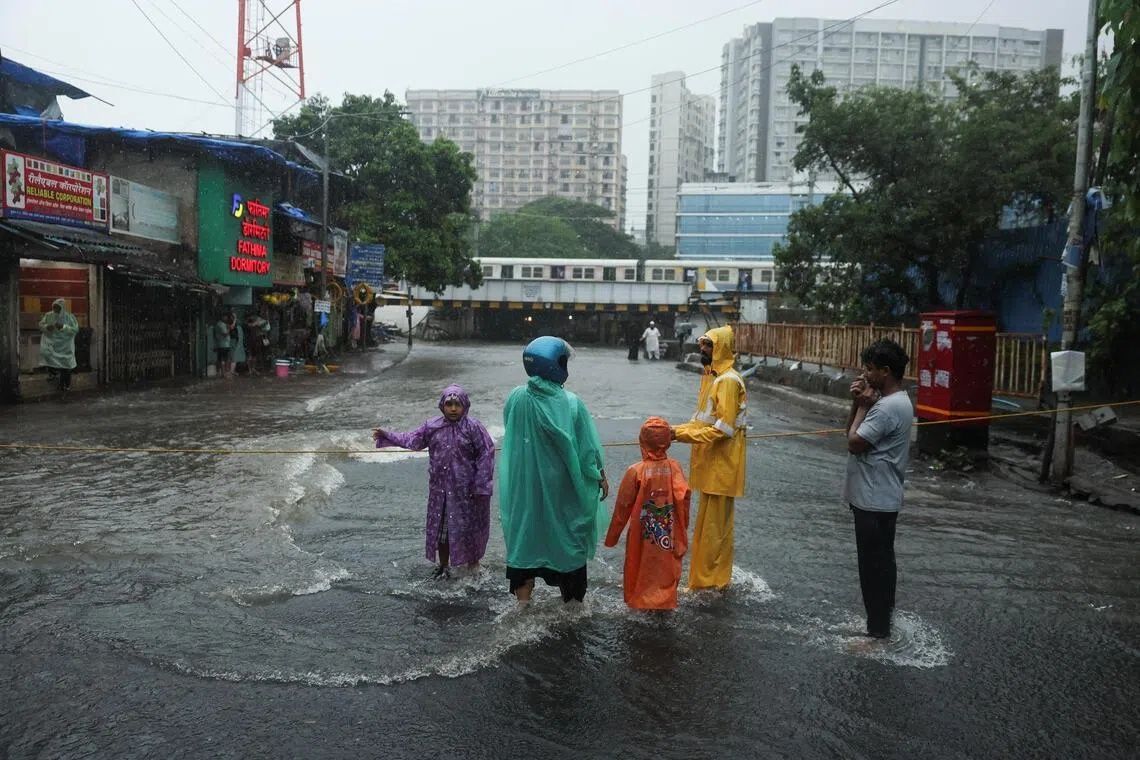
Mumbai is grappling with the deadly consequences of its annual monsoon deluge as torrential rainfall has claimed two lives and exposed the fragility of the city's civic infrastructure. The India Meteorological Department issued an orange alert for July 3, signalling the continuation of heavy downpours over the next 24 hours. The twin fatalities—one an 11-year-old child, the other a middle-aged man—have reignited fierce political debate about accountability and administrative negligence in India's financial capital, where seasonal flooding repeatedly overwhelms municipal systems and claims preventable casualties.
The first tragedy unfolded in Chembur on June 30 when a massive tree, uprooted by violent winds accompanying the heavy rain, crashed onto a school bus transporting students from Universal High School and Tilak Nagar School. The impact trapped children inside the vehicle, requiring emergency personnel to deploy specialised cutting equipment for an extended rescue operation. Among the injured was 11-year-old Vihan Shrivastav, who succumbed to his injuries despite receiving treatment at Zen Hospital and other medical facilities. The incident sparked immediate political responses, with Maharashtra minister Ashish Shelar acknowledging the tragic nature of the event and pledging government action. However, his carefully worded statement—emphasising the responsibility of both the state government and the Brihanmumbai Municipal Corporation (BMC) to support the grieving family—fell short of addressing the systemic issues that allowed such dangers to persist.
The political temperature rose further when MLA member Rohit Pawar visited the bereaved family and articulated a crucial distinction that reflects growing public frustration. He argued that punishing junior-level officials, the typical bureaucratic response to such incidents, represents a superficial accountability mechanism that leaves senior administrators untouched. For a family that lost an only child, the administrative shuffling of blame offers little solace or assurance of genuine reform. Pawar's comments highlighted the pattern of negligence visible in repeatedly failed pre-monsoon infrastructure inspections. These preparation exercises—designed to identify hazardous trees, blocked drains, and structural vulnerabilities before the rains arrive—appear to function more as paperwork exercises than as serious risk mitigation efforts.
Just days later, a second fatality demonstrated that the dangers extended beyond falling trees and structural collapses. On July 2, a 60-year-old man named Aslam Isak Shaikh fell into an open manhole in Sakinaka while attempting to navigate through flooded streets. The drainage cover had been removed for maintenance work, yet the opening remained unbarricaded despite forecasts of heavy rainfall. Shaikh, who was speaking on his mobile phone at the moment of the incident, was swept away by the fast-moving water that accumulated in the open pit. The subsequent search operation consumed approximately three hours before his body could be recovered, adding another dimension of tragedy to the administrative failure. MLA member Vijay Wadettiwar immediately demanded criminal action, questioning why basic precautions—covering or properly barricading the manhole—had not been implemented despite clear weather warnings.
The manhole incident crystallises a recurrent complaint in Indian cities that suffer monsoon flooding: maintenance activities are routinely conducted without adequate safety measures, effectively creating hazards during the very season when risks are highest. The responsibility for such oversights spans multiple tiers of civic administration, from the ward officers who approve maintenance schedules to the supervisory staff who should ensure protective barriers are in place. Wadettiwar's call for a first information report (FIR) against responsible officials reflects the growing political will to treat such negligence as a criminal matter rather than a mere administrative lapse. This signals a potential shift in how accountability is pursued, though sceptics note that high-profile criminal complaints often yield limited results in Indian bureaucracies.
Mumbai Mayor Ritu Tawde characterised the manhole death as an administrative mistake and announced compensation of 10 lakh rupees (approximately US$10,455) to the victim's family. While such monetary gestures represent acknowledgment of official responsibility, they raise uncomfortable questions about the adequacy of compensation for loss of life and whether financial payouts genuinely incentivise systemic reforms. The reliance on post-incident compensation rather than pre-incident prevention reflects institutional priorities that prioritise managing the aftermath of crises over preventing them. For Malaysian readers observing similar monsoon and flood challenges in Kuala Lumpur, Penang, and other major urban centres, Mumbai's struggles offer cautionary lessons about what happens when civic infrastructure maintenance becomes reactive rather than proactive.
Beyond the human toll, the heavy downpour created transportation chaos across Mumbai. Waterlogging affected multiple neighbourhoods including Dadra East and Sion Gandhi Market, trapping commuters in extended traffic delays. A truck overturned near the Kharghar Toll Plaza on the Sion-Panvel Highway, blocking multiple lanes and requiring emergency clearance operations. The cascade of disruptions—fallen trees, flooded roads, debris-choked pathways, and accidents caused by reduced visibility and slippery surfaces—demonstrates how inadequate pre-monsoon preparation multiplies the collateral damage of heavy rainfall. What might have been a manageable weather event becomes a civic catastrophe when infrastructure is neglected and contingency planning proves insufficient.
The political response has crystallised around two distinct narratives. The ruling establishment, represented by statements from Ashish Shelar and the Mayor, emphasises isolated incidents and promises corrective action, framing the deaths as unfortunate but manageable within existing systems. The opposition figures, particularly Pawar and Wadettiwar, challenge this characterisation by demanding that accountability reach senior officials and by questioning whether current inspection protocols carry any meaningful teeth. This divide reflects a broader scepticism about whether the BMC possesses either the resources or the political will to execute the comprehensive infrastructure upgrades that would truly reduce monsoon-related casualties. The repetition of similar incidents—trees crashing onto vehicles, people falling into uncovered utilities—suggests that institutional learning mechanisms are weak or non-existent.
With the orange alert indicating continued heavy rainfall over the coming 24 hours, Mumbai's civic authorities have issued the standard advisory asking residents to avoid unnecessary travel. Emergency teams have been deployed to clear blocked roads, remove debris, and manage flooded areas. These reactive measures, while necessary, underline the absence of transformative solutions. Properly maintained and trimmed trees, comprehensively barricaded utility openings, and cleared drainage systems should render such alerts far less dangerous. The fact that orange-alert conditions continue to kill residents speaks to a governance failure that transcends individual negligence and reflects systemic underinvestment in public safety infrastructure. For a city of Mumbai's stature and economic importance, the recurring monsoon deaths represent both a humanitarian tragedy and an indictment of administrative priorities that consistently defer essential maintenance in favour of other expenditures.

