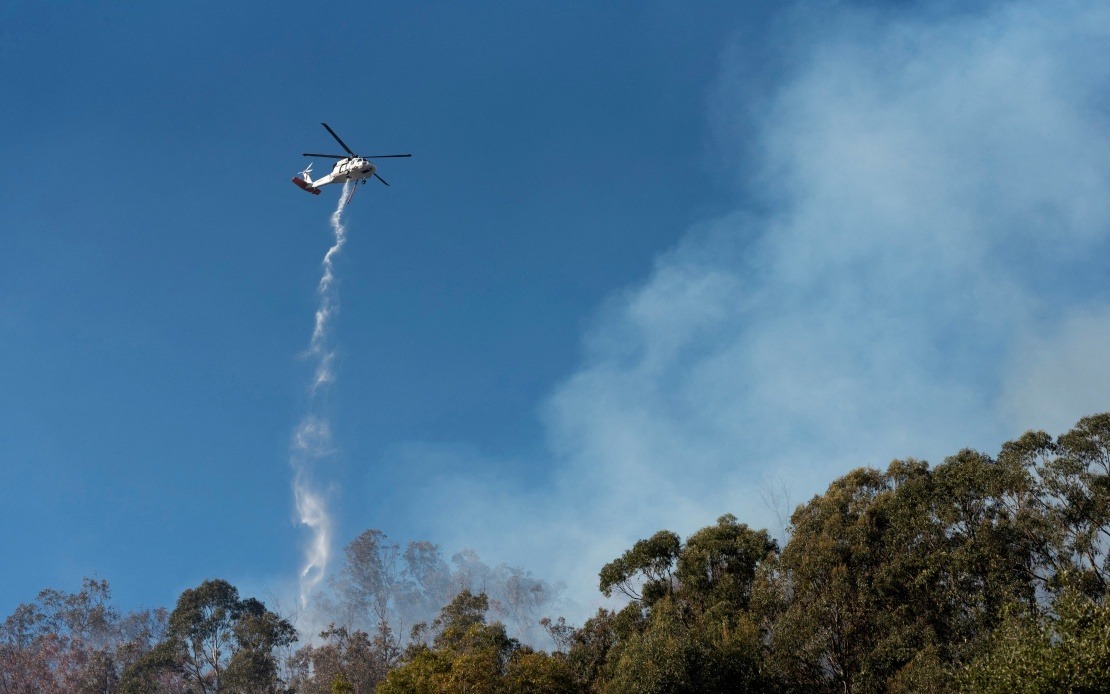
A helicopter contracted for wildfire suppression operations crashed in central Utah on Friday, resulting in the deaths of its pilot and one crew member as firefighting efforts continued against one of the state's most significant fires this year. The aircraft, a Sikorsky S-64 operated under contract with the US Forest Service, went down near Richfield at approximately 10 am local time. Authorities confirmed the fatal accident occurred during active firefighting operations on the Widemouth 2 Fire, with the National Interagency Fire Centre reporting the incident. The identities of the two fatalities have not yet been released pending family notification.
Investigators from the National Transportation Safety Board have assumed leadership of the accident inquiry, with preliminary findings suggesting the helicopter encountered unknown circumstances in the remote mountain terrain where it crashed. The difficult geography of the crash site, combined with ongoing fire activity in the vicinity, initially prevented ground crews from accessing the wreckage to conduct rescue operations or recover remains. The impact zone itself appears to have spawned additional flames, further complicating the response efforts and raising significant safety concerns for emergency personnel attempting to reach the location.
Utah Governor Spencer Cox issued a statement acknowledging the tragedy and emphasising the inherent dangers associated with wildland firefighting operations. He described wildfire suppression as "among the most dangerous jobs in the world" and characterised the incident as a sobering reminder of the sacrifices made by those who risk their lives protecting communities from catastrophic fires. Cox requested that residents afford both the investigation team and emergency responders adequate time and space to complete their work without external pressure or interference.
The Widemouth 2 Fire originated on July 27 when lightning struck dry vegetation on the Fishlake National Forest near Kanosh, a rural settlement in central Utah's Sevier County region. Initial conditions were particularly conducive to rapid fire spread, with the area experiencing extended drought conditions, elevated temperatures, and unpredictable wind patterns that propelled the flames across the landscape with unusual aggression. These meteorological factors forced the evacuation of nearby communities and resulted in significant structural damage to private residences and other buildings.
At the time of the helicopter crash, the Widemouth 2 Fire had consumed more than 114,000 acres—equivalent to approximately 461 square kilometres—across the Fishlake National Forest and surrounding terrain. Current containment efforts had achieved only 24 per cent containment of the perimeter, indicating that the majority of the fire remained actively spreading or at risk of further expansion. Fire officials reported that at least six structures had been destroyed, though preliminary assessments suggested the full extent of property damage would likely increase as crews gained access to affected areas.
The crash represents a significant setback to suppression operations at a critical juncture when aerial resources are essential for combating large wildfires across western North America. Helicopter-based crews like those operating the Sikorsky S-64 perform essential functions including water and fire-retardant drops, reconnaissance of the fire perimeter, and transport of personnel and equipment to otherwise inaccessible locations. The loss of such a resource during active suppression operations inevitably constrains the tactical options available to incident commanders seeking to contain the fire's spread.
For Malaysian and regional readers, this incident underscores the severe occupational hazards inherent in large-scale wildfire management, challenges that extend beyond North America to Southeast Asia and other regions prone to forest fires. While Malaysia and neighbouring countries experience different fire ecology and seasonal patterns compared to the western United States, the fundamental risks to personnel engaged in fire suppression—including exposure to extreme heat, hazardous atmospheric conditions, unstable terrain, and equipment failures—remain consistent across all environments. The sophistication and cost of aerial firefighting assets such as the Sikorsky S-64 reflect the tremendous investment required to combat large wildfires effectively.
The incident will likely prompt safety reviews within the aviation and wildfire management communities regarding operational protocols for helicopter-based firefighting missions. Questions surrounding the circumstances leading to the crash in "unknown conditions" will be examined exhaustively by the National Transportation Safety Board to identify any procedural or equipment-related factors that might have contributed to the accident. Such investigations often yield findings that influence safety standards across the broader industry.
The Widemouth 2 Fire continues to demand intensive resource commitment from state and federal agencies, with crews working to establish firebreaks, clear defensible space around communities, and advance the containment line. The helicopter crash occurred during what meteorologists anticipate could be an extended active wildfire season in Utah, with seasonal forecasts suggesting continued dry conditions and elevated fire risk through the autumn months. The loss of firefighting personnel and equipment therefore carries implications not merely for the current incident but for the capacity of emergency management systems to respond to multiple large fires simultaneously across the state.

