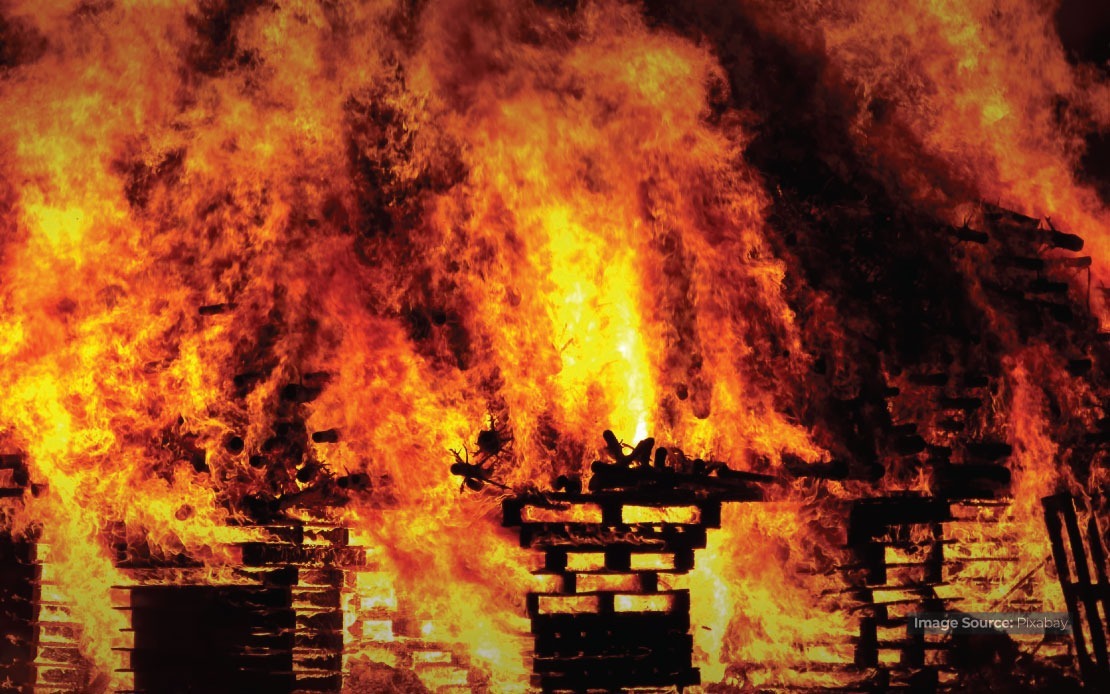
The death of two firefighters while combating a fire near Bordeaux Airport in southwestern France marks a tragic reminder of the dangers faced by emergency responders tackling large-scale incidents. French Interior Minister Laurent Nuñez confirmed the fatalities to parliament in Paris on Tuesday, indicating that both personnel died while working to extinguish flames that engulfed two separate structures located on the airport's perimeter.
According to regional reporting, the fire began on land adjacent to Bordeaux Airport's extended parking zone, an area typically used for long-term vehicle storage. The precise cause remains under investigation, though the incident occurred during particularly hazardous weather conditions affecting the broader region. The location's proximity to airport infrastructure created a complex operational environment for emergency crews attempting to control the expanding blaze.
The Gironde region, which encompasses Bordeaux as its administrative capital, had been placed under France's highest alert level for wildfire danger prior to this incident. This red-level warning reflects an extraordinary risk of uncontrolled fire spread across forested and vegetated areas throughout the territory. Such elevated alert statuses typically occur during sustained periods of high temperatures, low humidity, and unfavourable wind patterns that collectively accelerate fire propagation. The broader fire emergency context underscores why this airport-based incident demanded immediate and substantial resource deployment.
Airport operations experienced significant disruption in the immediate aftermath of the emergency. Departing flights were suspended temporarily to allow emergency services unrestricted access to runways and surrounding areas, though the airport maintained its capacity to receive incoming aircraft throughout the crisis. One scheduled evening service destined for Munich was anticipated to proceed as originally planned, suggesting authorities had contained the immediate threat sufficiently to permit normal flight arrivals while maintaining restrictions on departures.
Response efforts benefited from coordinated action between multiple emergency entities. Beyond the regional fire service that initiated the response, Bordeaux Airport deployed its own dedicated firefighting personnel to supplement suppression activities. The layered response structure reflected standard French emergency protocols that utilise airport-based units alongside municipal and regional services. This collaborative approach proved essential given the scale and location-specific challenges presented by a major fire immediately adjacent to critical aviation infrastructure.
Airborne firefighting capabilities were mobilised to augment ground-based efforts, with specialised aircraft descending on the location to discharge flame-retardant materials and assist in containing the blaze. Such aviation assets represent considerable resource commitments and are typically activated only when ground teams anticipate difficulty achieving swift containment or when structures at risk justify the expense and coordination required to position aerial support. The decision to deploy these aircraft indicated emergency commanders assessed the situation as presenting significant escalation risk if left to ground-based teams alone.
Visibility of the crisis extended across Bordeaux itself, with towering plumes of smoke rising prominently enough to be observed from considerable distances within the city. Smoke columns of such magnitude indicate both the fire's intensity and adverse wind conditions that were distributing emissions across populated areas. This visibility factor carries significance beyond operational awareness, as it heightens public concern and may trigger health warnings regarding air quality degradation in surrounding neighbourhoods.
For Malaysian and regional Southeast Asian readers, this incident illustrates several relevant considerations regarding emergency preparedness and resource management during periods of elevated environmental hazard. The French response demonstrates how modern developed economies structure emergency services to handle cascading crises where multiple incidents strain resources simultaneously. The Gironde region's heightened wildfire alert status mirrors challenges increasingly faced across Southeast Asia during extended dry seasons, where single incidents can overwhelm local capacity and necessitate regional mutual aid arrangements.
The tragedy also underscores the inherent occupational dangers that emergency personnel accept as routine aspects of their profession. France, like most developed nations, maintains comprehensive protocols, training standards, and equipment intended to minimise firefighter casualties. Yet incidents such as this demonstrate that even well-resourced, professionally managed emergency services cannot entirely eliminate workplace fatalities. The loss of two experienced personnel raises inevitable questions regarding operational decision-making, hazard assessment, and whether particular risk factors contributed to the adverse outcome.
The airport setting created additional complexity beyond typical fire scenarios. Major transportation hubs present distinctive challenges combining industrial fire risk with the need to maintain critical infrastructure functionality and public safety protocols. The balance between suppressing the immediate threat and preserving airport operability requires sophisticated incident command structures and clear prioritisation frameworks that emergency managers must navigate in real-time under conditions of incomplete information and time pressure.
As investigations proceed into the circumstances surrounding the deaths, French authorities will likely examine whether particular decisions, equipment failures, or environmental factors contributed to the fatalities. Such post-incident reviews represent standard practice across European emergency services and typically produce procedural refinements or safety enhancements intended to prevent recurrence. The broader French public will meanwhile absorb this incident within the context of ongoing national concerns regarding wildfire management, climate adaptation, and the sustainability of current resource allocation approaches to emergency response across regional territories.

