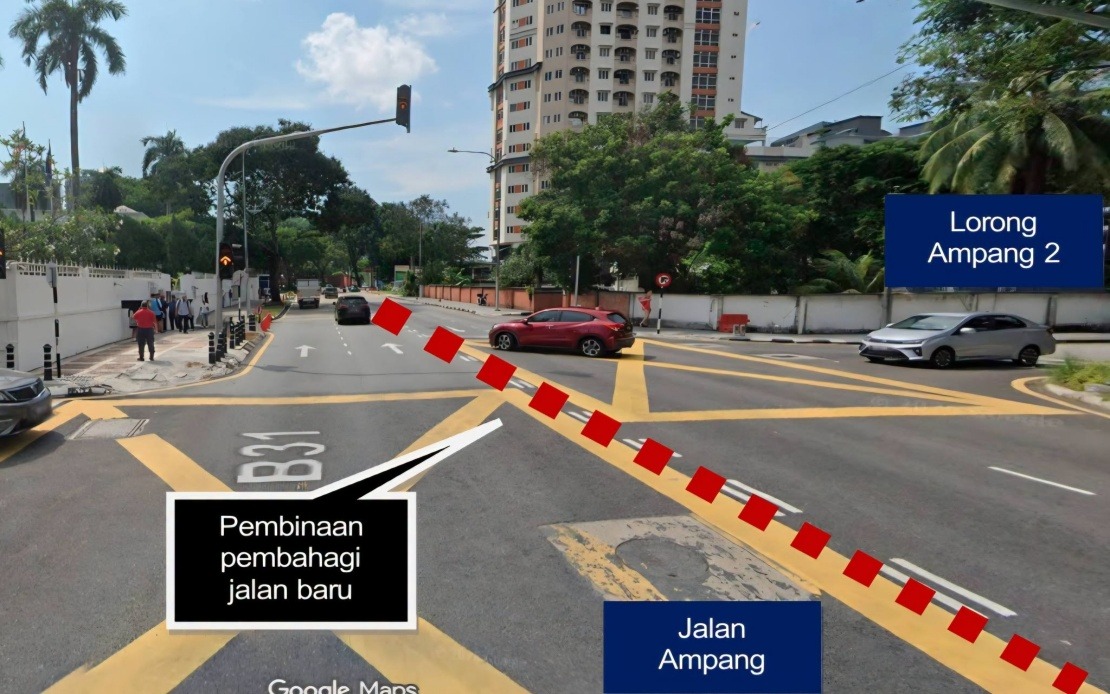
The permanent closure of two traffic light intersections on Jalan Ampang—one at the Royal Thai Embassy and another at Lorong Ampang 2—commenced on July 1 as part of a comprehensive infrastructure enhancement initiative. Kuala Lumpur City Hall announced the move through an official statement, framing the closures as a necessary step within the broader 3.2-kilometre Jalan Ampang upgrade project that stretches from the Jalan Tun Razak intersection through to the Middle Ring Road 2 interchange.
The upgrade project represents a significant commitment to modernising one of Kuala Lumpur's major thoroughfares, with objectives centred on expanding capacity, bolstering traffic efficiency, and creating a safer environment for all road users. City planners have designed the initiative to address longstanding congestion challenges that have plagued this corridor, which serves as a critical link for commuters travelling between the city centre and outlying residential and commercial districts.
The physical improvements envisioned under this project extend beyond simple lane reconfiguration. The scope includes installation of structured road dividers that will segregate traffic flows, expansion to four-lane two-way roads that provide greater capacity, comprehensive pedestrian infrastructure upgrades featuring widened and enhanced walkways, and modernised street lighting systems. These elements collectively aim to create a more organised and user-friendly transportation environment that accommodates diverse road users including private vehicles, public transport, and pedestrians.
The rationale behind closing these two traffic signal junctions centres on traffic engineering principles that recognise how excessive intersection points can create operational inefficiencies. By eliminating these signalised crossings, engineers anticipate significant reductions in lane-changing conflicts that typically occur when vehicles weave between lanes to position themselves for turns or exits. This streamlining should contribute to smoother traffic progression along the corridor, as vehicles no longer need to brake and accelerate repeatedly at closely-spaced signals.
Kuala Lumpur City Hall has acknowledged the potential disruption these closures may cause and has designated alternative routing to mitigate user inconvenience. Motorists heading towards Ampang now have the option to perform U-turns at Jalan Tun Razak, while those travelling cityward can execute U-turns at Jalan Ampang Hilir. These diversions represent the most practical solution given the fixed nature of the upgrade works, though commuters will experience extended travel times during the transition period.
The project carries particular significance for Kuala Lumpur's traffic management strategy, as Jalan Ampang functions as a primary arterial route serving substantial daily traffic volumes. The decision to proceed with permanent closure rather than temporary restrictions suggests a fundamental rethinking of the intersection's role within the broader network. City planners evidently concluded that the modest local convenience provided by these signals came at an unacceptable cost to overall corridor performance and safety.
For Malaysian motorists accustomed to navigating Kuala Lumpur's complex road network, such infrastructure projects typically require adjustment periods as commuters recalibrate their usual routes and timing. The July 1 implementation date falls within the mid-year period, which may partially insulate the city from the worst impacts given that some holiday travel patterns already deviate from standard routines. However, regular users of this corridor should anticipate delays and plan accordingly during the initial weeks of adjustment.
The broader context of this project reflects Malaysia's ongoing efforts to improve urban mobility in Kuala Lumpur, the nation's economic hub. As the capital continues expanding and attracting both residential and commercial development, maintaining efficient transportation corridors becomes increasingly critical for economic productivity and quality of life. Projects like the Jalan Ampang upgrade represent incremental but important steps toward creating a transportation system capable of serving a growing metropolitan region.
Public compliance with traffic signage and alternative routing guidance will prove essential to minimising disruption during this transition. City Hall's appeal for motorists to follow posted instructions reflects recognition that infrastructure projects depend significantly on user behaviour and cooperation. The success of this upgrade will ultimately depend not just on the physical improvements implemented, but also on how effectively commuters adapt to the changed traffic environment.
Looking ahead, the completion of this 3.2-kilometre upgrade should yield measurable improvements in traffic flow metrics, travel time reliability, and crash reduction along this critical urban corridor. The project exemplifies how targeted infrastructure investment, even when imposing short-term inconvenience, can contribute substantially to long-term urban livability and transportation system performance.

