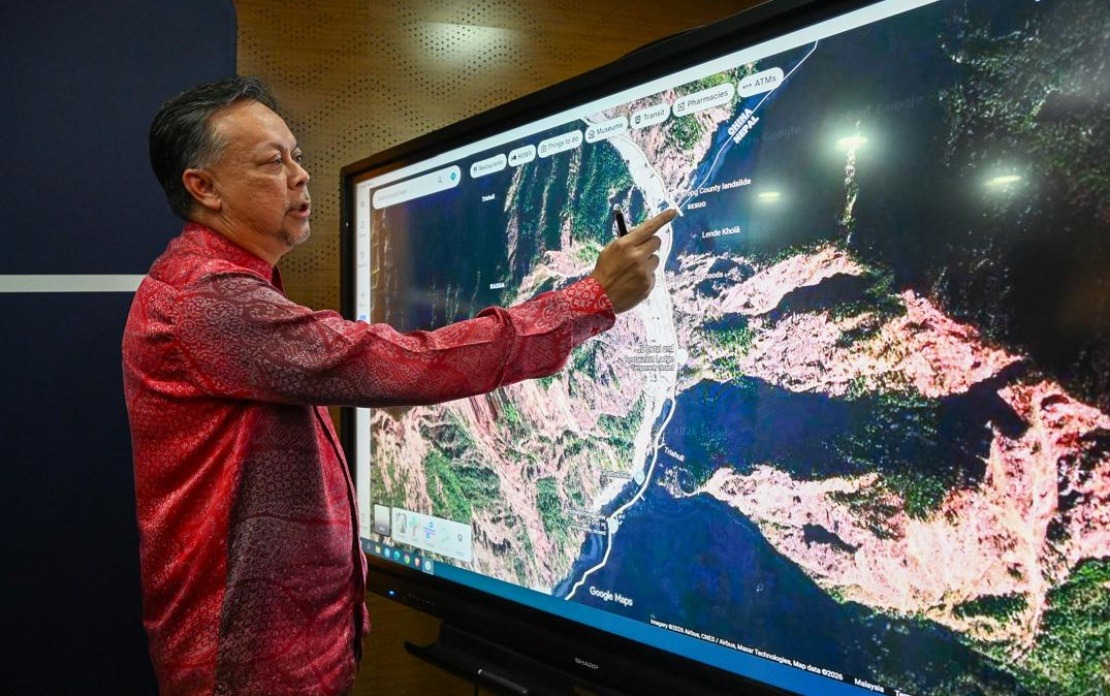
Malaysia's Foreign Ministry has confirmed locating two of the 57 Malaysians reported missing after devastating flash floods and landslides swept through Nepal's Rasua district, though the status of 55 others remains uncertain as search and rescue operations encounter significant obstacles. The breakthrough came as Datuk Syed Mohamad Hasrin Tengku Hussin, Deputy Secretary-General for Bilateral Affairs, briefed media on the evolving crisis, underscoring the complexity of disaster response in a region where communication networks have been severely compromised and infrastructure remains in tatters.
The two located individuals are undergoing identity verification and cross-referencing procedures to confirm their specific whereabouts and circumstances, a meticulous process deemed essential by officials to prevent duplication in records and ensure accurate information flow to anxious families. The ministry emphasized that this verification phase, while time-consuming, remains critical given the chaotic nature of the disaster zone and the fragmented information arriving from multiple sources including Nepalese authorities, tourism operators, and family members themselves. The figure of 55 unaccounted Malaysians continues to shift as authorities reconcile data from various channels, highlighting the inherent difficulties in managing casualty information during active crisis situations.
Foreign Minister Datuk Seri Mohamad Hasan has directed intensified efforts to locate remaining Malaysians, prompting the ministry to deploy additional personnel from the Malaysian High Commission in Dhaka to Kathmandu to strengthen coordination at the embassy level. This reinforcement reflects the serious nature of the crisis and Malaysia's commitment to ensuring no stone remains unturned in locating its citizens. The dispatched official is now assisting with information coordination, monitoring operational developments, and maintaining crucial liaison channels with Nepalese counterparts, effectively establishing a joint response mechanism that bridges diplomatic and humanitarian operations.
The underlying catastrophe unfolded when the Bote Koshi River overflowed on August 26, unleashing flash floods and triggering devastating landslides across the Rasua district and surrounding areas. Infrastructure damage remains extensive, with critical roads and bridges destroyed or rendered impassable, electricity networks severed, and telecommunications disrupted across affected zones. These infrastructure failures directly impede rescue operations and complicate information gathering, creating a vicious cycle where rescue teams cannot easily access remote areas where Malaysian trekkers or tourists may have been stranded, while simultaneously preventing survivors from contacting relatives or authorities to confirm their safety.
Nepalese authorities have reported rescuing 528 people so far—490 Nepalese nationals and 38 foreign nationals—yet none have been identified as Malaysian to date, adding to the uncertainty surrounding the 57 Malaysians on Malaysia's concern list. This discrepancy suggests some Malaysians may have been in more inaccessible locations at the time of the disaster, or alternatively that the initial tally of missing persons may include some who were never actually in the affected zone. The Malaysian Embassy in Kathmandu continues coordinating with Nepal's Foreign Ministry emergency response team, the Nepal Tourism Board, local authorities, and travel operators to systematically account for every Malaysian national in the region.
The geographic and logistical challenges confronting search and rescue efforts cannot be overstated, with Syed Mohamad Hasrin acknowledging that weather patterns remain unpredictable and infrastructure damage continues escalating as secondary disasters threaten. Nepalese authorities have issued fresh water overflow warnings for border areas, suggesting the immediate danger has not entirely passed and conditions could deteriorate rapidly. The simultaneous demands on Nepal's emergency services, which must prioritize their own 490 missing or affected citizens, naturally limit the resources available for assisting foreign nationals, creating an ethical tension in disaster response that regional observers understand yet find deeply troubling.
Malaysia's Foreign Ministry has activated a round-the-clock operations room in Putrajaya to serve as the central coordination nexus for all information flows, family member inquiries, and diplomatic communications with Nepalese counterparts. Every incoming call and piece of information undergoes rigorous cross-verification against Nepalese authority records and internal ministry databases to eliminate duplicates and maintain data integrity. Within the first two to three hours after activation, the operations room fielded between 12 and 15 calls from worried family members and friends, indicating significant anxiety within Malaysia's tourism and adventure travel communities regarding loved ones in Nepal.
The ministry has appealed for families with relevant information to contact the operations room directly, requesting comprehensive details including full names, passport numbers, specific travel itineraries, last confirmed locations, and active contact numbers. This systematic approach aims to construct as complete a picture as possible of Malaysian nationals who were present in Nepal when the disaster struck, distinguishing between those confirmed safe, those currently unaccounted for, and those potentially never in the affected zone. The intelligence gathered from multiple sources—including Tourism Malaysia, private tour operators, and individual family reports—creates an inherently messy dataset requiring careful curation to prevent false alarms or missed persons.
The disaster underscores the vulnerability of adventure tourists and trekkers exploring Nepal's mountainous terrain, where natural hazards remain ever-present and communication infrastructure is fragile. Malaysian citizens have long been drawn to Nepal for trekking expeditions, particularly routes traversing the Himalayan foothills where the August 26 flooding occurred. The incident serves as a sobering reminder that while Southeast Asian tourists frequently undertake such expeditions with well-established safety protocols, the unpredictable nature of monsoon-related flooding and landslides in high-altitude regions creates inherent risks that no amount of preparation fully mitigates.
For Malaysian families awaiting news, the uncertainty remains agonizing, though the location of two nationals provides a glimmer of hope that systematic search efforts are yielding results. The ministry's commitment to operating continuous monitoring and maintaining transparent communication with family members reflects recognition that disaster response extends beyond rescue operations to encompassing the emotional and informational needs of anxious relatives. As verification processes continue and weather conditions potentially improve, officials maintain cautious optimism that additional Malaysians will be accounted for in coming days, though they candidly acknowledge the severe constraints imposed by geography, infrastructure damage, and competing demands on Nepalese emergency services.

