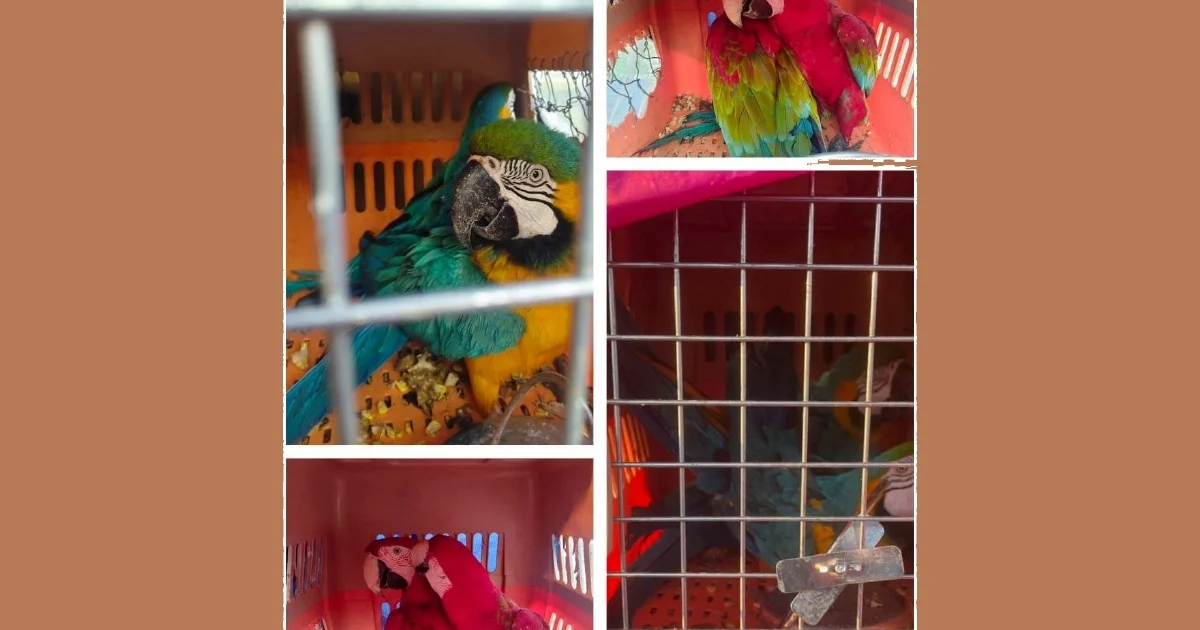
Authorities in Kelantan have arrested two longtime associates following the discovery of eight protected macaws being transported along Jalan Bandar Tumpat. The birds, which carry an estimated market value of RM400,000, were seized during an enforcement operation conducted yesterday that has drawn attention to the persistent problem of wildlife trafficking in Malaysia's northeastern state.
The arrest represents another significant capture in the ongoing battle against the illegal animal trade, which remains a lucrative but deeply damaging criminal enterprise across Southeast Asia. Macaws, native to Central and South America, command premium prices in underground markets, making them particularly attractive targets for smuggling networks. Their vibrant plumage, intelligence, and longevity as pets drive demand among collectors willing to circumvent protection laws, fuelling a supply chain that devastates wild populations in their countries of origin.
The two detainees were apprehended with the birds still in their possession, suggesting the operation may have intercepted the shipment before it reached its intended destination or distribution network. The timing and location of the seizure—along a main transport corridor—indicates that enforcement agencies may have received intelligence about the movement or had established surveillance protocols specifically targeting wildlife trafficking routes through the state.
Malaysia's involvement in the illegal wildlife trade extends beyond its role as a destination market. The country has become a significant transit hub and distribution point for smuggled animals destined for buyers throughout Asia and beyond. Port facilities, border crossings, and domestic transport networks provide pathways that traffickers exploit to move protected species rapidly through multiple jurisdictions, complicating enforcement and creating accountability challenges for authorities attempting to disrupt these networks.
The protection status of macaws under Malaysian law and international conventions, particularly the Convention on International Trade in Endangered Species of Wild Fauna and Flora (CITES), makes their commercial transportation without appropriate permits a serious wildlife crime. Penalties for such violations carry substantial fines and imprisonment, reflecting the gravity with which the government treats unauthorized trade in protected fauna. The value assigned to these eight birds—RM400,000—underscores both the commercial appeal and the conservation significance of such seizures.
Kelantan has emerged as a focal point for wildlife trafficking activity, positioning between major urban centres and offering multiple logistical advantages for criminal networks. The state's geography, port access through Tumpat, and border proximity create operational opportunities that traffickers have historically exploited. Previous enforcement successes in the region have yielded seizures of reptiles, birds, and other protected species, illustrating the persistent nature of the problem despite increased vigilance by authorities.
The participation of two individuals working in apparent collaboration raises questions about the broader organizational structure of the operation. Whether they represent lower-level operatives in a larger distribution network or independent actors remains to be determined through investigation. Such partnerships often indicate more sophisticated supply chains capable of sourcing animals, arranging transportation, accessing permits or falsified documentation, and connecting with buyers—functions distributed across multiple actors to insulate higher-level organizers from direct legal exposure.
Successful wildlife seizures depend significantly on cooperation between enforcement agencies, including wildlife officials, customs authorities, police, and specialized task forces. The coordination required to detect, intercept, and apprehend individuals involved in trafficking operations represents considerable institutional effort. Public information about seizures serves an educational function, broadcasting to potential traffickers that enforcement capacity exists and consequences are tangible, though experts note that market demand and profit margins often override such deterrence.
The incident carries implications for Malaysian efforts to combat transnational wildlife crime, particularly as international pressure mounts on countries to strengthen protections and enforcement. Regional cooperation mechanisms, intelligence sharing, and capacity building have become increasingly important as trafficking networks operate across borders with sophistication matching that of drug smuggling enterprises. Conservation organizations have repeatedly emphasized that reducing demand through consumer awareness campaigns must accompany enforcement efforts to achieve meaningful reductions in trafficking volumes.
For the broader conservation community, each seizure represents a temporary reprieve for wild populations under extraction pressure, though the fundamental dynamics driving trafficking—poverty, corruption, market demand, and limited alternative livelihoods for those involved in supply chains—persist largely unaddressed. The eight macaws recovered in this operation now face uncertain futures, typically requiring rehabilitation and eventual placement in sanctuaries or captive breeding programmes given the inherent risks of reintroduction to the wild after captivity.
The case will proceed through Malaysia's legal system, where the accused will face charges under wildlife protection statutes. Conviction outcomes and sentencing severity will be observed closely by conservation advocates evaluating the consistency and adequacy of legal consequences for trafficking offences. As organized wildlife trafficking increasingly operates at scales comparable to drug and arms smuggling in terms of sophistication and profit, authorities continue expanding investigative and enforcement capabilities specifically targeting these criminal networks.

