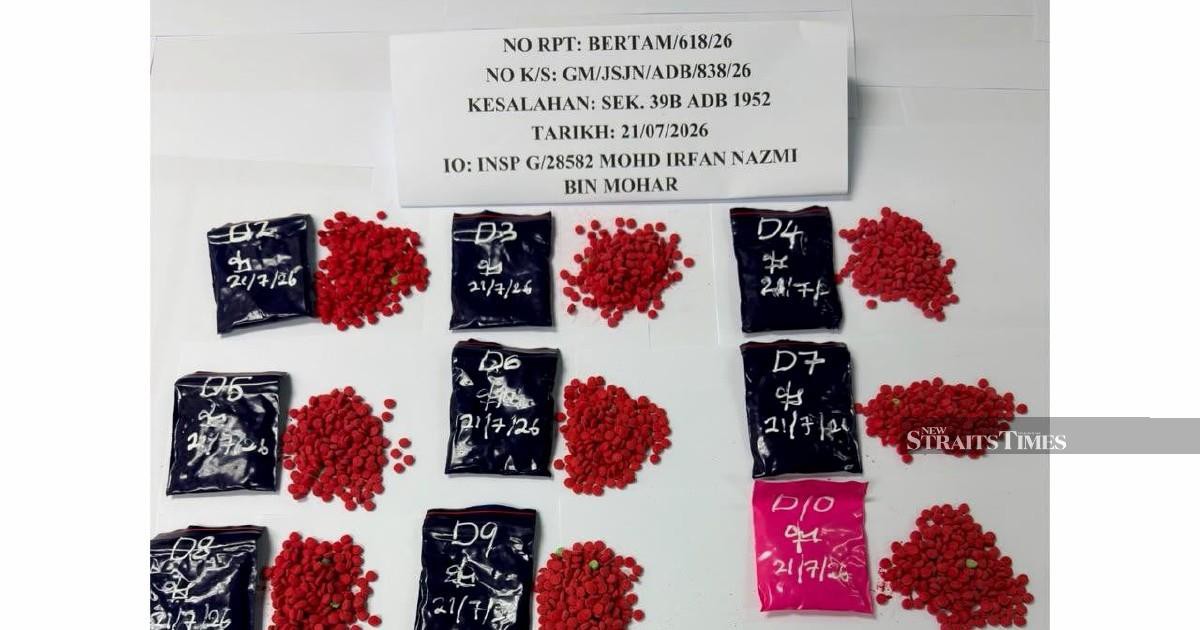
Police in Kelantan have arrested two Myanmar nationals after intercepting them during a brief chase in Gua Musang, leading to the confiscation of 6,000 yaba pills with an estimated street value of approximately RM60,000. The operation, which took place yesterday, represents another significant seizure in the ongoing fight against synthetic drug trafficking through Malaysia's porous borders.
Yaba, a combination of methamphetamine and caffeine typically pressed into tablet form, has become an increasingly prevalent narcotics problem across Southeast Asia. The drug originates primarily from clandestine laboratories operating in the border regions of Myanmar, Thailand, and Laos, where production costs remain minimal and demand from regional markets continues to drive supply networks. Malaysia's geographic position as a transit hub for such substances makes it particularly vulnerable to trafficking operations, with enforcement agencies consistently identifying new smuggling routes and modus operandi.
The Gua Musang district, located in Kelantan's interior, sits near critical smuggling corridors that connect Myanmar and Thailand to the Malaysian peninsula. The porous nature of the Thai-Malaysia border and the limited enforcement resources available across certain forested regions have long made this area a focal point for drug trafficking operations. Local police have intensified patrols and checkpoint operations in response to the persistent threat, recognising that interdiction at transit points remains one of the most effective strategies for disrupting supply chains.
The arrest of the two Myanmar nationals underscores the transnational dimension of drug trafficking in the region. Myanmar's ongoing internal instability and weak governance in border areas have created ideal conditions for trafficking organisations to establish production and distribution networks with minimal interference. These criminal enterprises frequently recruit individuals from Myanmar and neighbouring countries to serve as couriers, offering them modest compensation to transport narcotics across international borders, often without fully disclosing the nature of their cargo or the severe legal consequences they face.
Yaba's particular appeal to traffickers stems from its compact form, which facilitates concealment during transit, and its substantial profit margins. The difference between production costs in Myanmar and street value in Malaysia can exceed a thousandfold, making individual trafficking attempts economically rational despite significant apprehension risks. This economic dynamic ensures a constant flow of couriers willing to undertake the journey, despite mounting imprisonment sentences and mandatory drug testing provisions in Malaysian law.
The value of this seizure, placed at RM60,000, reflects both the quantity of pills recovered and their wholesale pricing within local drug markets. However, the actual retail value—calculated based on individual pill sales to end users—would be substantially higher, potentially reaching several times this figure. This distinction illustrates how enforcement agencies typically calculate seizure values at wholesale rates rather than street prices, presenting a more conservative assessment of the impact on criminal supply operations.
Kelantan's role as a major trafficking throughway has placed persistent pressure on state police resources and border enforcement capabilities. The Royal Malaysia Police have progressively enhanced coordination with Thai counterparts and central narcotics agencies, implementing joint operations and information-sharing protocols designed to interdict shipments before they penetrate deeper into peninsular distribution networks. Yesterday's successful operation reflects these enhanced coordination efforts and the intelligence-gathering capabilities that increasingly underpin modern drug enforcement.
The implications of this arrest extend beyond the immediate seizure. The two Myanmar nationals will likely face charges under Malaysia's Dangerous Drugs Act, which carries severe penalties including lengthy imprisonment and mandatory death sentences for trafficking offences involving quantities exceeding specified thresholds. The 6,000 pills seized substantially exceed typical possession quantities, suggesting these individuals were engaged in distribution rather than personal consumption, a distinction that carries profound legal ramifications under Malaysian law.
For Malaysian policymakers and enforcement agencies, the persistence of such trafficking operations despite significant interdiction efforts highlights the limitations of supply-side interventions alone. Demand reduction strategies, community awareness campaigns, and treatment and rehabilitation facilities remain underfunded relative to enforcement operations. The steady availability of yaba in local drug markets suggests that seizures, while important, are not reducing overall supply sufficiently to affect street prices or limit accessibility.
The broader regional context remains troubling. ASEAN nations collectively face escalating synthetic drug production in their immediate vicinity, with Myanmar's laboratories now estimated to produce hundreds of millions of pills annually. Cooperation frameworks between regional governments, though improving, remain hampered by varying legal systems, capacity disparities, and occasional diplomatic tensions. Until source-country governments implement sustained enforcement operations against manufacturing facilities and trafficking organisations, Malaysian authorities will continue managing the downstream consequences of regional drug production.
Looking forward, enforcement agencies must balance aggressive interdiction operations with strategic intelligence gathering designed to unravel trafficking networks rather than simply removing individual couriers. Disrupting established supply routes requires sustained pressure on production hubs, transit points, and distribution networks simultaneously—a challenge that demands sustained investment in cross-border cooperation and intelligence capabilities across Southeast Asia.

