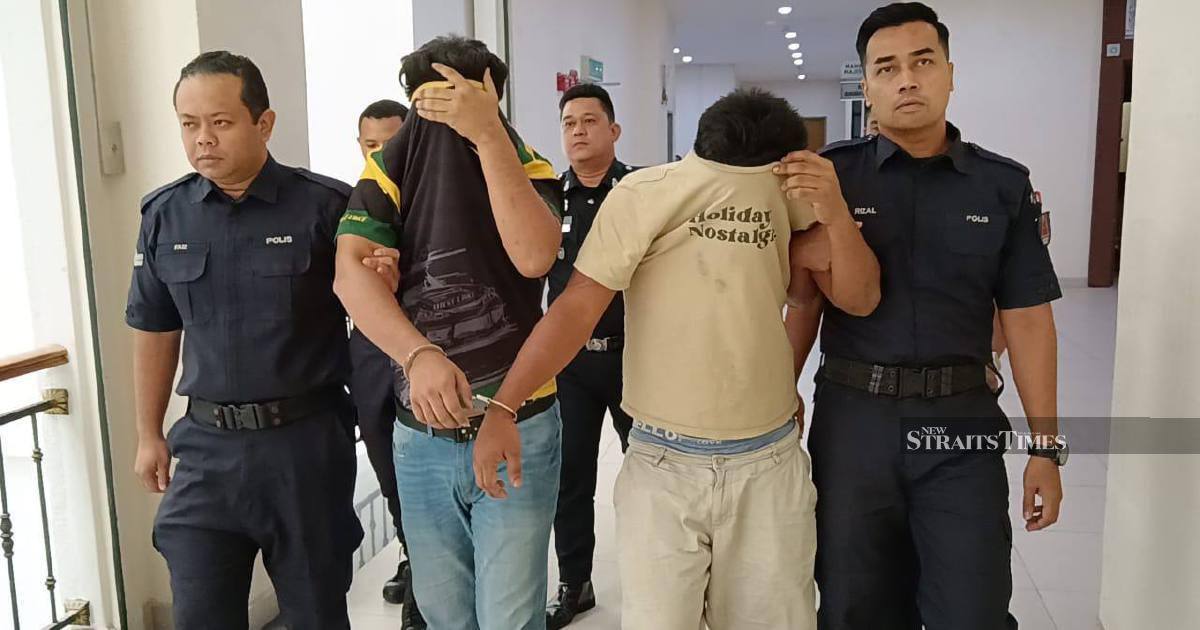
Two men of Rohingya origin, both registered with UNHCR identification documents, appeared before the Magistrate's Court in Muar today to face charges relating to a coordinated series of residential break-ins that have plagued the district. The pair, whose names and precise charges were documented in court proceedings, stand accused of involvement in multiple house intrusions over a defined period.
The case unfolds against a broader backdrop of Malaysia's complex relationship with its Rohingya population, estimated at over 180,000 persons scattered across the country. Most lack formal legal status, existing in a precarious limbo between humanitarian tolerance and exclusion, though some—like those charged today—carry UNHCR documentation that acknowledges their refugee status without conferring formal protection or settlement rights. This intermediate position creates administrative challenges that extend far beyond individual cases, affecting how security, employment, and integration questions are negotiated between refugee communities and host authorities.
Muar, located in Johor state, has emerged as a district with significant refugee populations residing in various residential areas and informal settlements. The concentration of break-ins attributed to individuals with refugee backgrounds inevitably amplifies anxieties among local residents about property crimes and may reinforce perceptions linking refugee populations to criminal activity. Such incidents, regardless of their frequency relative to overall crime rates, tend to generate disproportionate media attention and community concern that shapes public discourse about refugee policies.
The circumstances that drive individuals from marginalized refugee communities toward criminal conduct warrant examination. Limited access to formal employment, inadequate social services, and restricted freedom of movement create psychological and material desperation that some individuals attempt to resolve through illicit means. Young men without legitimate economic prospects may become vulnerable to criminal networks or may themselves turn to theft as a survival strategy. Understanding the motivations behind such crimes requires acknowledging these structural constraints, even as legal accountability remains essential.
For Malaysian authorities, these arrests underscore the enforcement capacity of local police and judiciary in addressing crime involving individuals regardless of immigration status. The Muar Magistrate's Court's handling of these cases demonstrates that the formal justice system applies consistently to non-citizens, though questions about due process protections for individuals unfamiliar with the Malaysian legal system and possibly facing language barriers remain pertinent. The Malaysian legal framework treats criminal conduct uniformly, though the underlying circumstances—statelessness, restricted rights, marginalization—create a distinct context.
The UNHCR's role in this scenario is circumscribed. The organization provides registration and documentation to displaced persons and asylum seekers, creating a record that facilitates identification and background checks. However, UNHCR does not function as a law enforcement agency; it cannot prevent individuals it has registered from committing crimes, nor does registration imply comprehensive background screening that would prevent all criminal activity. The presence of UNHCR cards on alleged perpetrators actually demonstrates that the registration system captured individuals later implicated in criminal conduct.
This case carries implications for Johor state's approach to public safety and refugee management simultaneously. Enhanced community policing in areas with significant refugee populations may deter such crimes, though such measures must balance security objectives with respect for civil liberties and avoidance of discriminatory profiling. The incident may prompt discussions among state and federal authorities about whether current oversight mechanisms for refugee populations require adjustment, particularly regarding monitoring of individuals known to authorities through UNHCR registration.
For the broader Southeast Asian context, Malaysia's willingness to prosecute non-citizens for crimes, including those with refugee status, contrasts with concerns that undocumented migrants sometimes escape accountability due to their lack of formal status. The Muar cases illustrate that individuals in the refugee population are not immune to law enforcement scrutiny, which theoretically deters criminal conduct even among highly vulnerable populations. However, the flip side involves risks of collective blame and heightened restrictions on refugee movement or residence.
The cases also highlight the absence of a comprehensive regional refugee framework across Southeast Asia. Unlike Europe, which operates under established asylum conventions and burden-sharing arrangements, Southeast Asian countries manage refugee populations largely as domestic concerns with limited international coordination. Malaysia effectively hosts one of the region's largest refugee populations, yet lacks comprehensive integration policies or international burden-sharing mechanisms that might distribute costs and responsibilities more equitably.
As the Muar Magistrate's Court proceedings advance, the cases will likely attract media attention and shape public perception of refugee populations during a period when migration issues command significant political attention across Malaysia. The outcomes—convictions, sentencing, potential deportation discussions—will send signals about how the Malaysian justice system treats non-citizens accused of serious crimes. These signals reverberate through refugee communities, affecting perceptions of rule of law and procedural fairness, while simultaneously influencing public opinion regarding asylum and refugee policy in Malaysia more broadly.

