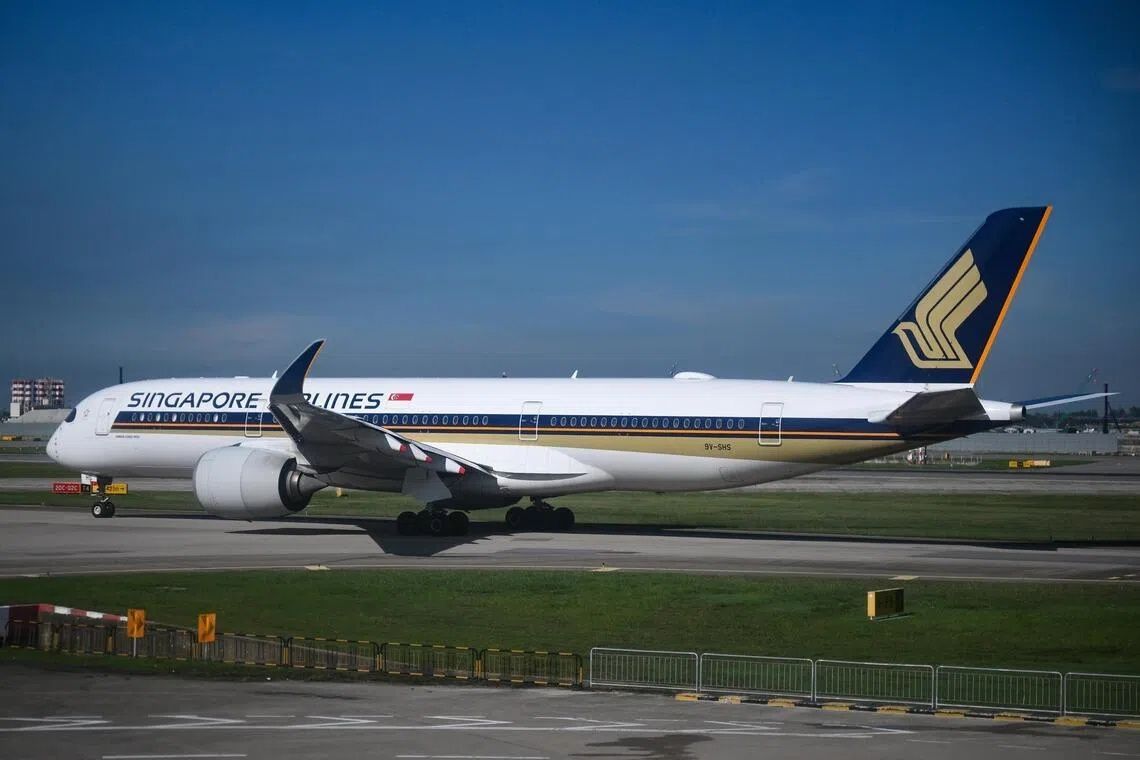
Major carriers serving Southeast Asia and the Asia-Pacific region have begun cancelling flights as Typhoon Noul closes in on Hong Kong and southern China, disrupting travel plans for thousands of passengers across the busy regional route network. Singapore Airlines announced the cancellation of three regional services on 25 and 26 July, citing conditions associated with the approaching typhoon, while Hong Kong's flag carrier Cathay Pacific took more extensive action by grounding all flights into and out of Hong Kong International Airport during a critical six-hour window on 26 July.
Singapore Airlines' operational response included the withdrawal of flight SQ856 from Singapore to Shenzhen scheduled for 25 July, as well as the return service SQ855 from Shenzhen to Singapore on 26 July. The carrier also suspended its Hong Kong-Singapore route for 26 July, affecting flight SQ899. The airline issued formal guidance to travellers on 25 July at 4:45pm, instructing passengers to monitor its dedicated flight status page for potential additional schedule adjustments, underscoring the fluid nature of operations during severe weather events in the region.
Cathay Pacific implemented an even more comprehensive suspension affecting Hong Kong International Airport, cancelling all operations scheduled between 1:15am and 6pm on 26 July. The Hong Kong-based carrier acknowledged that a supplementary group of services would experience delays rather than outright cancellation. The airline committed to rebooking all stranded passengers onto alternative flights and pledged to communicate new booking details as soon as revised schedules could be confirmed, a standard protocol for major weather disruptions.
For travellers affected by these cancellations, both carriers offered financial relief. Singapore Airlines extended full refund eligibility for the unused portion of cancelled tickets, providing compensation that extends beyond simply rescheduling passengers onto later flights. Passengers who had booked through intermediaries such as travel agents or partner airlines were directed to seek assistance directly from those booking entities, a common arrangement that places responsibility on the party that conducted the initial transaction.
Metereological agencies tracking Typhoon Noul projected landfall across the coastal zone spanning Hong Kong and Guangdong Province, with impact expected between the evening of 25 July and the morning of 26 July. China's National Meteorological Center, cited through international news agencies, warned of accompanying hazards including torrential rainfall and gale-force winds capable of creating dangerous conditions for both maritime and aviation operations. The intensity and trajectory of the storm system justified the precautionary measures adopted by the region's premier carriers.
The human toll of the disaster emerged through evacuation statistics released by Chinese state media. China Central Television reported that more than 20,000 residents had been relocated from Guangdong Province by the evening of 24 July, reflecting provincial authorities' commitment to removing vulnerable populations from zones facing direct typhoon exposure. This scale of precautionary displacement underscores the severity of the meteorological threat and the earnest efforts by governments to minimize casualties.
For Malaysian and regional travellers, disruptions to the Singapore-Hong Kong-Shenzhen route network carry particular significance, as this corridor ranks among Asia's most travelled commercial aviation lanes. Many Malaysian business professionals, tourists, and transit passengers depend on these services for regional connectivity, making weather-related closures a disruptive if occasionally unavoidable reality of tropical and subtropical travel. The coordination between Singapore and Hong Kong carriers in providing advance notice and rebooking options demonstrates established crisis communication protocols, though passenger inconvenience remains substantial.
The broader implication of Typhoon Noul's passage involves the vulnerability of concentrated aviation infrastructure to episodic severe weather events. Hong Kong International Airport, one of the world's busiest hubs, represents a choke point in Asia-Pacific air transport networks; its closure forces massive schedule reorganisation across multiple carriers and jurisdictions. Similarly, the Shenzhen-Singapore route disruption affects a major commercial corridor linking Southeast Asia to the Chinese manufacturing heartland, carrying implications for business continuity for firms operating across both regions.
Typhoons remain a seasonal reality for carriers operating in the western Pacific, and Singapore Airlines and Cathay Pacific have invested substantially in meteorological forecasting and contingency planning. The relatively orderly announcement of cancellations several hours before expected impact reflects operational maturity, allowing passengers time to make alternative arrangements rather than facing last-minute disruptions. However, the inability to maintain service during such events, despite technological advancement, illustrates that natural phenomena still impose hard constraints on aviation operations in the region.

