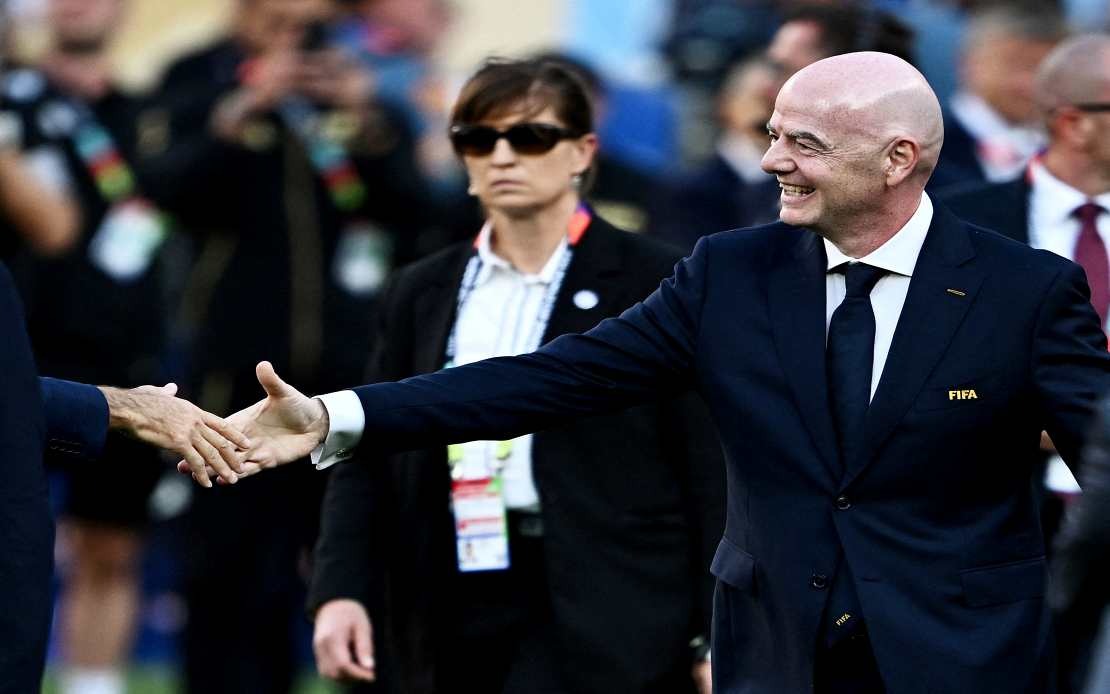
The Union of European Football Associations has escalated its confrontation with FIFA leadership by issuing a formal written notice to President Gianni Infantino that it is actively considering legal action, arbitration, and regulatory complaints stemming from a controversial scheme to privatise portions of the organisation's commercial operations. The dramatic escalation came just days after FIFA abandoned the proposal entirely, marking a significant political shift within international football's governing bodies and raising questions about accountability mechanisms within the sport's power structures.
FIFA's initial announcement in early August outlined an ambitious plan to raise approximately US$4.2 billion by selling roughly 20 per cent of a newly created entity that would manage the organisation's media and commercial rights, encompassing lucrative World Cup broadcasting and sponsorship arrangements. The proposal represented a fundamental restructuring of how football's most prestigious tournaments would be commercialised and controlled, with immediate implications for broadcasters, sponsors, and national football associations worldwide. According to reporting on the transaction, the Kushner Foundation—connected to Joshua Kushner, brother of former White House senior adviser Jared Kushner—emerged as a potential investor in this privatisation scheme.
The ramifications of such a transaction would have extended far beyond financial arrangements. Analysis of the proposal suggested that FIFA President Infantino's annual compensation would have increased substantially from three million euros to thirty million euros, positioning him as one of the world's highest-paid sports administrators. This personal financial dimension added another layer of controversy to discussions about FIFA governance and whether leadership interests aligned with the broader football community's welfare. The magnitude of this potential salary adjustment became a focal point for criticism from member confederations and governance watchdogs.
European football's response was swift and uncompromising. UEFA, which represents 55 European national associations and wields substantial political influence within FIFA, announced an immediate boycott of all FIFA competitions involving its member nations unless the proposal was completely withdrawn. This represented an extraordinary show of solidarity and institutional pressure, as UEFA effectively threatened to cripple FIFA's tournament calendar by removing European participation. Such coordinated action at confederation level remains rare within international football politics, underscoring the severity of concerns surrounding the privatisation initiative.
Within days of UEFA's boycott threat, FIFA reversed course entirely. By Saturday evening, Infantino announced the federation's decision to abandon the commercial rights sale indefinitely. The rapid capitulation suggested that the political costs of proceeding outweighed whatever strategic or financial advantages FIFA leadership believed the transaction would deliver. However, this retreat did not satisfy European football's governing body, which viewed the entire episode as symptomatic of deeper governance failures and accountability deficits within FIFA's leadership structures.
UEFA's subsequent formal legal notice, as disclosed to The Telegraph, employs carefully calibrated language that signals determination to pursue multiple enforcement avenues simultaneously. The confederation explicitly stated its intention to consider not only litigation but also arbitration proceedings and regulatory complaints, providing several potential pathways through which it could hold FIFA and Infantino personally accountable. This multifaceted legal strategy reflects sophisticated institutional awareness that different proceedings might succeed at different forums, and maintains maximum flexibility as the dispute develops.
The document preservation demand contained within UEFA's notice carries particular significance for potential litigation. By requiring FIFA and Infantino to immediately identify, locate, and maintain all documents and electronically stored information related to the failed commercial rights transaction, UEFA is establishing a legal record that can later be used to demonstrate deliberate destruction of evidence, should FIFA officials attempt to eliminate communications or decision-making records. Such preservation obligations are standard in major commercial disputes and represent a clear signal that UEFA views this matter as serious enough to warrant intensive legal investigation and potential courtroom proceedings.
For Malaysian sports observers and the broader Southeast Asian football community, this conflict within FIFA's leadership carries important implications. Any internal disputes at FIFA level ultimately affect how international competitions are structured, financed, and administered—decisions that ripple through regional football confederations including the Asian Football Confederation. Malaysia's own football governance and league structures operate within frameworks established by FIFA, meaning disruptions to FIFA's institutional coherence could indirectly influence domestic sports administration and investment patterns.
The underlying governance question animating this dispute extends beyond the specific commercial transaction. UEFA's actions reflect frustration with FIFA leadership's apparent willingness to pursue ambitious financial restructuring without adequate consultation with member confederations, and without demonstrating how such changes would benefit football globally rather than concentrating power and wealth among FIFA's executive hierarchy. This pattern of decision-making—whether characterised as top-down leadership or institutional capture—has long been a source of tension between FIFA's centralised power structure and more federalised regional associations that believe they should have meaningful input on major strategic decisions affecting international football.
The personal dimension of this dispute should not be underestimated. Infantino, who assumed FIFA's presidency in 2016 following the corruption scandals that engulfed his predecessor Sepp Blatter, has positioned himself as a reformer committed to expanding football's reach and generating additional revenue for member associations. However, his tenure has been marked by controversies ranging from governance questions to suspicious decision-making processes. The commercial rights sale proposal appeared to many observers as a mechanism through which Infantino could simultaneously enrich himself dramatically while also raising capital that FIFA could ostensibly distribute to confederations, thereby building support for his continued leadership despite ongoing governance concerns.
UEFA's legal threat also carries geopolitical implications worth noting. The European confederation represents the world's most commercially developed and politically influential football market. Its willingness to openly challenge FIFA and threaten competition boycotts signals that even the organisation's most powerful regional body no longer accepts FIFA's decision-making processes as automatically legitimate. Should UEFA proceed with substantial legal action, it could fundamentally alter the balance of power within international football, potentially forcing FIFA to adopt more consultative governance structures and more transparent decision-making processes, particularly regarding financial matters that concentrate substantial resources within the executive leadership.
Looking forward, the trajectory of UEFA's threatened legal proceedings will likely determine whether FIFA experiences genuine institutional reform or whether this episode becomes another chapter in the sport's recurring pattern of governance crises followed by temporary adjustments and renewed stability under existing power structures. For Malaysian football and Southeast Asian sports governance more broadly, the outcome carries implications for how regional confederations might collectively exercise their own institutional power when confronting decisions made at the international level that appear to serve narrow elite interests rather than football's broader development.

