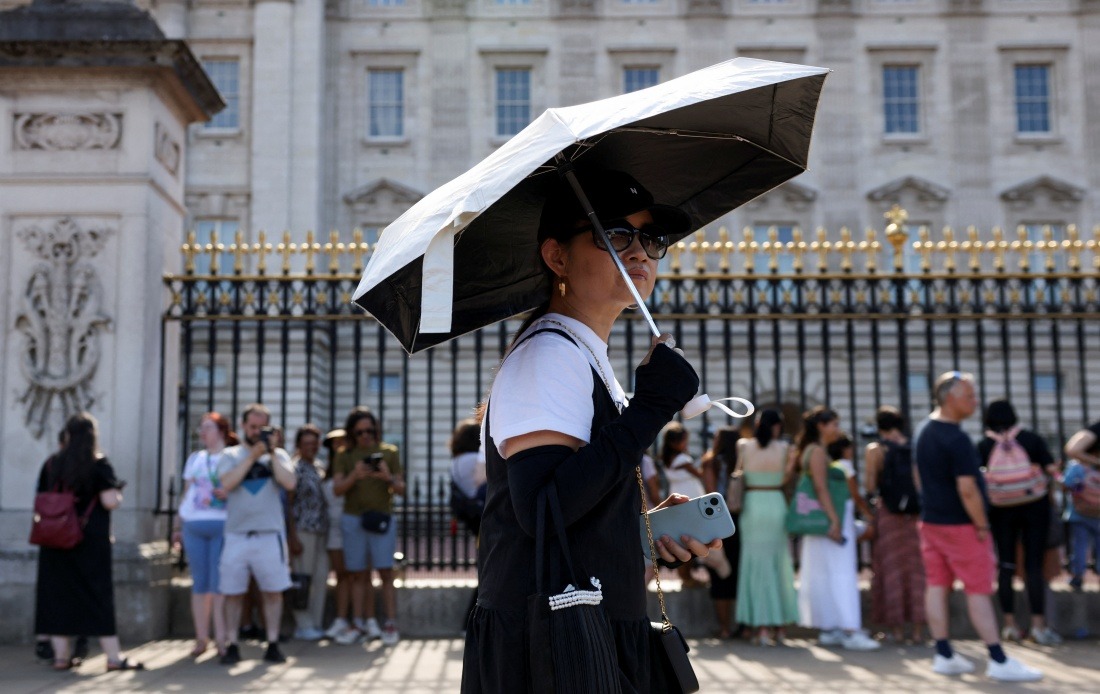
The Household Division of the United Kingdom announced on Tuesday that ceremonial guard changes will not proceed at Buckingham Palace, Windsor Castle, and locations across London throughout the latter half of this week due to an unprecedented heatwave sweeping through the country. The dramatic decision underscores the severity of weather conditions forecast for Wednesday and Thursday, when temperatures are expected to climb to 39 degrees Celsius, with some areas potentially recording even higher readings that could shatter the United Kingdom's June temperature record.
Meteorology officials at the UK's Met Office issued a red weather warning earlier this week covering the United Kingdom and Wales, signalling the most serious level of weather alert in Britain's warning system. This classification indicates dangerous conditions that pose genuine risk to public health and safety across affected regions. The warning encompasses London and several counties in southern England, including Somerset, Buckinghamshire, and Gloucestershire, areas that historically have not prepared extensively for such extreme thermal conditions.
In an official statement, the Household Division explained that the decision prioritises the welfare of military personnel, the ceremonial military horses that feature prominently in these iconic traditions, and the thousands of members of the public who regularly gather to witness these historic pageantry events. The ceremonial guard changes, which attract considerable crowds of tourists and local residents, require soldiers to remain in formal dress uniforms and stand at attention for extended periods under direct sunlight—conditions that become genuinely dangerous when temperatures exceed 37 degrees Celsius.
The suspension affects multiple locations and extends across three consecutive days, representing an unusual disruption to one of Britain's most recognisable ceremonial traditions. The Royal Horse Guards' Wednesday ceremony, which could not be entirely cancelled due to operational considerations, will proceed in a substantially modified format. This adapted version will commence earlier in the morning, before peak heating occurs, and will omit the elaborate ceremonial theatrical elements that typically characterise the event, allowing the ceremony to conclude more expeditiously.
Additional precautionary measures announced by the UK military include repositioning soldiers to remain within shaded areas throughout the day and implementing a more frequent rotation schedule to prevent any individual from enduring prolonged exposure to extreme heat. These adjustments reflect comprehensive risk management protocols adapted from military guidelines for operations in challenging environmental conditions. The military working horses will similarly benefit from enhanced shade provision and more frequent breaks from their ceremonial duties.
The heatwave's impact extends well beyond London's ceremonial calendar and into Britain's education sector, where the thermal stress has forced widespread institutional closures. Somerset county council announced that approximately 100 schools throughout the region will remain shuttered during the period of extreme heat, as many educational facilities lack adequate air conditioning infrastructure and cooling systems. The concern centres on maintaining safe internal temperatures within classrooms where concentrations of children and young people would face genuine health risks from prolonged exposure to overheating environments.
Buckinghamshire similarly reported closure of approximately 100 schools, whilst more than 80 educational institutions suspended in-person classes in Gloucestershire during the danger period. These closures cluster within the geographic area covered by the Met Office's red weather warning and demonstrate the systemic vulnerability of Britain's school infrastructure to extreme thermal events. In London itself, nearly 10 major schools opted to cancel conventional classroom instruction and either closed entirely or moved to remote learning arrangements.
For Malaysian readers, this episode illustrates how climate variability increasingly disrupts operations across developed nations equipped with sophisticated infrastructure and planning systems. Whilst Malaysia operates routinely in tropical heat, the British response demonstrates that societies unaccustomed to extreme temperatures lack necessary adaptive systems, whether in building design, operational protocols, or public expectations. This represents a reversal of traditional assumptions about which nations face climate vulnerability, suggesting that heat-related disruptions will increasingly affect temperate regions as global warming accelerates.
The suspension of ceremonial events at Buckingham Palace specifically carries symbolic weight beyond weather management. These ceremonies represent institutional continuity and national tradition, elements deeply embedded in British cultural identity. Temporarily suspending them acknowledges that even fundamental national rituals must yield to genuine public health imperatives. This pragmatic approach contrasts with some responses in other nations that might prioritise ceremonial optics over worker safety.
The closure of hundreds of schools across southern England also raises longer-term questions about infrastructure investment. British schools constructed across decades when such extreme temperatures were considered implausible now face operational challenges. This mirrors infrastructure concerns across Southeast Asia, where fixed building designs may prove inadequate as climate patterns intensify. Malaysia's experience managing consistent heat provides potential lessons for temperate nations ill-prepared for conditions they previously considered anomalous.
Meteorologists indicate this heatwave reflects broader climate trends rather than isolated aberration. The forecast breaking of June temperature records suggests intensifying frequency of such events, prompting questions about whether institutional adaptation strategies remain merely reactive responses or signal fundamental rethinking of operations across affected societies. For regional observers, Britain's experience provides early indication of challenges that may eventually become more frequent across previously temperate latitudes.