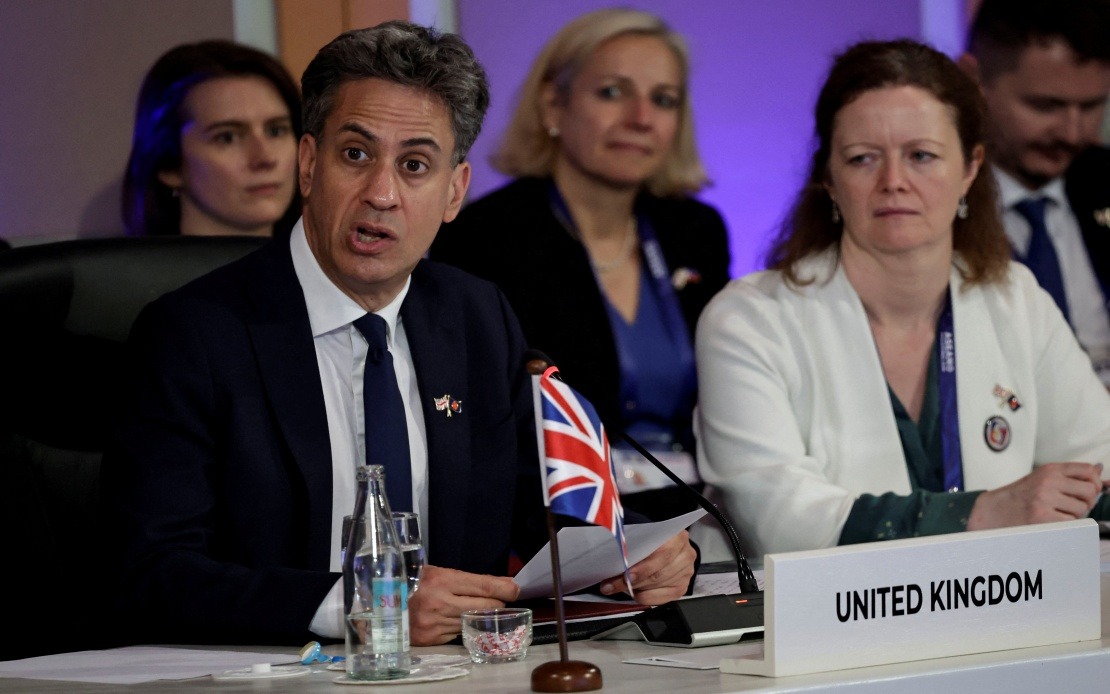
Britain's newly appointed Foreign Secretary Ed Miliband is set to undertake his first official visit to continental Europe this week, signalling the UK government's commitment to rebuilding and consolidating relationships with key European partners following years of post-Brexit tensions. The diplomatic mission will take him to both France and Spain on Wednesday, where he plans to hold substantive discussions with senior government officials and explore fresh commercial and political cooperation frameworks that benefit British citizens and enterprises operating across the European Union.
The timing of Miliband's visit carries particular poignancy given the catastrophic natural disasters currently afflicting both destination countries. France and Spain are grappling with unprecedented wildfire emergencies that have forced the evacuation of approximately 330,000 residents from danger zones, devastating communities, destroying infrastructure, and straining emergency services. The humanitarian crisis has exposed the vulnerability of European nations to climate-related disasters, creating an immediate context within which diplomatic conversations about long-term environmental strategy become especially urgent and substantive rather than merely procedural.
Miliband's decision to proceed with the visit whilst simultaneously offering tangible UK solidarity with disaster relief efforts demonstrates a carefully calibrated diplomatic approach. Rather than postponing engagements, he intends to use the crisis as a focal point for discussing how democracies must work together to address the underlying causes of extreme weather phenomena. The Foreign Secretary is expected to articulate Britain's position that the wildfires represent a stark illustration of the climate emergency's accelerating impact, requiring coordinated multilateral action rather than isolated national responses.
In Paris, Miliband will meet with French Foreign Minister Jean-Noel Barrot to discuss a range of strategic European concerns. Defence and security cooperation features prominently on the agenda, reflecting NATO's pivotal role in addressing geopolitical instability and the bloc's need to maintain unified positioning on critical international matters. The two officials are anticipated to thoroughly examine ongoing British support for Ukraine, a country whose security situation continues to demand Western commitment and resources despite reduced media attention in recent months.
The Franco-British dialogue will also address Middle Eastern affairs, particularly efforts to achieve sustainable peace arrangements across West Asia. This region has witnessed intensifying conflicts and humanitarian crises that necessitate coordinated diplomatic engagement from established powers. Beyond security matters, migration policy will feature in discussions, as both nations contend with complex population movements requiring harmonised legal frameworks and burden-sharing mechanisms.
Following his Paris engagements, Miliband will travel to Madrid to meet Spanish Foreign Minister José Manuel Albares. The UK-EU Gibraltar treaty represents a significant item on this bilateral agenda, reflecting an ongoing point of friction between London and Madrid that requires careful diplomatic management. Gibraltar's status has long generated tension between Britain and Spain, and Miliband's direct engagement with Albares provides an opportunity to affirm Britain's commitment to working within constructive frameworks that acknowledge legitimate concerns on both sides whilst maintaining stability in the region.
Security cooperation between the UK and Spain will occupy considerable attention during the Madrid meeting, particularly regarding Mediterranean security dynamics and counter-terrorism initiatives. Spain's geographic position and security expertise make it a crucial partner for Britain in addressing threats emanating from North Africa and the broader Middle East. The two nations share interests in protecting critical maritime routes and combating transnational criminal networks operating across the region.
The climate crisis will feature as a unifying theme throughout both meetings, underscoring how environmental challenges transcend borders and demand collective problem-solving. By linking immediate wildfire disasters to broader climate policy discussions, Miliband can demonstrate how diplomatic engagement serves practical purposes in addressing contemporary crises. This approach resonates particularly strongly in Southeast Asia and the Pacific, where climate impacts from flooding to extreme heat already impose substantial economic and human costs on developing nations with limited capacity to respond independently.
For Malaysian observers and broader regional audiences, Miliband's European tour illustrates how major Western powers are recalibrating their diplomatic priorities in the post-pandemic era. Britain's renewed emphasis on EU partnerships reflects recognition that geopolitical challenges—from climate change to regional conflicts to migration pressures—require sustained international cooperation rather than the nationalist retrenchment that characterised recent years. The UK's efforts to rebuild European relationships carry implications for global governance capacity and multilateral institutions that affect Southeast Asian interests.
The visit also demonstrates how natural disasters can refocus diplomatic agendas toward shared vulnerabilities. As climate impacts intensify globally, wealthy nations are increasingly recognising that climate adaptation and mitigation demand coordinated action. Britain's approach—using crisis moments to deepen environmental commitments alongside traditional bilateral discussions—offers a template for how countries might integrate climate imperatives into all diplomatic conversations rather than treating them as separate negotiating tracks.
Furthermore, Miliband's diplomatic mission occurs as Britain recalibrates its post-Brexit identity as an independent actor within the Western alliance. By prioritising substantive engagement with France and Spain, the UK signals that leaving the EU does not diminish its commitment to European stability and security cooperation. This positioning matters for regional powers seeking to understand Britain's future role in international affairs, particularly regarding Asia-Pacific security questions where Britain has historical interests and emerging strategic commitments.

