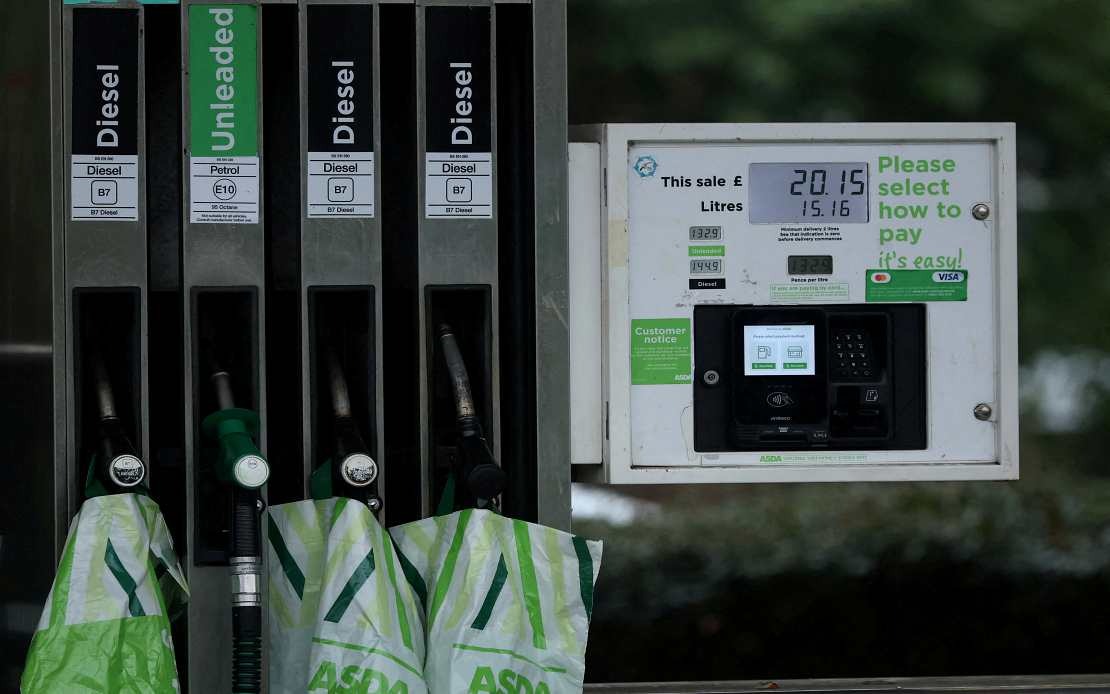
The United Kingdom faces a mounting fuel theft crisis, with drivers illicitly removing nearly £194,000 worth of petrol and diesel from forecourts each day since tensions with Iran ignited at the end of February. Analysis by fuel theft prevention company Forecourt Eye paints a troubling picture of a nation increasingly strained by energy costs, revealing that both the frequency and monetary value of pump thefts have climbed dramatically since conflict-related disruptions began shaking global oil markets.
The escalation in criminal activity at the forecourt tells a complex story about how geopolitical shocks ripple through everyday consumer behaviour. When the Iran crisis commenced on February 28, petrol prices spiked sharply, and within five months, reported incidents of fuel theft surged by 20 per cent compared with the preceding five-month period. More strikingly, the cumulative value of stolen fuel increased by 48 per cent during the same timeframe, demonstrating how rising prices have made each individual theft more lucrative and damaging to station operators.
Forecourt Eye's research, drawn from a representative sample of 550 installations across the UK's 8,359 petrol pumps, distinguishes between two primary methods of theft. Drive-offs occur when customers depart without any pretence of payment, while no-means-of-payment incidents involve drivers who fill their tanks and then claim inability to settle the bill. The distinction matters because it reveals different behavioural patterns: first-time offenders accounted for a 23 per cent increase in incidents and a 26 per cent rise in volume stolen, whereas repeat offenders showed lower growth rates of 17 per cent and 20 per cent respectively. This suggests that climbing fuel costs are pushing ordinary motorists toward criminal behaviour rather than simply enabling organised crime syndicates.
The financial toll on pump prices has become undeniable. By early August, unleaded petrol averaged 160 pence per litre in the UK, representing a 27 pence increase from pre-conflict levels and marking the highest price seen in three and a half years. Diesel proved even more dramatically affected, rising by approximately 37 pence per litre to reach 179 pence. For Malaysian readers accustomed to government-regulated fuel prices, these uncontrolled market-driven escalations illustrate how vulnerable economies without price controls become when international energy markets destabilise.
The human dimension underpinning these statistics deserves closer examination. Gordon Balmer, executive director of the Petrol Retailers Association representing independent stations, emphasises that frontline staff bear the brunt of this crisis. Members report escalating abuse and aggression directed at forecourt employees who are powerless to influence pricing yet find themselves confronting frustrated and financially squeezed customers. This phenomenon reflects broader social tensions accompanying the cost-of-living squeeze affecting British households.
A particularly revealing insight comes from Ben Lawrence, director at Lawrences Garages, which operates five stations in Norfolk and Hampshire. He observes a fundamental shift in who commits fuel theft. Historically, such crimes were predominantly perpetrated by individuals already embedded in broader criminal ecosystems. Today, however, rising living costs have democratised fuel theft, converting it from a specialised criminal act into a survival strategy for ordinary people facing genuine hardship. This transformation carries significant implications for how societies respond to economic crises, as traditional law-enforcement approaches designed for organised crime may prove inadequate when millions face genuine desperation.
Lawrence also highlights a critical misperception affecting consumer psychology. Many drivers mistakenly believe that branded forecourts displaying logos of multinational energy corporations such as BP and Shell are directly operated by those giants. In reality, the overwhelming majority operate as franchises owned by small independent businesses. Consequently, when motorists commit drive-offs at these locations, they frequently rationalise their actions as causing minimal harm to distant faceless corporations. The psychological distance between consumer and victim—typical in large corporate crime—becomes particularly pronounced at the petrol pump, where the visible brand obscures the actual small-business operator suffering genuine financial loss from theft of £80 to £90 per incident.
The industry response demonstrates recognition that technology may provide partial solutions to this deepening crisis. Forecourt Eye is partnering with Facewatch to offer free crime-reporting technology to petrol station operators, facilitating documentation of fuel thefts, shop crimes, and related incidents. Additionally, users possess the option to join Facewatch's live facial recognition network, which alerts participants to known repeat offenders. Michelle Henchoz, managing director at Forecourt Eye, positions this initiative as essential infrastructure for an increasingly sophisticated criminal environment, emphasising that integrated technology solutions must protect both fuel forecourts and associated convenience stores.
For Southeast Asian observers, this crisis illuminates the stability provided by fuel price regulation mechanisms implemented throughout the region. While such policies attract considerable economic criticism, the UK experience demonstrates how uncontrolled energy price volatility during geopolitical instability can trigger cascading social and economic consequences extending far beyond pump prices. Malaysia's subsidised petrol and diesel regime, despite budgetary pressures, prevents the kind of desperate consumer behaviour now plaguing UK forecourts, suggesting that targeted interventions addressing essential commodities may offer genuine social value even when economists question their long-term efficiency.
The broader implications extend beyond simple crime statistics. The Iran oil crisis has exposed how energy market shocks transmit through entire societies, fundamentally altering behaviour among previously law-abiding citizens while simultaneously overwhelming small business operators attempting to maintain legitimate operations. As geopolitical tensions remain elevated and energy markets continue their volatile trajectory, both the UK and other nations face difficult policy questions about managing the social consequences of commodity price volatility during periods of international instability.

